

napalm A substance used in incendiary bombs and Ûame throwers,
made by forming a gel of petrol with
aluminium soaps (aluminium salts of
long-chain carboxylic acids, such as
palmitic acid).
naphtha Any liquid hydrocarbon or
mixture obtained by the fractional
distillation of petroleum. It is generally applied to higher *alkane fractions with nine or ten carbon atoms.
Naphtha is used as a solvent and as a
starting material for *cracking into
more volatile products, such as
petrol.
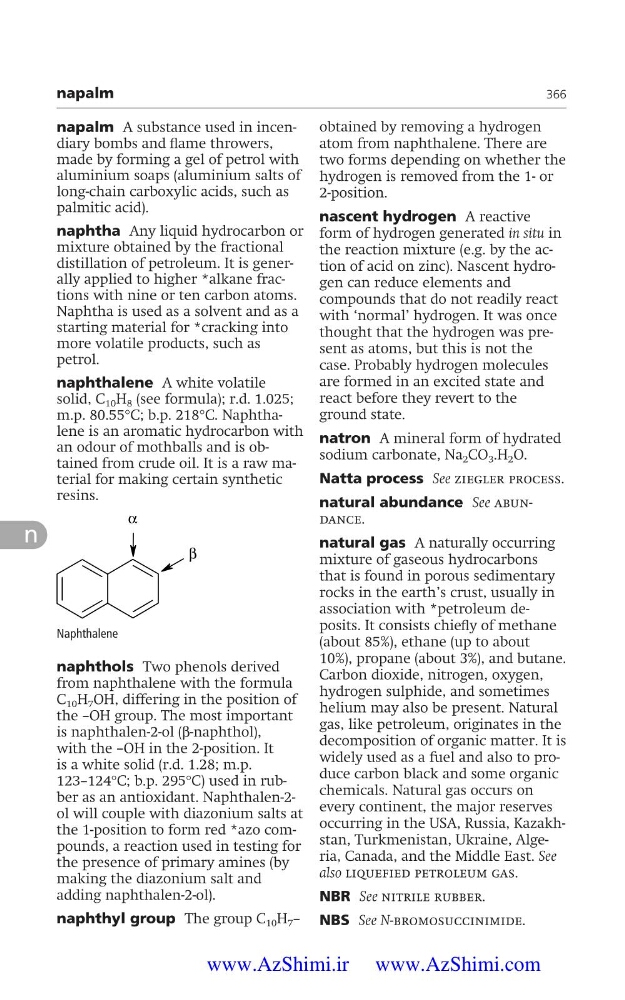
naphthalene A white volatile
solid, C 10 H 8 (see formula); r.d. 1.025;
m.p. 80.55°C; b.p. 218°C. Naphthalene is an aromatic hydrocarbon with
an odour of mothballs and is obtained from crude oil. It is a raw material for making certain synthetic
resins.
napalm
366
n
α
β
Naphthalene
naphthols Two phenols derived
from naphthalene with the formula
C 10 H 7 OH, differing in the position of
the –OH group. The most important
is naphthalen-2-ol (β-naphthol),
with the –OH in the 2-position. It
is a white solid (r.d. 1.28; m.p.
123–124°C; b.p. 295°C) used in rubber as an antioxidant. Naphthalen-2ol will couple with diazonium salts at
the 1-position to form red *azo compounds, a reaction used in testing for
the presence of primary amines (by
making the diazonium salt and
adding naphthalen-2-ol).
naphthyl group The group C 10 H 7 –
obtained by removing a hydrogen
atom from naphthalene. There are
two forms depending on whether the
hydrogen is removed from the 1- or
2-position.
nascent hydrogen A reactive
form of hydrogen generated in situ in
the reaction mixture (e.g. by the action of acid on zinc). Nascent hydrogen can reduce elements and
compounds that do not readily react
with ‘normal’ hydrogen. It was once
thought that the hydrogen was present as atoms, but this is not the
case. Probably hydrogen molecules
are formed in an excited state and
react before they revert to the
ground state.
natron A mineral form of hydrated
sodium carbonate, Na 2 CO 3 .H 2 O.
Natta process See ziegler process.
natural abundance See abundance.
natural gas A naturally occurring
mixture of gaseous hydrocarbons
that is found in porous sedimentary
rocks in the earth’s crust, usually in
association with *petroleum deposits. It consists chieÛy of methane
(about 85%), ethane (up to about
10%), propane (about 3%), and butane.
Carbon dioxide, nitrogen, oxygen,
hydrogen sulphide, and sometimes
helium may also be present. Natural
gas, like petroleum, originates in the
decomposition of organic matter. It is
widely used as a fuel and also to produce carbon black and some organic
chemicals. Natural gas occurs on
every continent, the major reserves
occurring in the USA, Russia, Kazakhstan, Turkmenistan, Ukraine, Algeria, Canada, and the Middle East. See
also liquefied petroleum gas.
NBR See nitrile rubber.
NBS See N-bromosuccinimide.
www.AzShimi.ir www.AzShimi.com
made by forming a gel of petrol with
aluminium soaps (aluminium salts of
long-chain carboxylic acids, such as
palmitic acid).
naphtha Any liquid hydrocarbon or
mixture obtained by the fractional
distillation of petroleum. It is generally applied to higher *alkane fractions with nine or ten carbon atoms.
Naphtha is used as a solvent and as a
starting material for *cracking into
more volatile products, such as
petrol.
naphthalene A white volatile
solid, C 10 H 8 (see formula); r.d. 1.025;
m.p. 80.55°C; b.p. 218°C. Naphthalene is an aromatic hydrocarbon with
an odour of mothballs and is obtained from crude oil. It is a raw material for making certain synthetic
resins.
napalm
366
n
α
β
Naphthalene
naphthols Two phenols derived
from naphthalene with the formula
C 10 H 7 OH, differing in the position of
the –OH group. The most important
is naphthalen-2-ol (β-naphthol),
with the –OH in the 2-position. It
is a white solid (r.d. 1.28; m.p.
123–124°C; b.p. 295°C) used in rubber as an antioxidant. Naphthalen-2ol will couple with diazonium salts at
the 1-position to form red *azo compounds, a reaction used in testing for
the presence of primary amines (by
making the diazonium salt and
adding naphthalen-2-ol).
naphthyl group The group C 10 H 7 –
obtained by removing a hydrogen
atom from naphthalene. There are
two forms depending on whether the
hydrogen is removed from the 1- or
2-position.
nascent hydrogen A reactive
form of hydrogen generated in situ in
the reaction mixture (e.g. by the action of acid on zinc). Nascent hydrogen can reduce elements and
compounds that do not readily react
with ‘normal’ hydrogen. It was once
thought that the hydrogen was present as atoms, but this is not the
case. Probably hydrogen molecules
are formed in an excited state and
react before they revert to the
ground state.
natron A mineral form of hydrated
sodium carbonate, Na 2 CO 3 .H 2 O.
Natta process See ziegler process.
natural abundance See abundance.
natural gas A naturally occurring
mixture of gaseous hydrocarbons
that is found in porous sedimentary
rocks in the earth’s crust, usually in
association with *petroleum deposits. It consists chieÛy of methane
(about 85%), ethane (up to about
10%), propane (about 3%), and butane.
Carbon dioxide, nitrogen, oxygen,
hydrogen sulphide, and sometimes
helium may also be present. Natural
gas, like petroleum, originates in the
decomposition of organic matter. It is
widely used as a fuel and also to produce carbon black and some organic
chemicals. Natural gas occurs on
every continent, the major reserves
occurring in the USA, Russia, Kazakhstan, Turkmenistan, Ukraine, Algeria, Canada, and the Middle East. See
also liquefied petroleum gas.
NBR See nitrile rubber.
NBS See N-bromosuccinimide.
www.AzShimi.ir www.AzShimi.com