

complex and B sediment together in the reaction boundary in the
presence of a constant concentration of slower sedimenting A
(constant bath approximation [20, 21]). Another way to describe
this process is the effective particle theory (EPT) that takes into
account that due to the dissociation of the complex a small fraction
of A co-sediments in the reaction boundary and that this fraction
of A, total B, and AB sediment together like a single particle in one
boundary, whereas the bulk of A sediments with the s-value of free
A [22]. Regardless of any model, the observation that the titration
of a constant concentration of B with increasing concentrations of
A results in a shift of the sedimentation coefficient of B to higher
values (Fig. 5a) is a proof of the interaction. With increasing excess
of A, the sedimentation coefficient of the reaction boundary s rb will
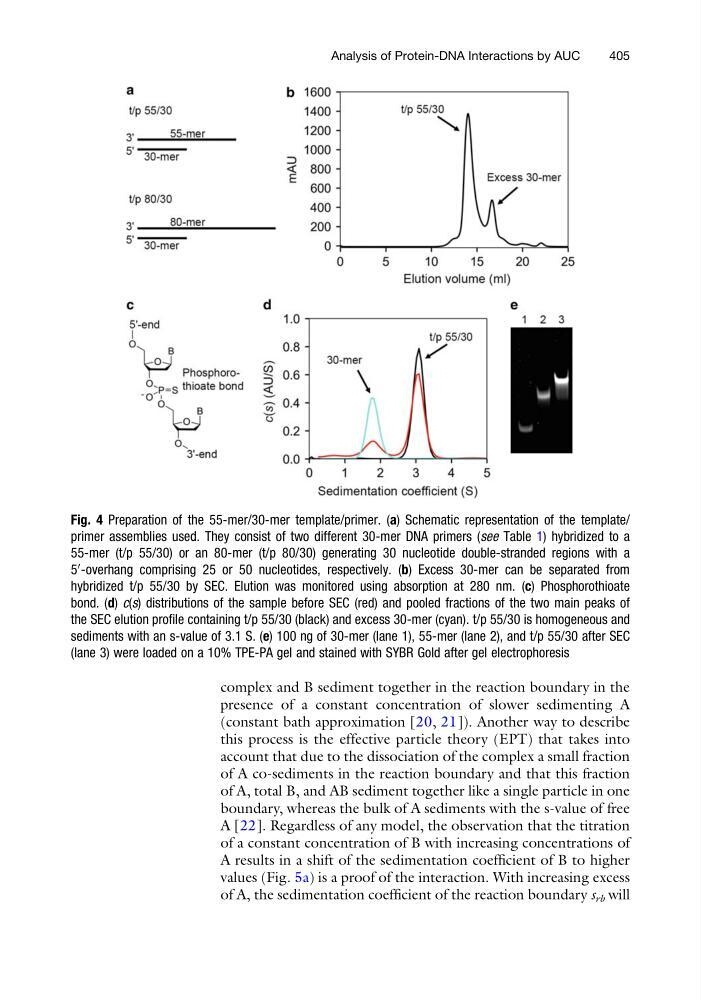
Fig. 4 Preparation of the 55-mer/30-mer template/primer. (a) Schematic representation of the template/
primer assemblies used. They consist of two different 30-mer DNA primers (see Table 1) hybridized to a
55-mer (t/p 55/30) or an 80-mer (t/p 80/30) generating 30 nucleotide double-stranded regions with a
5
0
-overhang comprising 25 or 50 nucleotides, respectively. (b) Excess 30-mer can be separated from
hybridized t/p 55/30 by SEC. Elution was monitored using absorption at 280 nm. (c) Phosphorothioate
bond. (d) c(s) distributions of the sample before SEC (red) and pooled fractions of the two main peaks of
the SEC elution profile containing t/p 55/30 (black) and excess 30-mer (cyan). t/p 55/30 is homogeneous and
sediments with an s-value of 3.1 S. (e) 100 ng of 30-mer (lane 1), 55-mer (lane 2), and t/p 55/30 after SEC
(lane 3) were loaded on a 10% TPE-PA gel and stained with SYBR Gold after gel electrophoresis
Analysis of Protein-DNA Interactions by AUC
405
presence of a constant concentration of slower sedimenting A
(constant bath approximation [20, 21]). Another way to describe
this process is the effective particle theory (EPT) that takes into
account that due to the dissociation of the complex a small fraction
of A co-sediments in the reaction boundary and that this fraction
of A, total B, and AB sediment together like a single particle in one
boundary, whereas the bulk of A sediments with the s-value of free
A [22]. Regardless of any model, the observation that the titration
of a constant concentration of B with increasing concentrations of
A results in a shift of the sedimentation coefficient of B to higher
values (Fig. 5a) is a proof of the interaction. With increasing excess
of A, the sedimentation coefficient of the reaction boundary s rb will
Fig. 4 Preparation of the 55-mer/30-mer template/primer. (a) Schematic representation of the template/
primer assemblies used. They consist of two different 30-mer DNA primers (see Table 1) hybridized to a
55-mer (t/p 55/30) or an 80-mer (t/p 80/30) generating 30 nucleotide double-stranded regions with a
5
0
-overhang comprising 25 or 50 nucleotides, respectively. (b) Excess 30-mer can be separated from
hybridized t/p 55/30 by SEC. Elution was monitored using absorption at 280 nm. (c) Phosphorothioate
bond. (d) c(s) distributions of the sample before SEC (red) and pooled fractions of the two main peaks of
the SEC elution profile containing t/p 55/30 (black) and excess 30-mer (cyan). t/p 55/30 is homogeneous and
sediments with an s-value of 3.1 S. (e) 100 ng of 30-mer (lane 1), 55-mer (lane 2), and t/p 55/30 after SEC
(lane 3) were loaded on a 10% TPE-PA gel and stained with SYBR Gold after gel electrophoresis
Analysis of Protein-DNA Interactions by AUC
405