

particularly important for high-affinity probes. Further readings
taken following establishment of equilibrium result in an appreciation of the stability of the reagents during the assay.
3.3.6 Reagent Stability
For high-throughput applications, where reagents need to be stable
for extended periods, it is useful to assess the stability of the probe
and target protein. To do this, target protein is made and stored for
various amounts of time prior to the addition of probe. The plate is
incubated for a time necessary for the binding to reach equilibrium
and the signal measured. Repeat experiments should be undertaken
where the probe is stored for various amounts of time prior to
addition of target protein. The result of these experiments indicates
the time for which the assay components are stable and may be
prepared in the plate before the start of the binding experiment (see
Note 22).
3.4 Measuring
the Effect of Test
Compounds
Compounds that displace the labeled probe from the target protein
cause a decrease in the observed polarization. The effect of compounds may be observed by the addition of a single concentration
of test compound (in primary screening), or by creating a concentration response for test compound covering a wide range of concentrations and differing by half-log steps. The output of such a
concentration-response experiment is often analyzed by fitting a
four-parameter logistic equation:
Y ¼ Min þ
Max À Min
ð
Þ
1 þ 10
log IC 50 ÀX
ð
Þ :h
n
o
ð5Þ
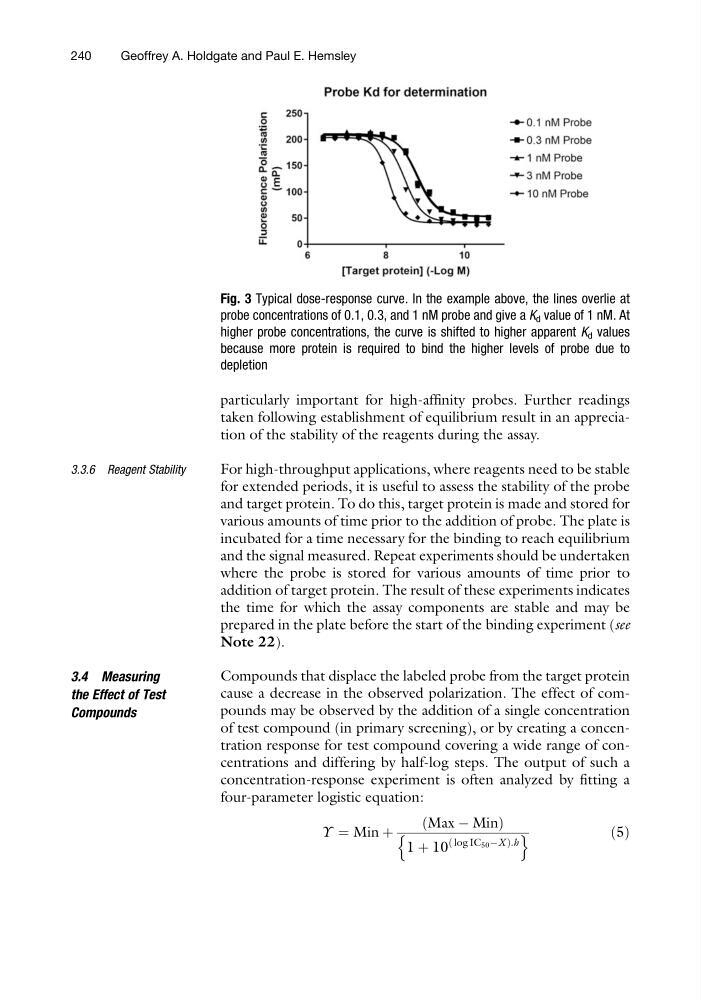
Fig. 3 Typical dose-response curve. In the example above, the lines overlie at
probe concentrations of 0.1, 0.3, and 1 nM probe and give a K d value of 1 nM. At
higher probe concentrations, the curve is shifted to higher apparent K d values
because more protein is required to bind the higher levels of probe due to
depletion
240
Geoffrey A. Holdgate and Paul E. Hemsley
taken following establishment of equilibrium result in an appreciation of the stability of the reagents during the assay.
3.3.6 Reagent Stability
For high-throughput applications, where reagents need to be stable
for extended periods, it is useful to assess the stability of the probe
and target protein. To do this, target protein is made and stored for
various amounts of time prior to the addition of probe. The plate is
incubated for a time necessary for the binding to reach equilibrium
and the signal measured. Repeat experiments should be undertaken
where the probe is stored for various amounts of time prior to
addition of target protein. The result of these experiments indicates
the time for which the assay components are stable and may be
prepared in the plate before the start of the binding experiment (see
Note 22).
3.4 Measuring
the Effect of Test
Compounds
Compounds that displace the labeled probe from the target protein
cause a decrease in the observed polarization. The effect of compounds may be observed by the addition of a single concentration
of test compound (in primary screening), or by creating a concentration response for test compound covering a wide range of concentrations and differing by half-log steps. The output of such a
concentration-response experiment is often analyzed by fitting a
four-parameter logistic equation:
Y ¼ Min þ
Max À Min
ð
Þ
1 þ 10
log IC 50 ÀX
ð
Þ :h
n
o
ð5Þ
Fig. 3 Typical dose-response curve. In the example above, the lines overlie at
probe concentrations of 0.1, 0.3, and 1 nM probe and give a K d value of 1 nM. At
higher probe concentrations, the curve is shifted to higher apparent K d values
because more protein is required to bind the higher levels of probe due to
depletion
240
Geoffrey A. Holdgate and Paul E. Hemsley