

Given suitable optical signals, it would be possible, at least in
principle, to study all four steps of the cycle individually. The
interaction of P with X and P with Y could be studied using the
methods described in Subheading 3.1 for Scheme B. The interaction of Y with PX would be studied in a similar way by mixing a
solution of P and X (at concentrations of X that saturates P) with a
solution of Y under pseudo-first-order conditions ([Y tot ] ) [P tot ]),
and so on. Only in ideal cases will it be possible to study all four
steps individually; nevertheless, it is sometimes still possible to
derive useful information from the study of a subset of the steps,
particularly regarding the possibility of cooperativity between binding sites (see Note 12). For example, if the equilibrium dissociation
constants determined for the interaction of Y with P and for Y with
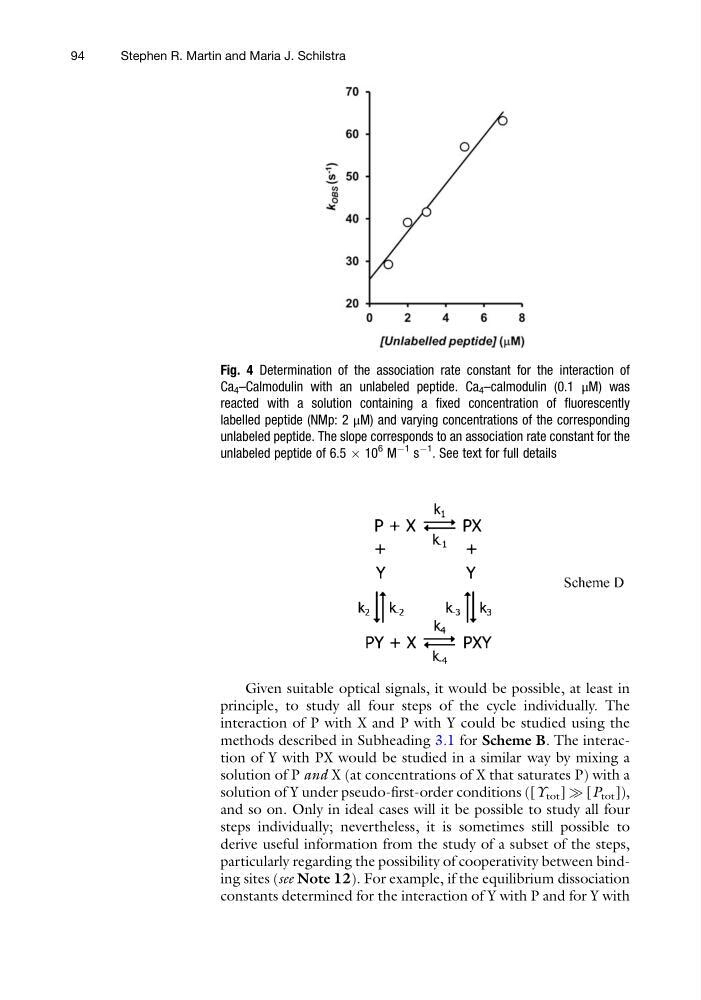
Fig. 4 Determination of the association rate constant for the interaction of
Ca 4 –Calmodulin with an unlabeled peptide. Ca 4 –calmodulin (0.1 μM) was
reacted with a solution containing a fixed concentration of fluorescently
labelled peptide (NMp: 2 μM) and varying concentrations of the corresponding
unlabeled peptide. The slope corresponds to an association rate constant for the
unlabeled peptide of 6.5 Â 10
6
M
À1
s
À1
. See text for full details
94
Stephen R. Martin and Maria J. Schilstra
principle, to study all four steps of the cycle individually. The
interaction of P with X and P with Y could be studied using the
methods described in Subheading 3.1 for Scheme B. The interaction of Y with PX would be studied in a similar way by mixing a
solution of P and X (at concentrations of X that saturates P) with a
solution of Y under pseudo-first-order conditions ([Y tot ] ) [P tot ]),
and so on. Only in ideal cases will it be possible to study all four
steps individually; nevertheless, it is sometimes still possible to
derive useful information from the study of a subset of the steps,
particularly regarding the possibility of cooperativity between binding sites (see Note 12). For example, if the equilibrium dissociation
constants determined for the interaction of Y with P and for Y with
Fig. 4 Determination of the association rate constant for the interaction of
Ca 4 –Calmodulin with an unlabeled peptide. Ca 4 –calmodulin (0.1 μM) was
reacted with a solution containing a fixed concentration of fluorescently
labelled peptide (NMp: 2 μM) and varying concentrations of the corresponding
unlabeled peptide. The slope corresponds to an association rate constant for the
unlabeled peptide of 6.5 Â 10
6
M
À1
s
À1
. See text for full details
94
Stephen R. Martin and Maria J. Schilstra