

14.6 AMF Application Strategies
Arbuscular mycorrhizal fungi (AMF) can play a major role in plant response to
alleviate abiotic stresses. They can facilitate soil nutrient uptake by the plants, and
the fungi benefit from photosynthetic carbon produced by plants (Smith and Read
2008). AMF can improve the performance of individual plants while also having
higher order effects on plant community structure, plant productivity, soil stability,
and nutrient cycling (Smith and Read 2008; Sellosse 2017). The relationships
between Tamarix species (T. articulata, T. gallica) and soil biota have been most
extensively studied within plant-fungal mycorrhizal symbioses (Bencherif et al.
2015, 2016, 2019b, c; Stefani et al. 2020). These studies have proven the
mycotrophic statue of T. articulata and T. gallica and the influence of seasonal
variation on this symbiosis in arid and semiarid Algerian areas (Bencherif et al.
2016). The impact of soil salinity stress on T. articulata AMF and their associated
microbiota in the field has been determined (Bencherif et al. 2015). Moreover, the
Taxonomic assignment of arbuscular mycorrhizal fungi in an 18S metagenomic
dataset of T. articulata (aphylla) was determined (Stefani et al. 2020). Based on
these studies it may be suggested that AMF act by countering stress-induced oxidative damage and increase flavonoids content, which are known to improve plant
redox status. In fact, the biochemical phenomenon of abiotic stress alleviation by
AMF was studied for some species (Cicer arietinum L) (Garg and Singla 2015),
(Ocimum basilicum L.) (El Hindi et al. 2017); (Cajanus cajan) (Garg and Singh
2018) but never for T. articulata or T. gallica. In fact, the combined complex
Arsenic linked to leaves cell wall
Arsenic linked to roots cell wall
Arsenic form a band cellulose,
Function as the first barrier
protection
Pectic and histidily
groups cell wall play a
key role in the
immobilization of metal
ions
Alleviates metals toxicity to
plant cell by providing a large
number of metal binding sites
Linked to proteic fraction
Arsenic is located in the
intracellular central part of
cell= Arsenic is perdominatly
contained in vacuoles
Increase level of Sulfo-richpeptides (polytochelatine and
organics acids)= Homeostatis
mechanisms in T. gallica
Stability of Arsenicpolytochelanic complexes is
depending on the acidic
conditions
Storage of these complexes in
vacuoles
pectine and lignin cell wall
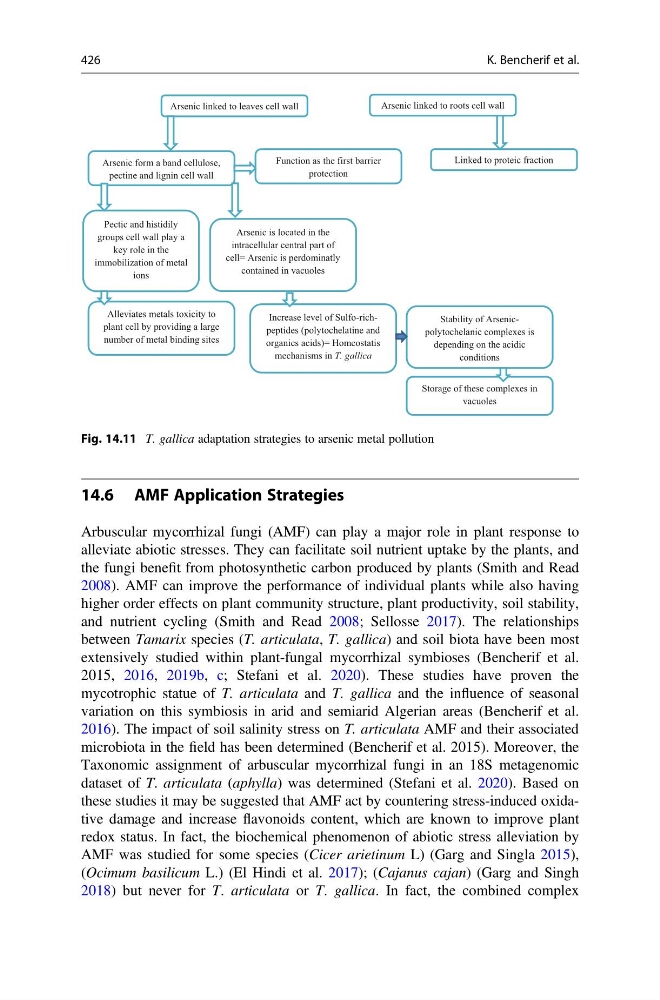
Fig. 14.11 T. gallica adaptation strategies to arsenic metal pollution
426
K. Bencherif et al.
Arbuscular mycorrhizal fungi (AMF) can play a major role in plant response to
alleviate abiotic stresses. They can facilitate soil nutrient uptake by the plants, and
the fungi benefit from photosynthetic carbon produced by plants (Smith and Read
2008). AMF can improve the performance of individual plants while also having
higher order effects on plant community structure, plant productivity, soil stability,
and nutrient cycling (Smith and Read 2008; Sellosse 2017). The relationships
between Tamarix species (T. articulata, T. gallica) and soil biota have been most
extensively studied within plant-fungal mycorrhizal symbioses (Bencherif et al.
2015, 2016, 2019b, c; Stefani et al. 2020). These studies have proven the
mycotrophic statue of T. articulata and T. gallica and the influence of seasonal
variation on this symbiosis in arid and semiarid Algerian areas (Bencherif et al.
2016). The impact of soil salinity stress on T. articulata AMF and their associated
microbiota in the field has been determined (Bencherif et al. 2015). Moreover, the
Taxonomic assignment of arbuscular mycorrhizal fungi in an 18S metagenomic
dataset of T. articulata (aphylla) was determined (Stefani et al. 2020). Based on
these studies it may be suggested that AMF act by countering stress-induced oxidative damage and increase flavonoids content, which are known to improve plant
redox status. In fact, the biochemical phenomenon of abiotic stress alleviation by
AMF was studied for some species (Cicer arietinum L) (Garg and Singla 2015),
(Ocimum basilicum L.) (El Hindi et al. 2017); (Cajanus cajan) (Garg and Singh
2018) but never for T. articulata or T. gallica. In fact, the combined complex
Arsenic linked to leaves cell wall
Arsenic linked to roots cell wall
Arsenic form a band cellulose,
Function as the first barrier
protection
Pectic and histidily
groups cell wall play a
key role in the
immobilization of metal
ions
Alleviates metals toxicity to
plant cell by providing a large
number of metal binding sites
Linked to proteic fraction
Arsenic is located in the
intracellular central part of
cell= Arsenic is perdominatly
contained in vacuoles
Increase level of Sulfo-richpeptides (polytochelatine and
organics acids)= Homeostatis
mechanisms in T. gallica
Stability of Arsenicpolytochelanic complexes is
depending on the acidic
conditions
Storage of these complexes in
vacuoles
pectine and lignin cell wall
Fig. 14.11 T. gallica adaptation strategies to arsenic metal pollution
426
K. Bencherif et al.