

4
problem. Let us have a look into these factors and the responsible stakeholders
which form the complex landscape of antimicrobial resistance.
1.2 Antibiotics and Antimicrobial Resistance
1.2.1 Antibiotics in Humans, Veterinary and Agriculture
The usage of antibiotics is mostly for therapeutic purposes and is frequent in humans
and animals. Only few classes of antibiotics are confined to exclusive usage in either
humans or animals. This is due to toxicity of those antibiotics in humans and/or different incidences of infection in humans/animals for which that antibiotic is administered usually. However, many common classes of antibiotics are administered in
both animals and humans, including cattle, poultry, fish and honey bees (Church
2004; Davies and Davies 2010; Van Boeckel et al. 2015). Limited prophylactic
usage of antibiotics is usually done in humans and mostly in cases such as postsurgery or during treatment of certain diseases. In animals, the antibiotic administration pattern is broadly similar to humans, but in large farms and especially food
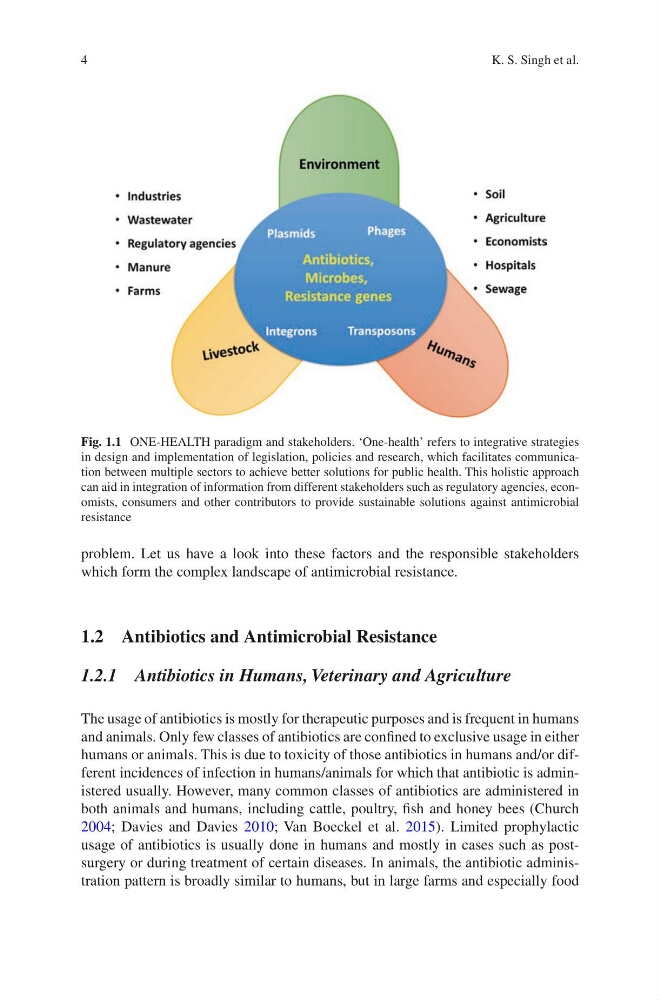
Fig. 1.1 ONE-HEALTH paradigm and stakeholders. ‘One-health’ refers to integrative strategies
in design and implementation of legislation, policies and research, which facilitates communication between multiple sectors to achieve better solutions for public health. This holistic approach
can aid in integration of information from different stakeholders such as regulatory agencies, economists, consumers and other contributors to provide sustainable solutions against antimicrobial
resistance
K. S. Singh et al.
problem. Let us have a look into these factors and the responsible stakeholders
which form the complex landscape of antimicrobial resistance.
1.2 Antibiotics and Antimicrobial Resistance
1.2.1 Antibiotics in Humans, Veterinary and Agriculture
The usage of antibiotics is mostly for therapeutic purposes and is frequent in humans
and animals. Only few classes of antibiotics are confined to exclusive usage in either
humans or animals. This is due to toxicity of those antibiotics in humans and/or different incidences of infection in humans/animals for which that antibiotic is administered usually. However, many common classes of antibiotics are administered in
both animals and humans, including cattle, poultry, fish and honey bees (Church
2004; Davies and Davies 2010; Van Boeckel et al. 2015). Limited prophylactic
usage of antibiotics is usually done in humans and mostly in cases such as postsurgery or during treatment of certain diseases. In animals, the antibiotic administration pattern is broadly similar to humans, but in large farms and especially food
Fig. 1.1 ONE-HEALTH paradigm and stakeholders. ‘One-health’ refers to integrative strategies
in design and implementation of legislation, policies and research, which facilitates communication between multiple sectors to achieve better solutions for public health. This holistic approach
can aid in integration of information from different stakeholders such as regulatory agencies, economists, consumers and other contributors to provide sustainable solutions against antimicrobial
resistance
K. S. Singh et al.