

164
electrolyzed water shows enhanced bactericidal efficiency that can be attributed due
to chlorine (Sun et al. 2012).
7.5.5 Dispersal
Planktonic bacteria are small clusters of bacteria that are released from the mature
biofilms due to treatment with dispersal causing agents. These planktonic cells are
more antibiotic susceptible as compared to their biofilm associated counterparts.
Certain conditions and agents are responsible for triggering dispersal leading to
breaking up of the biofilm. Nutrient limiting conditions like depleted carbon availability induce P. aeruginosa to seed new population in order to escape from starvation. During this process of dispersal, mature biofilms releases as antibiotic
susceptible planktonic bacteria. Various compounds like alginate oligomer oligoG,
composed of blocks of alpha-l-guluronic acid can significantly damage bacterial
biofilms by targeting exopolysaccharides. Similarly, unsaturated fatty acid cis-2decenoic acid and by nitric oxide can also cause biofilm dispersal in various pathogens like P. aeruginosa (Bjarnsholt et al. 2013). Effective biofilm dispersal is also
brought about by decreasing 3,5-cyclic diguanylic acid (c-di-GMP) levels using
proteins that effectively bind and block 3,5-cyclic diguanylic acid. Dispersal mediator protein BdcA is highly effective against E. coli (Fig. 7.4). Additionally antimicrobial agents like sulphathiazole can significantly inhibit 3,5-cyclic diguanylic
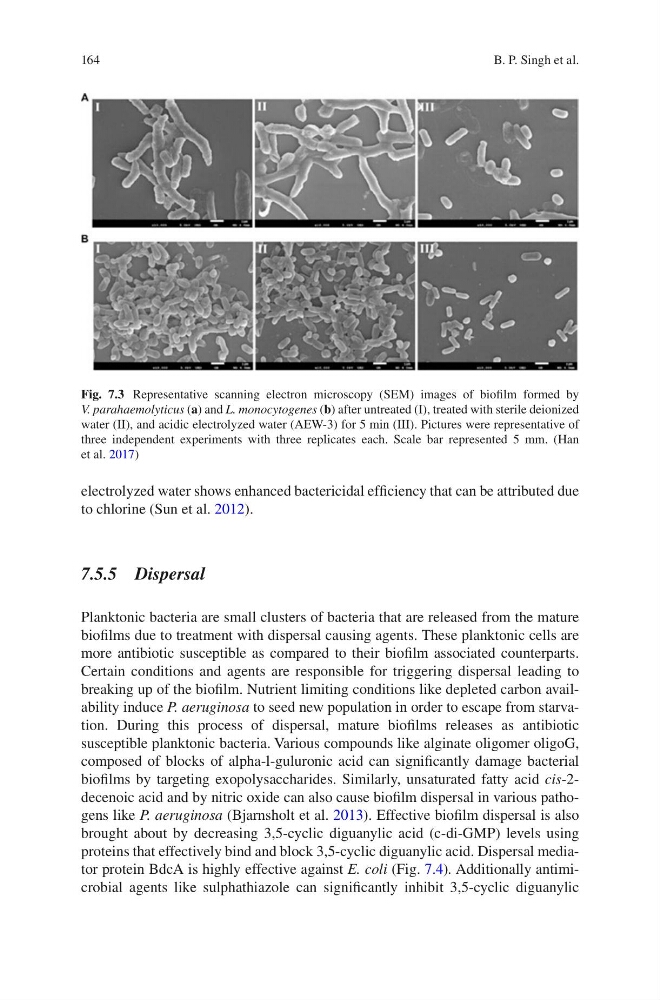
Fig. 7.3 Representative scanning electron microscopy (SEM) images of biofilm formed by
V. parahaemolyticus (a) and L. monocytogenes (b) after untreated (I), treated with sterile deionized
water (II), and acidic electrolyzed water (AEW-3) for 5 min (III). Pictures were representative of
three independent experiments with three replicates each. Scale bar represented 5 mm. (Han
et al. 2017)
B. P. Singh et al.
electrolyzed water shows enhanced bactericidal efficiency that can be attributed due
to chlorine (Sun et al. 2012).
7.5.5 Dispersal
Planktonic bacteria are small clusters of bacteria that are released from the mature
biofilms due to treatment with dispersal causing agents. These planktonic cells are
more antibiotic susceptible as compared to their biofilm associated counterparts.
Certain conditions and agents are responsible for triggering dispersal leading to
breaking up of the biofilm. Nutrient limiting conditions like depleted carbon availability induce P. aeruginosa to seed new population in order to escape from starvation. During this process of dispersal, mature biofilms releases as antibiotic
susceptible planktonic bacteria. Various compounds like alginate oligomer oligoG,
composed of blocks of alpha-l-guluronic acid can significantly damage bacterial
biofilms by targeting exopolysaccharides. Similarly, unsaturated fatty acid cis-2decenoic acid and by nitric oxide can also cause biofilm dispersal in various pathogens like P. aeruginosa (Bjarnsholt et al. 2013). Effective biofilm dispersal is also
brought about by decreasing 3,5-cyclic diguanylic acid (c-di-GMP) levels using
proteins that effectively bind and block 3,5-cyclic diguanylic acid. Dispersal mediator protein BdcA is highly effective against E. coli (Fig. 7.4). Additionally antimicrobial agents like sulphathiazole can significantly inhibit 3,5-cyclic diguanylic
Fig. 7.3 Representative scanning electron microscopy (SEM) images of biofilm formed by
V. parahaemolyticus (a) and L. monocytogenes (b) after untreated (I), treated with sterile deionized
water (II), and acidic electrolyzed water (AEW-3) for 5 min (III). Pictures were representative of
three independent experiments with three replicates each. Scale bar represented 5 mm. (Han
et al. 2017)
B. P. Singh et al.