

In TARBIL project, the reference observation network was dense enough to
represent regional soil structure variation. Besides the common monitoring network
sensors in commercially available integrated agricultural services, some of the
farmers may have their own sensor sets for getting the processed data service with
higher local precision. In this case, continuous training can also be applied for
different contexts such as parcel-based crop varieties as long as data label for training
exists through the feedback from the field. For this reason, an efficient agricultural
information system must consider well-designed and sustainable data exchange and
acquisition scenarios.
This data fusion scheme is given as an example for understanding TDNN
structures. It can be facilitated in different ways. Wavelet features as explained in
the following section can be used instead of time-domain sequence. In this case,
ET 0 (t), ET 0 (tÀT ), ET 0 (tÀ2T ), ET 0 (tÀ3T ), and ET 0 (tÀ4T ) should be replaced by
their wavelet coefficients in the same moving time frame as a 0 , a 1 , a 2 , a 3 , and a 4 . The
transformation of the input data patterns to the wavelet domain usually improves
prediction performance (reduces the error rate) in natural systems. The same time
series data pattern can also be applied to the input at different time frames, e.g., as
hours and days depending on the varying short-term and long-term correlations. It is
possible to establish several different data fusion models by exchanging some of the
input and output variables as long as there are some known relationships and
available training dataset.
7.5 Wavelets in Data Fusion
The wavelet transformation is widely used in signal processing and image compression. For example, in JPEG2000 standard, lossless compression is provided by the
use of a reversible integer wavelet transformation. In data fusion processes, an
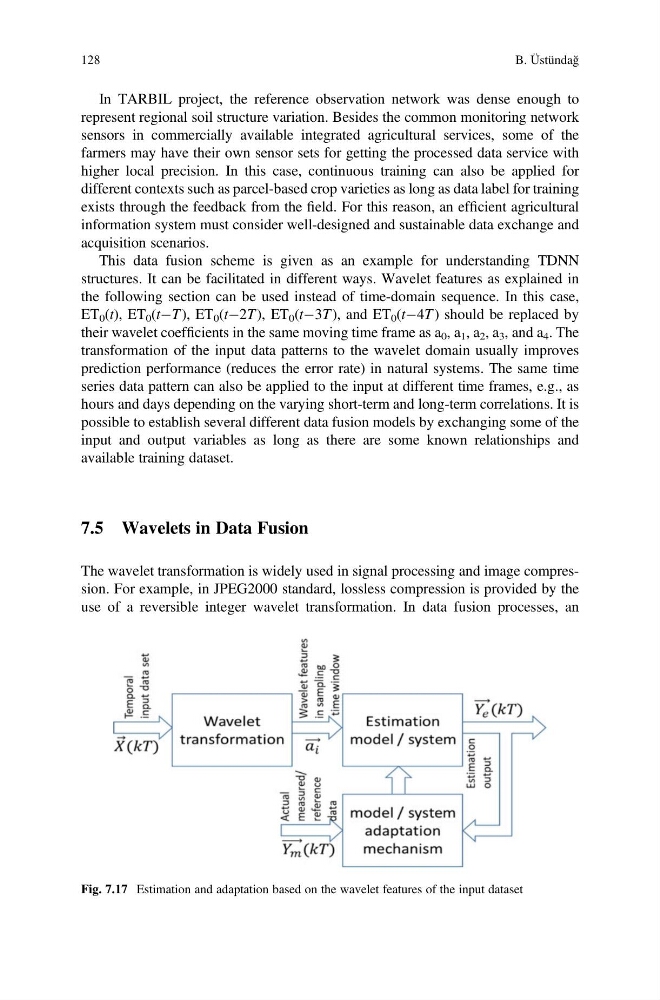
Fig. 7.17 Estimation and adaptation based on the wavelet features of the input dataset
128
B. Üstündağ
represent regional soil structure variation. Besides the common monitoring network
sensors in commercially available integrated agricultural services, some of the
farmers may have their own sensor sets for getting the processed data service with
higher local precision. In this case, continuous training can also be applied for
different contexts such as parcel-based crop varieties as long as data label for training
exists through the feedback from the field. For this reason, an efficient agricultural
information system must consider well-designed and sustainable data exchange and
acquisition scenarios.
This data fusion scheme is given as an example for understanding TDNN
structures. It can be facilitated in different ways. Wavelet features as explained in
the following section can be used instead of time-domain sequence. In this case,
ET 0 (t), ET 0 (tÀT ), ET 0 (tÀ2T ), ET 0 (tÀ3T ), and ET 0 (tÀ4T ) should be replaced by
their wavelet coefficients in the same moving time frame as a 0 , a 1 , a 2 , a 3 , and a 4 . The
transformation of the input data patterns to the wavelet domain usually improves
prediction performance (reduces the error rate) in natural systems. The same time
series data pattern can also be applied to the input at different time frames, e.g., as
hours and days depending on the varying short-term and long-term correlations. It is
possible to establish several different data fusion models by exchanging some of the
input and output variables as long as there are some known relationships and
available training dataset.
7.5 Wavelets in Data Fusion
The wavelet transformation is widely used in signal processing and image compression. For example, in JPEG2000 standard, lossless compression is provided by the
use of a reversible integer wavelet transformation. In data fusion processes, an
Fig. 7.17 Estimation and adaptation based on the wavelet features of the input dataset
128
B. Üstündağ