

99
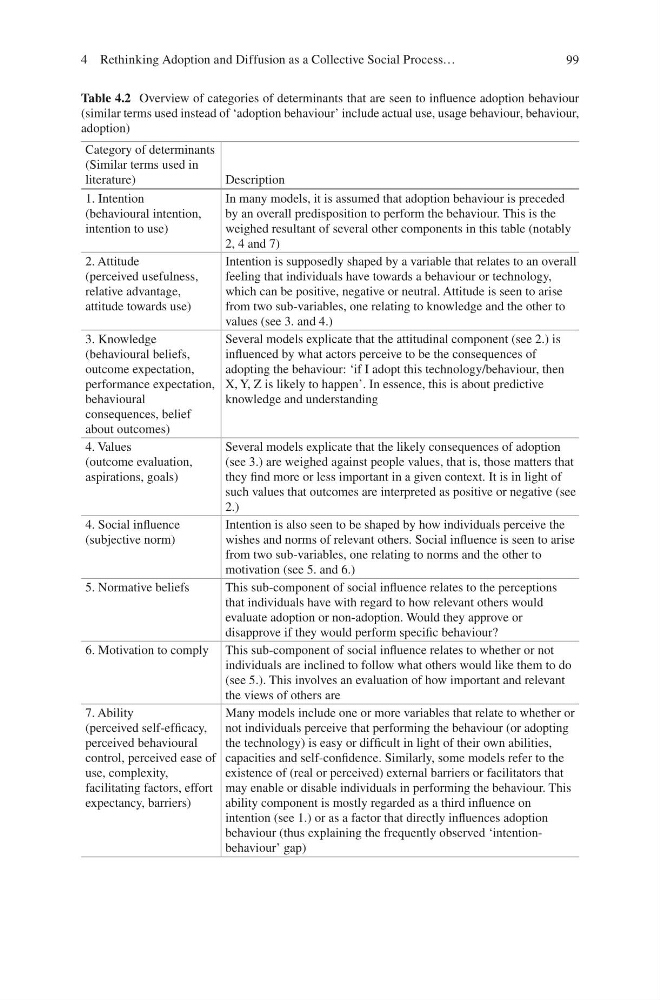
Table 4.2 Overview of categories of determinants that are seen to influence adoption behaviour
(similar terms used instead of ‘adoption behaviour’ include actual use, usage behaviour, behaviour,
adoption)
Category of determinants
(Similar terms used in
literature)
Description
1. Intention
(behavioural intention,
intention to use)
In many models, it is assumed that adoption behaviour is preceded
by an overall predisposition to perform the behaviour. This is the
weighed resultant of several other components in this table (notably
2, 4 and 7)
2. Attitude
(perceived usefulness,
relative advantage,
attitude towards use)
Intention is supposedly shaped by a variable that relates to an overall
feeling that individuals have towards a behaviour or technology,
which can be positive, negative or neutral. Attitude is seen to arise
from two sub-variables, one relating to knowledge and the other to
values (see 3. and 4.)
3. Knowledge
(behavioural beliefs,
outcome expectation,
performance expectation,
behavioural
consequences, belief
about outcomes)
Several models explicate that the attitudinal component (see 2.) is
influenced by what actors perceive to be the consequences of
adopting the behaviour: ‘if I adopt this technology/behaviour, then
X, Y, Z is likely to happen’. In essence, this is about predictive
knowledge and understanding
4. Values
(outcome evaluation,
aspirations, goals)
Several models explicate that the likely consequences of adoption
(see 3.) are weighed against people values, that is, those matters that
they find more or less important in a given context. It is in light of
such values that outcomes are interpreted as positive or negative (see
2.)
4. Social influence
(subjective norm)
Intention is also seen to be shaped by how individuals perceive the
wishes and norms of relevant others. Social influence is seen to arise
from two sub-variables, one relating to norms and the other to
motivation (see 5. and 6.)
5. Normative beliefs
This sub-component of social influence relates to the perceptions
that individuals have with regard to how relevant others would
evaluate adoption or non-adoption. Would they approve or
disapprove if they would perform specific behaviour?
6. Motivation to comply This sub-component of social influence relates to whether or not
individuals are inclined to follow what others would like them to do
(see 5.). This involves an evaluation of how important and relevant
the views of others are
7. Ability
(perceived self-efficacy,
perceived behavioural
control, perceived ease of
use, complexity,
facilitating factors, effort
expectancy, barriers)
Many models include one or more variables that relate to whether or
not individuals perceive that performing the behaviour (or adopting
the technology) is easy or difficult in light of their own abilities,
capacities and self-confidence. Similarly, some models refer to the
existence of (real or perceived) external barriers or facilitators that
may enable or disable individuals in performing the behaviour. This
ability component is mostly regarded as a third influence on
intention (see 1.) or as a factor that directly influences adoption
behaviour (thus explaining the frequently observed ‘intentionbehaviour’ gap)
4 Rethinking Adoption and Diffusion as a Collective Social Process…
Table 4.2 Overview of categories of determinants that are seen to influence adoption behaviour
(similar terms used instead of ‘adoption behaviour’ include actual use, usage behaviour, behaviour,
adoption)
Category of determinants
(Similar terms used in
literature)
Description
1. Intention
(behavioural intention,
intention to use)
In many models, it is assumed that adoption behaviour is preceded
by an overall predisposition to perform the behaviour. This is the
weighed resultant of several other components in this table (notably
2, 4 and 7)
2. Attitude
(perceived usefulness,
relative advantage,
attitude towards use)
Intention is supposedly shaped by a variable that relates to an overall
feeling that individuals have towards a behaviour or technology,
which can be positive, negative or neutral. Attitude is seen to arise
from two sub-variables, one relating to knowledge and the other to
values (see 3. and 4.)
3. Knowledge
(behavioural beliefs,
outcome expectation,
performance expectation,
behavioural
consequences, belief
about outcomes)
Several models explicate that the attitudinal component (see 2.) is
influenced by what actors perceive to be the consequences of
adopting the behaviour: ‘if I adopt this technology/behaviour, then
X, Y, Z is likely to happen’. In essence, this is about predictive
knowledge and understanding
4. Values
(outcome evaluation,
aspirations, goals)
Several models explicate that the likely consequences of adoption
(see 3.) are weighed against people values, that is, those matters that
they find more or less important in a given context. It is in light of
such values that outcomes are interpreted as positive or negative (see
2.)
4. Social influence
(subjective norm)
Intention is also seen to be shaped by how individuals perceive the
wishes and norms of relevant others. Social influence is seen to arise
from two sub-variables, one relating to norms and the other to
motivation (see 5. and 6.)
5. Normative beliefs
This sub-component of social influence relates to the perceptions
that individuals have with regard to how relevant others would
evaluate adoption or non-adoption. Would they approve or
disapprove if they would perform specific behaviour?
6. Motivation to comply This sub-component of social influence relates to whether or not
individuals are inclined to follow what others would like them to do
(see 5.). This involves an evaluation of how important and relevant
the views of others are
7. Ability
(perceived self-efficacy,
perceived behavioural
control, perceived ease of
use, complexity,
facilitating factors, effort
expectancy, barriers)
Many models include one or more variables that relate to whether or
not individuals perceive that performing the behaviour (or adopting
the technology) is easy or difficult in light of their own abilities,
capacities and self-confidence. Similarly, some models refer to the
existence of (real or perceived) external barriers or facilitators that
may enable or disable individuals in performing the behaviour. This
ability component is mostly regarded as a third influence on
intention (see 1.) or as a factor that directly influences adoption
behaviour (thus explaining the frequently observed ‘intentionbehaviour’ gap)
4 Rethinking Adoption and Diffusion as a Collective Social Process…