

polyethylene bags, and frozen in the refrigerator to
enable the preparation of analysis.
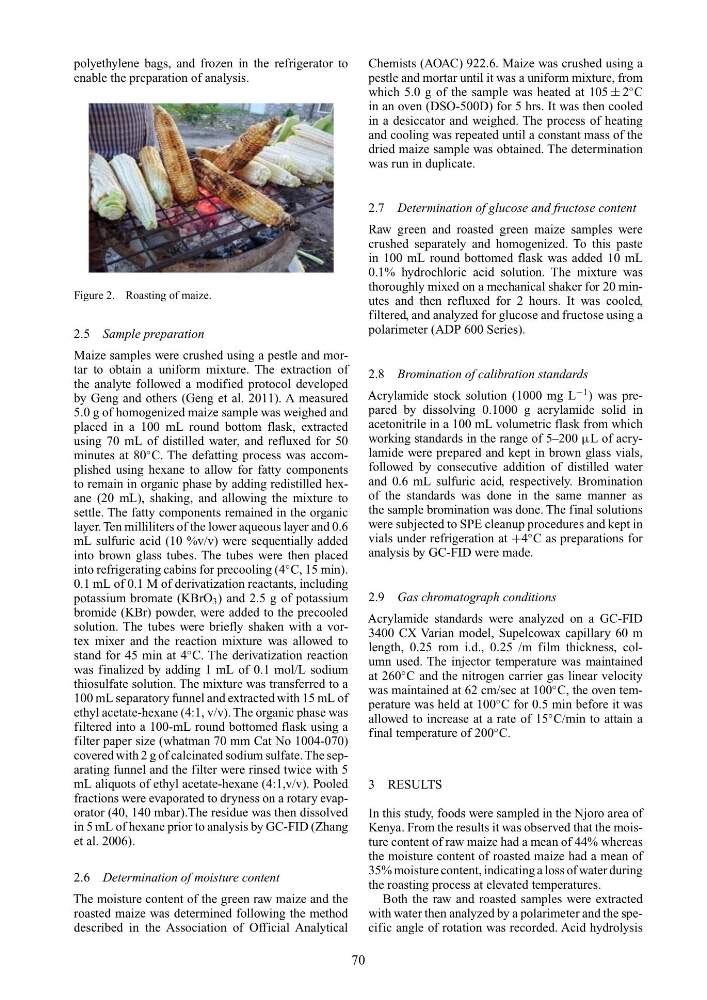
Figure 2. Roasting of maize.
2.5 Sample preparation
Maize samples were crushed using a pestle and mortar to obtain a uniform mixture. The extraction of
the analyte followed a modified protocol developed
by Geng and others (Geng et al. 2011). A measured
5.0 g of homogenized maize sample was weighed and
placed in a 100 mL round bottom flask, extracted
using 70 mL of distilled water, and refluxed for 50
minutes at 80
◦ C. The defatting process was accomplished using hexane to allow for fatty components
to remain in organic phase by adding redistilled hexane (20 mL), shaking, and allowing the mixture to
settle. The fatty components remained in the organic
layer. Ten milliliters of the lower aqueous layer and 0.6
mL sulfuric acid (10 %v/v) were sequentially added
into brown glass tubes. The tubes were then placed
into refrigerating cabins for precooling (4
◦ C, 15 min).
0.1 mL of 0.1 M of derivatization reactants, including
potassium bromate (KBrO 3 ) and 2.5 g of potassium
bromide (KBr) powder, were added to the precooled
solution. The tubes were briefly shaken with a vortex mixer and the reaction mixture was allowed to
stand for 45 min at 4
◦ C. The derivatization reaction
was finalized by adding 1 mL of 0.1 mol/L sodium
thiosulfate solution. The mixture was transferred to a
100 mL separatory funnel and extracted with 15 mL of
ethyl acetate-hexane (4:1, v/v). The organic phase was
filtered into a 100-mL round bottomed flask using a
filter paper size (whatman 70 mm Cat No 1004-070)
covered with 2 g of calcinated sodium sulfate. The separating funnel and the filter were rinsed twice with 5
mL aliquots of ethyl acetate-hexane (4:1,v/v). Pooled
fractions were evaporated to dryness on a rotary evaporator (40, 140 mbar).The residue was then dissolved
in 5 mL of hexane prior to analysis by GC-FID (Zhang
et al. 2006).
2.6 Determination of moisture content
The moisture content of the green raw maize and the
roasted maize was determined following the method
described in the Association of Official Analytical
Chemists (AOAC) 922.6. Maize was crushed using a
pestle and mortar until it was a uniform mixture, from
which 5.0 g of the sample was heated at 105 ± 2
◦ C
in an oven (DSO-500D) for 5 hrs. It was then cooled
in a desiccator and weighed. The process of heating
and cooling was repeated until a constant mass of the
dried maize sample was obtained. The determination
was run in duplicate.
2.7 Determination of glucose and fructose content
Raw green and roasted green maize samples were
crushed separately and homogenized. To this paste
in 100 mL round bottomed flask was added 10 mL
0.1% hydrochloric acid solution. The mixture was
thoroughly mixed on a mechanical shaker for 20 minutes and then refluxed for 2 hours. It was cooled,
filtered, and analyzed for glucose and fructose using a
polarimeter (ADP 600 Series).
2.8 Bromination of calibration standards
Acrylamide stock solution (1000 mg L
−1 ) was prepared by dissolving 0.1000 g acrylamide solid in
acetonitrile in a 100 mL volumetric flask from which
working standards in the range of 5–200 µL of acrylamide were prepared and kept in brown glass vials,
followed by consecutive addition of distilled water
and 0.6 mL sulfuric acid, respectively. Bromination
of the standards was done in the same manner as
the sample bromination was done. The final solutions
were subjected to SPE cleanup procedures and kept in
vials under refrigeration at +4
◦ C as preparations for
analysis by GC-FID were made.
2.9 Gas chromatograph conditions
Acrylamide standards were analyzed on a GC-FID
3400 CX Varian model, Supelcowax capillary 60 m
length, 0.25 rom i.d., 0.25 /m film thickness, column used. The injector temperature was maintained
at 260
◦ C and the nitrogen carrier gas linear velocity
was maintained at 62 cm/sec at 100
◦ C, the oven temperature was held at 100
◦ C for 0.5 min before it was
allowed to increase at a rate of 15
◦ C/min to attain a
final temperature of 200
◦ C.
3 RESULTS
In this study, foods were sampled in the Njoro area of
Kenya. From the results it was observed that the moisture content of raw maize had a mean of 44% whereas
the moisture content of roasted maize had a mean of
35% moisture content, indicating a loss of water during
the roasting process at elevated temperatures.
Both the raw and roasted samples were extracted
with water then analyzed by a polarimeter and the specific angle of rotation was recorded. Acid hydrolysis
70
enable the preparation of analysis.
Figure 2. Roasting of maize.
2.5 Sample preparation
Maize samples were crushed using a pestle and mortar to obtain a uniform mixture. The extraction of
the analyte followed a modified protocol developed
by Geng and others (Geng et al. 2011). A measured
5.0 g of homogenized maize sample was weighed and
placed in a 100 mL round bottom flask, extracted
using 70 mL of distilled water, and refluxed for 50
minutes at 80
◦ C. The defatting process was accomplished using hexane to allow for fatty components
to remain in organic phase by adding redistilled hexane (20 mL), shaking, and allowing the mixture to
settle. The fatty components remained in the organic
layer. Ten milliliters of the lower aqueous layer and 0.6
mL sulfuric acid (10 %v/v) were sequentially added
into brown glass tubes. The tubes were then placed
into refrigerating cabins for precooling (4
◦ C, 15 min).
0.1 mL of 0.1 M of derivatization reactants, including
potassium bromate (KBrO 3 ) and 2.5 g of potassium
bromide (KBr) powder, were added to the precooled
solution. The tubes were briefly shaken with a vortex mixer and the reaction mixture was allowed to
stand for 45 min at 4
◦ C. The derivatization reaction
was finalized by adding 1 mL of 0.1 mol/L sodium
thiosulfate solution. The mixture was transferred to a
100 mL separatory funnel and extracted with 15 mL of
ethyl acetate-hexane (4:1, v/v). The organic phase was
filtered into a 100-mL round bottomed flask using a
filter paper size (whatman 70 mm Cat No 1004-070)
covered with 2 g of calcinated sodium sulfate. The separating funnel and the filter were rinsed twice with 5
mL aliquots of ethyl acetate-hexane (4:1,v/v). Pooled
fractions were evaporated to dryness on a rotary evaporator (40, 140 mbar).The residue was then dissolved
in 5 mL of hexane prior to analysis by GC-FID (Zhang
et al. 2006).
2.6 Determination of moisture content
The moisture content of the green raw maize and the
roasted maize was determined following the method
described in the Association of Official Analytical
Chemists (AOAC) 922.6. Maize was crushed using a
pestle and mortar until it was a uniform mixture, from
which 5.0 g of the sample was heated at 105 ± 2
◦ C
in an oven (DSO-500D) for 5 hrs. It was then cooled
in a desiccator and weighed. The process of heating
and cooling was repeated until a constant mass of the
dried maize sample was obtained. The determination
was run in duplicate.
2.7 Determination of glucose and fructose content
Raw green and roasted green maize samples were
crushed separately and homogenized. To this paste
in 100 mL round bottomed flask was added 10 mL
0.1% hydrochloric acid solution. The mixture was
thoroughly mixed on a mechanical shaker for 20 minutes and then refluxed for 2 hours. It was cooled,
filtered, and analyzed for glucose and fructose using a
polarimeter (ADP 600 Series).
2.8 Bromination of calibration standards
Acrylamide stock solution (1000 mg L
−1 ) was prepared by dissolving 0.1000 g acrylamide solid in
acetonitrile in a 100 mL volumetric flask from which
working standards in the range of 5–200 µL of acrylamide were prepared and kept in brown glass vials,
followed by consecutive addition of distilled water
and 0.6 mL sulfuric acid, respectively. Bromination
of the standards was done in the same manner as
the sample bromination was done. The final solutions
were subjected to SPE cleanup procedures and kept in
vials under refrigeration at +4
◦ C as preparations for
analysis by GC-FID were made.
2.9 Gas chromatograph conditions
Acrylamide standards were analyzed on a GC-FID
3400 CX Varian model, Supelcowax capillary 60 m
length, 0.25 rom i.d., 0.25 /m film thickness, column used. The injector temperature was maintained
at 260
◦ C and the nitrogen carrier gas linear velocity
was maintained at 62 cm/sec at 100
◦ C, the oven temperature was held at 100
◦ C for 0.5 min before it was
allowed to increase at a rate of 15
◦ C/min to attain a
final temperature of 200
◦ C.
3 RESULTS
In this study, foods were sampled in the Njoro area of
Kenya. From the results it was observed that the moisture content of raw maize had a mean of 44% whereas
the moisture content of roasted maize had a mean of
35% moisture content, indicating a loss of water during
the roasting process at elevated temperatures.
Both the raw and roasted samples were extracted
with water then analyzed by a polarimeter and the specific angle of rotation was recorded. Acid hydrolysis
70