

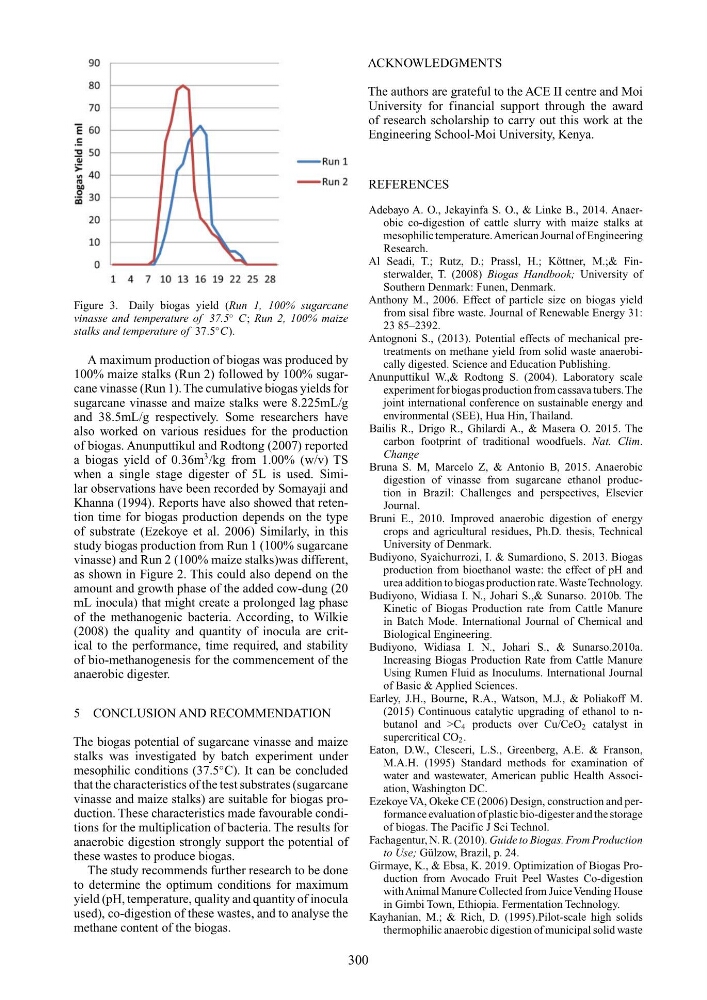
Figure 3. Daily biogas yield (Run 1, 100% sugarcane
vinasse and temperature of 37.5
◦ C; Run 2, 100% maize
stalks and temperature of 37.5
◦ C).
A maximum production of biogas was produced by
100% maize stalks (Run 2) followed by 100% sugarcane vinasse (Run 1). The cumulative biogas yields for
sugarcane vinasse and maize stalks were 8.225mL/g
and 38.5mL/g respectively. Some researchers have
also worked on various residues for the production
of biogas. Anunputtikul and Rodtong (2007) reported
a biogas yield of 0.36m
3 /kg from 1.00% (w/v) TS
when a single stage digester of 5L is used. Similar observations have been recorded by Somayaji and
Khanna (1994). Reports have also showed that retention time for biogas production depends on the type
of substrate (Ezekoye et al. 2006) Similarly, in this
study biogas production from Run 1 (100% sugarcane
vinasse) and Run 2 (100% maize stalks)was different,
as shown in Figure 2. This could also depend on the
amount and growth phase of the added cow-dung (20
mL inocula) that might create a prolonged lag phase
of the methanogenic bacteria. According, to Wilkie
(2008) the quality and quantity of inocula are critical to the performance, time required, and stability
of bio-methanogenesis for the commencement of the
anaerobic digester.
5 CONCLUSION AND RECOMMENDATION
The biogas potential of sugarcane vinasse and maize
stalks was investigated by batch experiment under
mesophilic conditions (37.5
◦ C). It can be concluded
that the characteristics of the test substrates (sugarcane
vinasse and maize stalks) are suitable for biogas production. These characteristics made favourable conditions for the multiplication of bacteria. The results for
anaerobic digestion strongly support the potential of
these wastes to produce biogas.
The study recommends further research to be done
to determine the optimum conditions for maximum
yield (pH, temperature, quality and quantity of inocula
used), co-digestion of these wastes, and to analyse the
methane content of the biogas.
ACKNOWLEDGMENTS
The authors are grateful to the ACE II centre and Moi
University for financial support through the award
of research scholarship to carry out this work at the
Engineering School-Moi University, Kenya.
REFERENCES
Adebayo A. O., Jekayinfa S. O., & Linke B., 2014. Anaerobic co-digestion of cattle slurry with maize stalks at
mesophilic temperature.American Journal of Engineering
Research.
Al Seadi, T.; Rutz, D.; Prassl, H.; Köttner, M.;& Finsterwalder, T. (2008) Biogas Handbook; University of
Southern Denmark: Funen, Denmark.
Anthony M., 2006. Effect of particle size on biogas yield
from sisal fibre waste. Journal of Renewable Energy 31:
23 85–2392.
Antognoni S., (2013). Potential effects of mechanical pretreatments on methane yield from solid waste anaerobically digested. Science and Education Publishing.
Anunputtikul W.,& Rodtong S. (2004). Laboratory scale
experiment for biogas production from cassava tubers.The
joint international conference on sustainable energy and
environmental (SEE), Hua Hin, Thailand.
Bailis R., Drigo R., Ghilardi A., & Masera O. 2015. The
carbon footprint of traditional woodfuels. Nat. Clim.
Change
Bruna S. M, Marcelo Z, & Antonio B, 2015. Anaerobic
digestion of vinasse from sugarcane ethanol production in Brazil: Challenges and perspectives, Elsevier
Journal.
Bruni E., 2010. Improved anaerobic digestion of energy
crops and agricultural residues, Ph.D. thesis, Technical
University of Denmark.
Budiyono, Syaichurrozi, I. & Sumardiono, S. 2013. Biogas
production from bioethanol waste: the effect of pH and
urea addition to biogas production rate. Waste Technology.
Budiyono, Widiasa I. N., Johari S.,& Sunarso. 2010b. The
Kinetic of Biogas Production rate from Cattle Manure
in Batch Mode. International Journal of Chemical and
Biological Engineering.
Budiyono, Widiasa I. N., Johari S., & Sunarso.2010a.
Increasing Biogas Production Rate from Cattle Manure
Using Rumen Fluid as Inoculums. International Journal
of Basic & Applied Sciences.
Earley, J.H., Bourne, R.A., Watson, M.J., & Poliakoff M.
(2015) Continuous catalytic upgrading of ethanol to nbutanol and >C 4 products over Cu/CeO 2 catalyst in
supercritical CO 2 .
Eaton, D.W., Clesceri, L.S., Greenberg, A.E. & Franson,
M.A.H. (1995) Standard methods for examination of
water and wastewater, American public Health Association, Washington DC.
Ezekoye VA, Okeke CE (2006) Design, construction and performance evaluation of plastic bio-digester and the storage
of biogas. The Pacific J Sci Technol.
Fachagentur, N. R. (2010). Guide to Biogas. From Production
to Use; Gülzow, Brazil, p. 24.
Girmaye, K., & Ebsa, K. 2019. Optimization of Biogas Production from Avocado Fruit Peel Wastes Co-digestion
with Animal Manure Collected from Juice Vending House
in Gimbi Town, Ethiopia. Fermentation Technology.
Kayhanian, M.; & Rich, D. (1995).Pilot-scale high solids
thermophilic anaerobic digestion of municipal solid waste
300
vinasse and temperature of 37.5
◦ C; Run 2, 100% maize
stalks and temperature of 37.5
◦ C).
A maximum production of biogas was produced by
100% maize stalks (Run 2) followed by 100% sugarcane vinasse (Run 1). The cumulative biogas yields for
sugarcane vinasse and maize stalks were 8.225mL/g
and 38.5mL/g respectively. Some researchers have
also worked on various residues for the production
of biogas. Anunputtikul and Rodtong (2007) reported
a biogas yield of 0.36m
3 /kg from 1.00% (w/v) TS
when a single stage digester of 5L is used. Similar observations have been recorded by Somayaji and
Khanna (1994). Reports have also showed that retention time for biogas production depends on the type
of substrate (Ezekoye et al. 2006) Similarly, in this
study biogas production from Run 1 (100% sugarcane
vinasse) and Run 2 (100% maize stalks)was different,
as shown in Figure 2. This could also depend on the
amount and growth phase of the added cow-dung (20
mL inocula) that might create a prolonged lag phase
of the methanogenic bacteria. According, to Wilkie
(2008) the quality and quantity of inocula are critical to the performance, time required, and stability
of bio-methanogenesis for the commencement of the
anaerobic digester.
5 CONCLUSION AND RECOMMENDATION
The biogas potential of sugarcane vinasse and maize
stalks was investigated by batch experiment under
mesophilic conditions (37.5
◦ C). It can be concluded
that the characteristics of the test substrates (sugarcane
vinasse and maize stalks) are suitable for biogas production. These characteristics made favourable conditions for the multiplication of bacteria. The results for
anaerobic digestion strongly support the potential of
these wastes to produce biogas.
The study recommends further research to be done
to determine the optimum conditions for maximum
yield (pH, temperature, quality and quantity of inocula
used), co-digestion of these wastes, and to analyse the
methane content of the biogas.
ACKNOWLEDGMENTS
The authors are grateful to the ACE II centre and Moi
University for financial support through the award
of research scholarship to carry out this work at the
Engineering School-Moi University, Kenya.
REFERENCES
Adebayo A. O., Jekayinfa S. O., & Linke B., 2014. Anaerobic co-digestion of cattle slurry with maize stalks at
mesophilic temperature.American Journal of Engineering
Research.
Al Seadi, T.; Rutz, D.; Prassl, H.; Köttner, M.;& Finsterwalder, T. (2008) Biogas Handbook; University of
Southern Denmark: Funen, Denmark.
Anthony M., 2006. Effect of particle size on biogas yield
from sisal fibre waste. Journal of Renewable Energy 31:
23 85–2392.
Antognoni S., (2013). Potential effects of mechanical pretreatments on methane yield from solid waste anaerobically digested. Science and Education Publishing.
Anunputtikul W.,& Rodtong S. (2004). Laboratory scale
experiment for biogas production from cassava tubers.The
joint international conference on sustainable energy and
environmental (SEE), Hua Hin, Thailand.
Bailis R., Drigo R., Ghilardi A., & Masera O. 2015. The
carbon footprint of traditional woodfuels. Nat. Clim.
Change
Bruna S. M, Marcelo Z, & Antonio B, 2015. Anaerobic
digestion of vinasse from sugarcane ethanol production in Brazil: Challenges and perspectives, Elsevier
Journal.
Bruni E., 2010. Improved anaerobic digestion of energy
crops and agricultural residues, Ph.D. thesis, Technical
University of Denmark.
Budiyono, Syaichurrozi, I. & Sumardiono, S. 2013. Biogas
production from bioethanol waste: the effect of pH and
urea addition to biogas production rate. Waste Technology.
Budiyono, Widiasa I. N., Johari S.,& Sunarso. 2010b. The
Kinetic of Biogas Production rate from Cattle Manure
in Batch Mode. International Journal of Chemical and
Biological Engineering.
Budiyono, Widiasa I. N., Johari S., & Sunarso.2010a.
Increasing Biogas Production Rate from Cattle Manure
Using Rumen Fluid as Inoculums. International Journal
of Basic & Applied Sciences.
Earley, J.H., Bourne, R.A., Watson, M.J., & Poliakoff M.
(2015) Continuous catalytic upgrading of ethanol to nbutanol and >C 4 products over Cu/CeO 2 catalyst in
supercritical CO 2 .
Eaton, D.W., Clesceri, L.S., Greenberg, A.E. & Franson,
M.A.H. (1995) Standard methods for examination of
water and wastewater, American public Health Association, Washington DC.
Ezekoye VA, Okeke CE (2006) Design, construction and performance evaluation of plastic bio-digester and the storage
of biogas. The Pacific J Sci Technol.
Fachagentur, N. R. (2010). Guide to Biogas. From Production
to Use; Gülzow, Brazil, p. 24.
Girmaye, K., & Ebsa, K. 2019. Optimization of Biogas Production from Avocado Fruit Peel Wastes Co-digestion
with Animal Manure Collected from Juice Vending House
in Gimbi Town, Ethiopia. Fermentation Technology.
Kayhanian, M.; & Rich, D. (1995).Pilot-scale high solids
thermophilic anaerobic digestion of municipal solid waste
300