

treatment can reduce organic matter to biogas that can
be used for heating for an evaporation and distillation
unit or can be saved for aerobic–anaerobic treatment.
Studies have established that maize stalks could be
used as raw material for anaerobic fermentation (Adebayo et al. 2014; Bruni 2010; Zhong et al. 2011). A
pretreatment process is required to decompose cellulose to reduce the volume of material and increase the
production of biogas (Antognoni et al. 2013). In UasinGishu county maize stalks are abundant since they are
left in the farms and even sometimes burned. These
practices cause harm to the environment. When the
maize stalks are left or burnt they cause air pollution.
The current study will also digest maize stalks.
3 MATERIALS AND METHODS
The test substrates consisted of maize stalks and sugarcane vinasse. Maize stalks was collected from the
farms in Uasin-Gishu County (Indany Kipsum farm)
during harvesting season and dried. The maize stalks
samples were milled and dried at ambient conditions to
average equilibrium moisture content of 10% (±1.5).
The vinasse was obtained from Muhoroni Sugar
Company, ethanol plant, collected in 20 litre plastic
containers and transported to the laboratory.
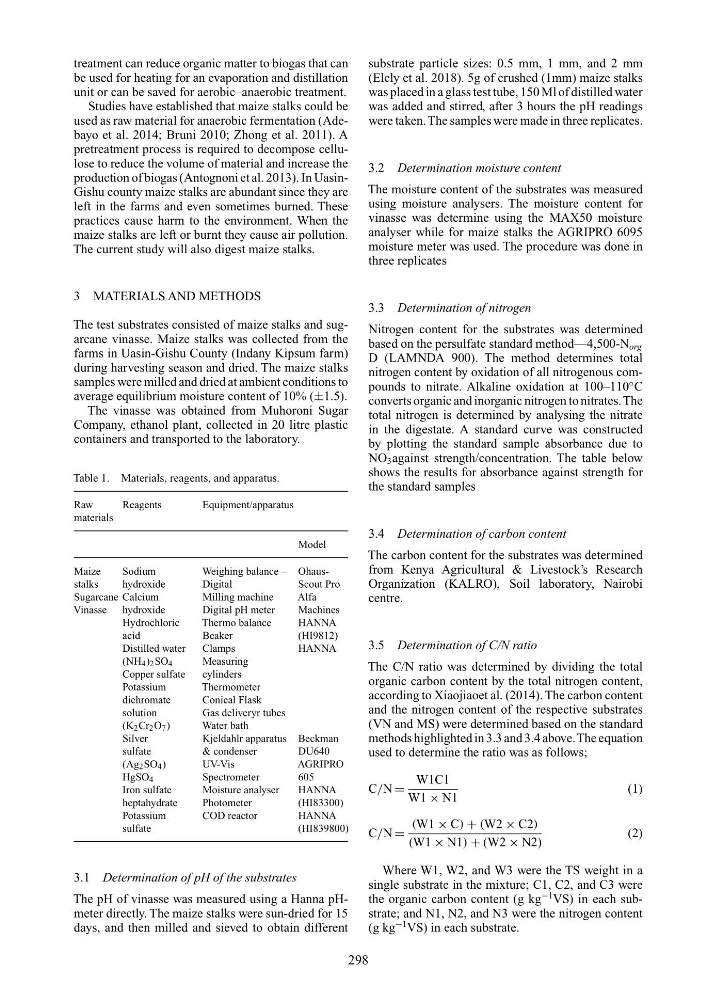
Table 1. Materials, reagents, and apparatus.
Raw
materials
Reagents
Equipment/apparatus
Model
Maize
stalks
Sugarcane
Vinasse
Sodium
hydroxide
Calcium
hydroxide
Hydrochloric
acid
Distilled water
(NH 4 ) 2 SO 4
Copper sulfate
Potassium
dichromate
solution
(K 2 Cr 2 O 7 )
Weighing balance –
Digital
Milling machine
Digital pH meter
Thermo balance
Beaker
Clamps
Measuring
cylinders
Thermometer
Conical Flask
Gas deliveryr tubes
Water bath
OhausScout Pro
Alfa
Machines
HANNA
(HI9812)
HANNA
Silver
sulfate
(Ag 2 SO 4 )
HgSO 4
Iron sulfate
heptahydrate
Potassium
sulfate
Kjeldahlr apparatus
& condenser
UV-Vis
Spectrometer
Moisture analyser
Photometer
COD reactor
Beckman
DU640
AGRIPRO
605
HANNA
(HI83300)
HANNA
(HI839800)
3.1 Determination of pH of the substrates
The pH of vinasse was measured using a Hanna pHmeter directly. The maize stalks were sun-dried for 15
days, and then milled and sieved to obtain different
substrate particle sizes: 0.5 mm, 1 mm, and 2 mm
(Elely et al. 2018). 5g of crushed (1mm) maize stalks
was placed in a glass test tube, 150 Ml of distilled water
was added and stirred, after 3 hours the pH readings
were taken. The samples were made in three replicates.
3.2 Determination moisture content
The moisture content of the substrates was measured
using moisture analysers. The moisture content for
vinasse was determine using the MAX50 moisture
analyser while for maize stalks the AGRIPRO 6095
moisture meter was used. The procedure was done in
three replicates
3.3 Determination of nitrogen
Nitrogen content for the substrates was determined
based on the persulfate standard method—4,500-N org
D (LAMNDA 900). The method determines total
nitrogen content by oxidation of all nitrogenous compounds to nitrate. Alkaline oxidation at 100–110
◦ C
converts organic and inorganic nitrogen to nitrates.The
total nitrogen is determined by analysing the nitrate
in the digestate. A standard curve was constructed
by plotting the standard sample absorbance due to
NO 3 against strength/concentration. The table below
shows the results for absorbance against strength for
the standard samples
3.4 Determination of carbon content
The carbon content for the substrates was determined
from Kenya Agricultural & Livestock’s Research
Organization (KALRO), Soil laboratory, Nairobi
centre.
3.5 Determination of C/N ratio
The C/N ratio was determined by dividing the total
organic carbon content by the total nitrogen content,
according to Xiaojiaoet al. (2014). The carbon content
and the nitrogen content of the respective substrates
(VN and MS) were determined based on the standard
methods highlighted in 3.3 and 3.4 above.The equation
used to determine the ratio was as follows;
C/N =
W1C1
W1 × N1
(1)
C/N =
(W1 × C) + (W2 × C2)
(W1 × N1) + (W2 × N2)
(2)
Where W1, W2, and W3 were the TS weight in a
single substrate in the mixture; C1, C2, and C3 were
the organic carbon content (g kg
−1 VS) in each substrate; and N1, N2, and N3 were the nitrogen content
(g kg
−1 VS) in each substrate.
298
be used for heating for an evaporation and distillation
unit or can be saved for aerobic–anaerobic treatment.
Studies have established that maize stalks could be
used as raw material for anaerobic fermentation (Adebayo et al. 2014; Bruni 2010; Zhong et al. 2011). A
pretreatment process is required to decompose cellulose to reduce the volume of material and increase the
production of biogas (Antognoni et al. 2013). In UasinGishu county maize stalks are abundant since they are
left in the farms and even sometimes burned. These
practices cause harm to the environment. When the
maize stalks are left or burnt they cause air pollution.
The current study will also digest maize stalks.
3 MATERIALS AND METHODS
The test substrates consisted of maize stalks and sugarcane vinasse. Maize stalks was collected from the
farms in Uasin-Gishu County (Indany Kipsum farm)
during harvesting season and dried. The maize stalks
samples were milled and dried at ambient conditions to
average equilibrium moisture content of 10% (±1.5).
The vinasse was obtained from Muhoroni Sugar
Company, ethanol plant, collected in 20 litre plastic
containers and transported to the laboratory.
Table 1. Materials, reagents, and apparatus.
Raw
materials
Reagents
Equipment/apparatus
Model
Maize
stalks
Sugarcane
Vinasse
Sodium
hydroxide
Calcium
hydroxide
Hydrochloric
acid
Distilled water
(NH 4 ) 2 SO 4
Copper sulfate
Potassium
dichromate
solution
(K 2 Cr 2 O 7 )
Weighing balance –
Digital
Milling machine
Digital pH meter
Thermo balance
Beaker
Clamps
Measuring
cylinders
Thermometer
Conical Flask
Gas deliveryr tubes
Water bath
OhausScout Pro
Alfa
Machines
HANNA
(HI9812)
HANNA
Silver
sulfate
(Ag 2 SO 4 )
HgSO 4
Iron sulfate
heptahydrate
Potassium
sulfate
Kjeldahlr apparatus
& condenser
UV-Vis
Spectrometer
Moisture analyser
Photometer
COD reactor
Beckman
DU640
AGRIPRO
605
HANNA
(HI83300)
HANNA
(HI839800)
3.1 Determination of pH of the substrates
The pH of vinasse was measured using a Hanna pHmeter directly. The maize stalks were sun-dried for 15
days, and then milled and sieved to obtain different
substrate particle sizes: 0.5 mm, 1 mm, and 2 mm
(Elely et al. 2018). 5g of crushed (1mm) maize stalks
was placed in a glass test tube, 150 Ml of distilled water
was added and stirred, after 3 hours the pH readings
were taken. The samples were made in three replicates.
3.2 Determination moisture content
The moisture content of the substrates was measured
using moisture analysers. The moisture content for
vinasse was determine using the MAX50 moisture
analyser while for maize stalks the AGRIPRO 6095
moisture meter was used. The procedure was done in
three replicates
3.3 Determination of nitrogen
Nitrogen content for the substrates was determined
based on the persulfate standard method—4,500-N org
D (LAMNDA 900). The method determines total
nitrogen content by oxidation of all nitrogenous compounds to nitrate. Alkaline oxidation at 100–110
◦ C
converts organic and inorganic nitrogen to nitrates.The
total nitrogen is determined by analysing the nitrate
in the digestate. A standard curve was constructed
by plotting the standard sample absorbance due to
NO 3 against strength/concentration. The table below
shows the results for absorbance against strength for
the standard samples
3.4 Determination of carbon content
The carbon content for the substrates was determined
from Kenya Agricultural & Livestock’s Research
Organization (KALRO), Soil laboratory, Nairobi
centre.
3.5 Determination of C/N ratio
The C/N ratio was determined by dividing the total
organic carbon content by the total nitrogen content,
according to Xiaojiaoet al. (2014). The carbon content
and the nitrogen content of the respective substrates
(VN and MS) were determined based on the standard
methods highlighted in 3.3 and 3.4 above.The equation
used to determine the ratio was as follows;
C/N =
W1C1
W1 × N1
(1)
C/N =
(W1 × C) + (W2 × C2)
(W1 × N1) + (W2 × N2)
(2)
Where W1, W2, and W3 were the TS weight in a
single substrate in the mixture; C1, C2, and C3 were
the organic carbon content (g kg
−1 VS) in each substrate; and N1, N2, and N3 were the nitrogen content
(g kg
−1 VS) in each substrate.
298