

thermochemical treatment using agents like air, steam,
oxygen, or carbon dioxide. The products of gasification include syngas, bio-oil, and biochar (Wang
& Wang 2019). Hydrothermal carbonization is carried out on a mixture of biomass and water. Thermal
composition is done at high temperature and pressure
resulting in hydrochar formation which has higher carbon content than biochar from processes using dry
biomass. Biochar can be modified by various methods
to enhance its adsorption ability. Alkaline treatment
with chemicals like NaOH, KOH, K 2 O, and K 2 CO 3
is among the most applied biochar modification processes (Jung et al. 2019). Other modification processes
include physical treatment with CO 2 and steam. It can
also be impregnated with amino compounds or other
surface modifying compounds to enhance the effectiveness as an adsorbent (Yang & Jiang 2014). The
adsorption properties of biochar depend on the type
of substrate and activation process. Biochar has been
used as an adsorbent in gases, soil, and water contaminates (Qian et al. 2015). Recently, it has been applied in
the removal of carbon dioxide from gases (Ding & Liu
2020). Its main advantages as a gas cleaning agent are
that it is cost-effective and easily available compared
to commercial adsorbents used in such applications.
Table 1 shows the use of biochar in the capture of
carbon dioxide.
Unmodified biochar has low adsorption capacity
of carbon dioxide with a range of 0.41–1.7 mmol/g.
However, this can be improved by the activation
and impregnation with metal compounds. Physical
adsorptions depend on the surface area pore volume
and the carbon dioxide interaction. The surface area
and pore size of biomass adsorbents are determined
by the feedstock, activation temperature, and residence time. Table 1 shows that biochar modified with
monoethanolamine has high carbon dioxide adsorption capacity. This is possibly because biochar adsorption capacity depends on its surface area and surface
chemistry. Monoethanolamine treatment of biochar
increases the content of nitrogen which improves the
alkalinity of the surface. Therefore, the increase in
Table 1. The summary of the capture of carbon dioxide using raw and modified biochar adsorbent.
Types of biochar
Modification
Biochar activation
CO 2 uptake
adsorbents
of biochar
temperature
mmol/g
Reference
Cotton wood
Mg
600
◦ C
1.4
(Creamer et al. 2016)
Sugarcane bagasse
Unmodified
600
◦ C
1.7
(Creamer et al. 2014)
See-weed porous
KOH
800
◦ C
1.05
(Ding & Liu 2020)
Palm kernel shells
Unmodified
500
◦ C
0.46
(Promraksa & Rakmak 2020)
Rambutan
Mg
–
1.7
(Zubbri et al. 2020)
Sawdust biochar
MEA
850
◦ C
10.7
(Madzaki et al. 2016)
Sewage sludge
Unmodified
500
◦ C
0.41
(Xu et al. 2016)
Wheat straw
Unmodified
500
◦ C
0.78
(Xu et al. 2016)
Pine sawdust
Steam activated
550
◦ C
0.73
(Igalavithana et al. 2020)
Hickory chips
Fe
–
3.64
(Xu et al. 2020)
Walnut shell
Mg
900
◦ C
1.9
(Lahijani et al. 2018)
HF-N-char
Pre-de-ashed
600
◦ C
1.8
(X. Zhang et al. 2015)
Note; MEA: monoethanolamine, HF-N-char: hydrofluoric pre de-ashed rice husk.
the basicity of the surface of adsorbent improves
the adsorption capacity of carbon dioxide. Generally,
chemical activation of biochar improves the adsorption capacity by increasing the surface area and total
pore size.
3.2 Activation of biomass plant
Activated carbon can be prepared from plant biomass
by physical and chemical activation. The quality of
adsorbent produced from biomass depends on the
types of feedstocks, pyrolysis temperature, and residence time (Dias et al. 2007). They affect the surface
area, micropore area, and micropore volume, which
are important in enhancing the adsorption capacity of
carbon dioxide. In addition, it depends on the chemical
agents used. The process of activating carbonaceous
material into activated carbon leads to an increase in
the surface area and the pore volume. Furthermore, it
enhances the degree of surface reactivity. Therefore,
the material is able to adsorb various adsorbates such
as carbon dioxide. Activated carbon adsorbents have
high adsorption capacity, despite their low cost. In
addition, their adsorption capacity can be improved
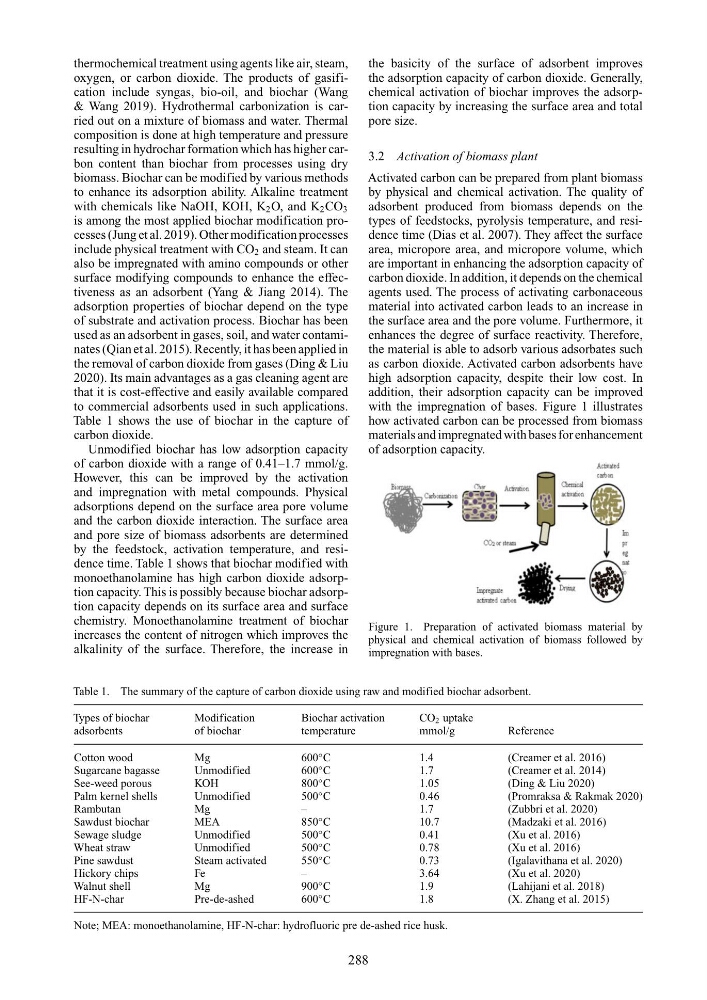
with the impregnation of bases. Figure 1 illustrates
how activated carbon can be processed from biomass
materials and impregnated with bases for enhancement
of adsorption capacity.
Figure 1. Preparation of activated biomass material by
physical and chemical activation of biomass followed by
impregnation with bases.
288
oxygen, or carbon dioxide. The products of gasification include syngas, bio-oil, and biochar (Wang
& Wang 2019). Hydrothermal carbonization is carried out on a mixture of biomass and water. Thermal
composition is done at high temperature and pressure
resulting in hydrochar formation which has higher carbon content than biochar from processes using dry
biomass. Biochar can be modified by various methods
to enhance its adsorption ability. Alkaline treatment
with chemicals like NaOH, KOH, K 2 O, and K 2 CO 3
is among the most applied biochar modification processes (Jung et al. 2019). Other modification processes
include physical treatment with CO 2 and steam. It can
also be impregnated with amino compounds or other
surface modifying compounds to enhance the effectiveness as an adsorbent (Yang & Jiang 2014). The
adsorption properties of biochar depend on the type
of substrate and activation process. Biochar has been
used as an adsorbent in gases, soil, and water contaminates (Qian et al. 2015). Recently, it has been applied in
the removal of carbon dioxide from gases (Ding & Liu
2020). Its main advantages as a gas cleaning agent are
that it is cost-effective and easily available compared
to commercial adsorbents used in such applications.
Table 1 shows the use of biochar in the capture of
carbon dioxide.
Unmodified biochar has low adsorption capacity
of carbon dioxide with a range of 0.41–1.7 mmol/g.
However, this can be improved by the activation
and impregnation with metal compounds. Physical
adsorptions depend on the surface area pore volume
and the carbon dioxide interaction. The surface area
and pore size of biomass adsorbents are determined
by the feedstock, activation temperature, and residence time. Table 1 shows that biochar modified with
monoethanolamine has high carbon dioxide adsorption capacity. This is possibly because biochar adsorption capacity depends on its surface area and surface
chemistry. Monoethanolamine treatment of biochar
increases the content of nitrogen which improves the
alkalinity of the surface. Therefore, the increase in
Table 1. The summary of the capture of carbon dioxide using raw and modified biochar adsorbent.
Types of biochar
Modification
Biochar activation
CO 2 uptake
adsorbents
of biochar
temperature
mmol/g
Reference
Cotton wood
Mg
600
◦ C
1.4
(Creamer et al. 2016)
Sugarcane bagasse
Unmodified
600
◦ C
1.7
(Creamer et al. 2014)
See-weed porous
KOH
800
◦ C
1.05
(Ding & Liu 2020)
Palm kernel shells
Unmodified
500
◦ C
0.46
(Promraksa & Rakmak 2020)
Rambutan
Mg
–
1.7
(Zubbri et al. 2020)
Sawdust biochar
MEA
850
◦ C
10.7
(Madzaki et al. 2016)
Sewage sludge
Unmodified
500
◦ C
0.41
(Xu et al. 2016)
Wheat straw
Unmodified
500
◦ C
0.78
(Xu et al. 2016)
Pine sawdust
Steam activated
550
◦ C
0.73
(Igalavithana et al. 2020)
Hickory chips
Fe
–
3.64
(Xu et al. 2020)
Walnut shell
Mg
900
◦ C
1.9
(Lahijani et al. 2018)
HF-N-char
Pre-de-ashed
600
◦ C
1.8
(X. Zhang et al. 2015)
Note; MEA: monoethanolamine, HF-N-char: hydrofluoric pre de-ashed rice husk.
the basicity of the surface of adsorbent improves
the adsorption capacity of carbon dioxide. Generally,
chemical activation of biochar improves the adsorption capacity by increasing the surface area and total
pore size.
3.2 Activation of biomass plant
Activated carbon can be prepared from plant biomass
by physical and chemical activation. The quality of
adsorbent produced from biomass depends on the
types of feedstocks, pyrolysis temperature, and residence time (Dias et al. 2007). They affect the surface
area, micropore area, and micropore volume, which
are important in enhancing the adsorption capacity of
carbon dioxide. In addition, it depends on the chemical
agents used. The process of activating carbonaceous
material into activated carbon leads to an increase in
the surface area and the pore volume. Furthermore, it
enhances the degree of surface reactivity. Therefore,
the material is able to adsorb various adsorbates such
as carbon dioxide. Activated carbon adsorbents have
high adsorption capacity, despite their low cost. In
addition, their adsorption capacity can be improved
with the impregnation of bases. Figure 1 illustrates
how activated carbon can be processed from biomass
materials and impregnated with bases for enhancement
of adsorption capacity.
Figure 1. Preparation of activated biomass material by
physical and chemical activation of biomass followed by
impregnation with bases.
288