

analysis of eucalyptus wood were comparable to those
reported by previous authors (Adem & Ambie, 2017)
in Ethiopia.
3.2 Performance evaluation of the improved
cookstove designed
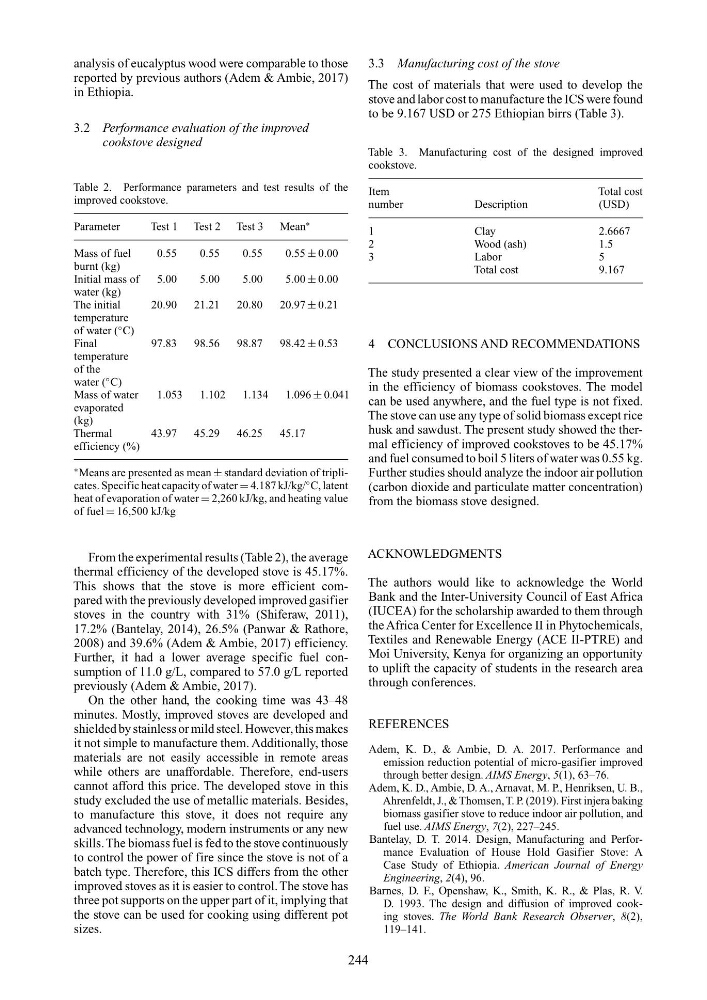
Table 2. Performance parameters and test results of the
improved cookstove.
Parameter
Test 1 Test 2 Test 3 Mean
∗
Mass of fuel
0.55
0.55
0.55
0.55 ± 0.00
burnt (kg)
Initial mass of
5.00
5.00
5.00
5.00 ± 0.00
water (kg)
The initial
20.90
21.21
20.80
20.97 ± 0.21
temperature
of water (
◦ C)
Final
97.83
98.56
98.87
98.42 ± 0.53
temperature
of the
water (
◦ C)
Mass of water
1.053
1.102
1.134
1.096 ± 0.041
evaporated
(kg)
Thermal
43.97
45.29
46.25
45.17
efficiency (%)
∗ Means are presented as mean ± standard deviation of triplicates. Specific heat capacity of water = 4.187 kJ/kg/
◦ C, latent
heat of evaporation of water = 2,260 kJ/kg, and heating value
of fuel = 16,500 kJ/kg
From the experimental results (Table 2), the average
thermal efficiency of the developed stove is 45.17%.
This shows that the stove is more efficient compared with the previously developed improved gasifier
stoves in the country with 31% (Shiferaw, 2011),
17.2% (Bantelay, 2014), 26.5% (Panwar & Rathore,
2008) and 39.6% (Adem & Ambie, 2017) efficiency.
Further, it had a lower average specific fuel consumption of 11.0 g/L, compared to 57.0 g/L reported
previously (Adem & Ambie, 2017).
On the other hand, the cooking time was 43–48
minutes. Mostly, improved stoves are developed and
shielded by stainless or mild steel. However, this makes
it not simple to manufacture them. Additionally, those
materials are not easily accessible in remote areas
while others are unaffordable. Therefore, end-users
cannot afford this price. The developed stove in this
study excluded the use of metallic materials. Besides,
to manufacture this stove, it does not require any
advanced technology, modern instruments or any new
skills. The biomass fuel is fed to the stove continuously
to control the power of fire since the stove is not of a
batch type. Therefore, this ICS differs from the other
improved stoves as it is easier to control. The stove has
three pot supports on the upper part of it, implying that
the stove can be used for cooking using different pot
sizes.
3.3 Manufacturing cost of the stove
The cost of materials that were used to develop the
stove and labor cost to manufacture the ICS were found
to be 9.167 USD or 275 Ethiopian birrs (Table 3).
Table 3. Manufacturing cost of the designed improved
cookstove.
Item
Total cost
number
Description
(USD)
1
Clay
2.6667
2
Wood (ash)
1.5
3
Labor
5
Total cost
9.167
4 CONCLUSIONS AND RECOMMENDATIONS
The study presented a clear view of the improvement
in the efficiency of biomass cookstoves. The model
can be used anywhere, and the fuel type is not fixed.
The stove can use any type of solid biomass except rice
husk and sawdust. The present study showed the thermal efficiency of improved cookstoves to be 45.17%
and fuel consumed to boil 5 liters of water was 0.55 kg.
Further studies should analyze the indoor air pollution
(carbon dioxide and particulate matter concentration)
from the biomass stove designed.
ACKNOWLEDGMENTS
The authors would like to acknowledge the World
Bank and the Inter-University Council of East Africa
(IUCEA) for the scholarship awarded to them through
the Africa Center for Excellence II in Phytochemicals,
Textiles and Renewable Energy (ACE II-PTRE) and
Moi University, Kenya for organizing an opportunity
to uplift the capacity of students in the research area
through conferences.
REFERENCES
Adem, K. D., & Ambie, D. A. 2017. Performance and
emission reduction potential of micro-gasifier improved
through better design. AIMS Energy, 5(1), 63–76.
Adem, K. D., Ambie, D. A., Arnavat, M. P., Henriksen, U. B.,
Ahrenfeldt, J., & Thomsen, T. P. (2019). First injera baking
biomass gasifier stove to reduce indoor air pollution, and
fuel use. AIMS Energy, 7(2), 227–245.
Bantelay, D. T. 2014. Design, Manufacturing and Performance Evaluation of House Hold Gasifier Stove: A
Case Study of Ethiopia. American Journal of Energy
Engineering, 2(4), 96.
Barnes, D. F., Openshaw, K., Smith, K. R., & Plas, R. V.
D. 1993. The design and diffusion of improved cooking stoves. The World Bank Research Observer, 8(2),
119–141.
244
reported by previous authors (Adem & Ambie, 2017)
in Ethiopia.
3.2 Performance evaluation of the improved
cookstove designed
Table 2. Performance parameters and test results of the
improved cookstove.
Parameter
Test 1 Test 2 Test 3 Mean
∗
Mass of fuel
0.55
0.55
0.55
0.55 ± 0.00
burnt (kg)
Initial mass of
5.00
5.00
5.00
5.00 ± 0.00
water (kg)
The initial
20.90
21.21
20.80
20.97 ± 0.21
temperature
of water (
◦ C)
Final
97.83
98.56
98.87
98.42 ± 0.53
temperature
of the
water (
◦ C)
Mass of water
1.053
1.102
1.134
1.096 ± 0.041
evaporated
(kg)
Thermal
43.97
45.29
46.25
45.17
efficiency (%)
∗ Means are presented as mean ± standard deviation of triplicates. Specific heat capacity of water = 4.187 kJ/kg/
◦ C, latent
heat of evaporation of water = 2,260 kJ/kg, and heating value
of fuel = 16,500 kJ/kg
From the experimental results (Table 2), the average
thermal efficiency of the developed stove is 45.17%.
This shows that the stove is more efficient compared with the previously developed improved gasifier
stoves in the country with 31% (Shiferaw, 2011),
17.2% (Bantelay, 2014), 26.5% (Panwar & Rathore,
2008) and 39.6% (Adem & Ambie, 2017) efficiency.
Further, it had a lower average specific fuel consumption of 11.0 g/L, compared to 57.0 g/L reported
previously (Adem & Ambie, 2017).
On the other hand, the cooking time was 43–48
minutes. Mostly, improved stoves are developed and
shielded by stainless or mild steel. However, this makes
it not simple to manufacture them. Additionally, those
materials are not easily accessible in remote areas
while others are unaffordable. Therefore, end-users
cannot afford this price. The developed stove in this
study excluded the use of metallic materials. Besides,
to manufacture this stove, it does not require any
advanced technology, modern instruments or any new
skills. The biomass fuel is fed to the stove continuously
to control the power of fire since the stove is not of a
batch type. Therefore, this ICS differs from the other
improved stoves as it is easier to control. The stove has
three pot supports on the upper part of it, implying that
the stove can be used for cooking using different pot
sizes.
3.3 Manufacturing cost of the stove
The cost of materials that were used to develop the
stove and labor cost to manufacture the ICS were found
to be 9.167 USD or 275 Ethiopian birrs (Table 3).
Table 3. Manufacturing cost of the designed improved
cookstove.
Item
Total cost
number
Description
(USD)
1
Clay
2.6667
2
Wood (ash)
1.5
3
Labor
5
Total cost
9.167
4 CONCLUSIONS AND RECOMMENDATIONS
The study presented a clear view of the improvement
in the efficiency of biomass cookstoves. The model
can be used anywhere, and the fuel type is not fixed.
The stove can use any type of solid biomass except rice
husk and sawdust. The present study showed the thermal efficiency of improved cookstoves to be 45.17%
and fuel consumed to boil 5 liters of water was 0.55 kg.
Further studies should analyze the indoor air pollution
(carbon dioxide and particulate matter concentration)
from the biomass stove designed.
ACKNOWLEDGMENTS
The authors would like to acknowledge the World
Bank and the Inter-University Council of East Africa
(IUCEA) for the scholarship awarded to them through
the Africa Center for Excellence II in Phytochemicals,
Textiles and Renewable Energy (ACE II-PTRE) and
Moi University, Kenya for organizing an opportunity
to uplift the capacity of students in the research area
through conferences.
REFERENCES
Adem, K. D., & Ambie, D. A. 2017. Performance and
emission reduction potential of micro-gasifier improved
through better design. AIMS Energy, 5(1), 63–76.
Adem, K. D., Ambie, D. A., Arnavat, M. P., Henriksen, U. B.,
Ahrenfeldt, J., & Thomsen, T. P. (2019). First injera baking
biomass gasifier stove to reduce indoor air pollution, and
fuel use. AIMS Energy, 7(2), 227–245.
Bantelay, D. T. 2014. Design, Manufacturing and Performance Evaluation of House Hold Gasifier Stove: A
Case Study of Ethiopia. American Journal of Energy
Engineering, 2(4), 96.
Barnes, D. F., Openshaw, K., Smith, K. R., & Plas, R. V.
D. 1993. The design and diffusion of improved cooking stoves. The World Bank Research Observer, 8(2),
119–141.
244