

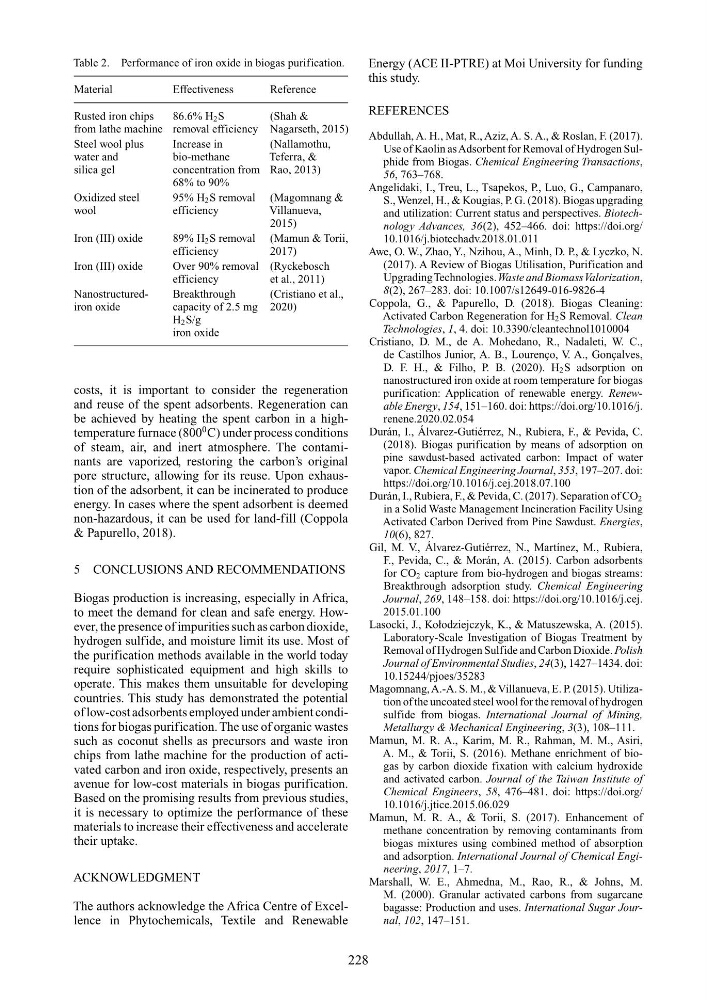
Table 2. Performance of iron oxide in biogas purification.
Material
Effectiveness
Reference
Rusted iron chips
86.6% H 2 S
(Shah &
from lathe machine removal efficiency Nagarseth, 2015)
Steel wool plus
Increase in
(Nallamothu,
water and
bio-methane
Teferra, &
silica gel
concentration from Rao, 2013)
68% to 90%
Oxidized steel
95% H 2 S removal (Magomnang &
wool
efficiency
Villanueva,
2015)
Iron (III) oxide
89% H 2 S removal (Mamun & Torii,
efficiency
2017)
Iron (III) oxide
Over 90% removal (Ryckebosch
efficiency
et al., 2011)
NanostructuredBreakthrough
(Cristiano et al.,
iron oxide
capacity of 2.5 mg 2020)
H 2 S/g
iron oxide
costs, it is important to consider the regeneration
and reuse of the spent adsorbents. Regeneration can
be achieved by heating the spent carbon in a hightemperature furnace (800
0 C) under process conditions
of steam, air, and inert atmosphere. The contaminants are vaporized, restoring the carbon’s original
pore structure, allowing for its reuse. Upon exhaustion of the adsorbent, it can be incinerated to produce
energy. In cases where the spent adsorbent is deemed
non-hazardous, it can be used for land-fill (Coppola
& Papurello, 2018).
5 CONCLUSIONS AND RECOMMENDATIONS
Biogas production is increasing, especially in Africa,
to meet the demand for clean and safe energy. However, the presence of impurities such as carbon dioxide,
hydrogen sulfide, and moisture limit its use. Most of
the purification methods available in the world today
require sophisticated equipment and high skills to
operate. This makes them unsuitable for developing
countries. This study has demonstrated the potential
of low-cost adsorbents employed under ambient conditions for biogas purification. The use of organic wastes
such as coconut shells as precursors and waste iron
chips from lathe machine for the production of activated carbon and iron oxide, respectively, presents an
avenue for low-cost materials in biogas purification.
Based on the promising results from previous studies,
it is necessary to optimize the performance of these
materials to increase their effectiveness and accelerate
their uptake.
ACKNOWLEDGMENT
The authors acknowledge the Africa Centre of Excellence in Phytochemicals, Textile and Renewable
Energy (ACE II-PTRE) at Moi University for funding
this study.
REFERENCES
Abdullah, A. H., Mat, R., Aziz, A. S. A., & Roslan, F. (2017).
Use of Kaolin as Adsorbent for Removal of Hydrogen Sulphide from Biogas. Chemical Engineering Transactions,
56, 763–768.
Angelidaki, I., Treu, L., Tsapekos, P., Luo, G., Campanaro,
S., Wenzel, H., & Kougias, P. G. (2018). Biogas upgrading
and utilization: Current status and perspectives. Biotechnology Advances, 36(2), 452–466. doi: https://doi.org/
10.1016/j.biotechadv.2018.01.011
Awe, O. W., Zhao, Y., Nzihou, A., Minh, D. P., & Lyczko, N.
(2017). A Review of Biogas Utilisation, Purification and
UpgradingTechnologies.Waste and BiomassValorization,
8(2), 267–283. doi: 10.1007/s12649-016-9826-4
Coppola, G., & Papurello, D. (2018). Biogas Cleaning:
Activated Carbon Regeneration for H 2 S Removal. Clean
Technologies, 1, 4. doi: 10.3390/cleantechnol1010004
Cristiano, D. M., de A. Mohedano, R., Nadaleti, W. C.,
de Castilhos Junior, A. B., Lourenço, V. A., Gonçalves,
D. F. H., & Filho, P. B. (2020). H 2 S adsorption on
nanostructured iron oxide at room temperature for biogas
purification: Application of renewable energy. Renewable Energy, 154, 151–160. doi: https://doi.org/10.1016/j.
renene.2020.02.054
Durán, I., Álvarez-Gutiérrez, N., Rubiera, F., & Pevida, C.
(2018). Biogas purification by means of adsorption on
pine sawdust-based activated carbon: Impact of water
vapor. Chemical Engineering Journal, 353, 197–207. doi:
https://doi.org/10.1016/j.cej.2018.07.100
Durán, I., Rubiera, F., & Pevida, C. (2017). Separation of CO 2
in a Solid Waste Management Incineration Facility Using
Activated Carbon Derived from Pine Sawdust. Energies,
10(6), 827.
Gil, M. V., Álvarez-Gutiérrez, N., Martínez, M., Rubiera,
F., Pevida, C., & Morán, A. (2015). Carbon adsorbents
for CO 2 capture from bio-hydrogen and biogas streams:
Breakthrough adsorption study. Chemical Engineering
Journal, 269, 148–158. doi: https://doi.org/10.1016/j.cej.
2015.01.100
Lasocki, J., Kołodziejczyk, K., & Matuszewska, A. (2015).
Laboratory-Scale Investigation of Biogas Treatment by
Removal of Hydrogen Sulfide and Carbon Dioxide. Polish
Journal of Environmental Studies, 24(3), 1427–1434. doi:
10.15244/pjoes/35283
Magomnang, A.-A. S. M., & Villanueva, E. P. (2015). Utilization of the uncoated steel wool for the removal of hydrogen
sulfide from biogas. International Journal of Mining,
Metallurgy & Mechanical Engineering, 3(3), 108–111.
Mamun, M. R. A., Karim, M. R., Rahman, M. M., Asiri,
A. M., & Torii, S. (2016). Methane enrichment of biogas by carbon dioxide fixation with calcium hydroxide
and activated carbon. Journal of the Taiwan Institute of
Chemical Engineers, 58, 476–481. doi: https://doi.org/
10.1016/j.jtice.2015.06.029
Mamun, M. R. A., & Torii, S. (2017). Enhancement of
methane concentration by removing contaminants from
biogas mixtures using combined method of absorption
and adsorption. International Journal of Chemical Engineering, 2017, 1–7.
Marshall, W. E., Ahmedna, M., Rao, R., & Johns, M.
M. (2000). Granular activated carbons from sugarcane
bagasse: Production and uses. International Sugar Journal, 102, 147–151.
228
Material
Effectiveness
Reference
Rusted iron chips
86.6% H 2 S
(Shah &
from lathe machine removal efficiency Nagarseth, 2015)
Steel wool plus
Increase in
(Nallamothu,
water and
bio-methane
Teferra, &
silica gel
concentration from Rao, 2013)
68% to 90%
Oxidized steel
95% H 2 S removal (Magomnang &
wool
efficiency
Villanueva,
2015)
Iron (III) oxide
89% H 2 S removal (Mamun & Torii,
efficiency
2017)
Iron (III) oxide
Over 90% removal (Ryckebosch
efficiency
et al., 2011)
NanostructuredBreakthrough
(Cristiano et al.,
iron oxide
capacity of 2.5 mg 2020)
H 2 S/g
iron oxide
costs, it is important to consider the regeneration
and reuse of the spent adsorbents. Regeneration can
be achieved by heating the spent carbon in a hightemperature furnace (800
0 C) under process conditions
of steam, air, and inert atmosphere. The contaminants are vaporized, restoring the carbon’s original
pore structure, allowing for its reuse. Upon exhaustion of the adsorbent, it can be incinerated to produce
energy. In cases where the spent adsorbent is deemed
non-hazardous, it can be used for land-fill (Coppola
& Papurello, 2018).
5 CONCLUSIONS AND RECOMMENDATIONS
Biogas production is increasing, especially in Africa,
to meet the demand for clean and safe energy. However, the presence of impurities such as carbon dioxide,
hydrogen sulfide, and moisture limit its use. Most of
the purification methods available in the world today
require sophisticated equipment and high skills to
operate. This makes them unsuitable for developing
countries. This study has demonstrated the potential
of low-cost adsorbents employed under ambient conditions for biogas purification. The use of organic wastes
such as coconut shells as precursors and waste iron
chips from lathe machine for the production of activated carbon and iron oxide, respectively, presents an
avenue for low-cost materials in biogas purification.
Based on the promising results from previous studies,
it is necessary to optimize the performance of these
materials to increase their effectiveness and accelerate
their uptake.
ACKNOWLEDGMENT
The authors acknowledge the Africa Centre of Excellence in Phytochemicals, Textile and Renewable
Energy (ACE II-PTRE) at Moi University for funding
this study.
REFERENCES
Abdullah, A. H., Mat, R., Aziz, A. S. A., & Roslan, F. (2017).
Use of Kaolin as Adsorbent for Removal of Hydrogen Sulphide from Biogas. Chemical Engineering Transactions,
56, 763–768.
Angelidaki, I., Treu, L., Tsapekos, P., Luo, G., Campanaro,
S., Wenzel, H., & Kougias, P. G. (2018). Biogas upgrading
and utilization: Current status and perspectives. Biotechnology Advances, 36(2), 452–466. doi: https://doi.org/
10.1016/j.biotechadv.2018.01.011
Awe, O. W., Zhao, Y., Nzihou, A., Minh, D. P., & Lyczko, N.
(2017). A Review of Biogas Utilisation, Purification and
UpgradingTechnologies.Waste and BiomassValorization,
8(2), 267–283. doi: 10.1007/s12649-016-9826-4
Coppola, G., & Papurello, D. (2018). Biogas Cleaning:
Activated Carbon Regeneration for H 2 S Removal. Clean
Technologies, 1, 4. doi: 10.3390/cleantechnol1010004
Cristiano, D. M., de A. Mohedano, R., Nadaleti, W. C.,
de Castilhos Junior, A. B., Lourenço, V. A., Gonçalves,
D. F. H., & Filho, P. B. (2020). H 2 S adsorption on
nanostructured iron oxide at room temperature for biogas
purification: Application of renewable energy. Renewable Energy, 154, 151–160. doi: https://doi.org/10.1016/j.
renene.2020.02.054
Durán, I., Álvarez-Gutiérrez, N., Rubiera, F., & Pevida, C.
(2018). Biogas purification by means of adsorption on
pine sawdust-based activated carbon: Impact of water
vapor. Chemical Engineering Journal, 353, 197–207. doi:
https://doi.org/10.1016/j.cej.2018.07.100
Durán, I., Rubiera, F., & Pevida, C. (2017). Separation of CO 2
in a Solid Waste Management Incineration Facility Using
Activated Carbon Derived from Pine Sawdust. Energies,
10(6), 827.
Gil, M. V., Álvarez-Gutiérrez, N., Martínez, M., Rubiera,
F., Pevida, C., & Morán, A. (2015). Carbon adsorbents
for CO 2 capture from bio-hydrogen and biogas streams:
Breakthrough adsorption study. Chemical Engineering
Journal, 269, 148–158. doi: https://doi.org/10.1016/j.cej.
2015.01.100
Lasocki, J., Kołodziejczyk, K., & Matuszewska, A. (2015).
Laboratory-Scale Investigation of Biogas Treatment by
Removal of Hydrogen Sulfide and Carbon Dioxide. Polish
Journal of Environmental Studies, 24(3), 1427–1434. doi:
10.15244/pjoes/35283
Magomnang, A.-A. S. M., & Villanueva, E. P. (2015). Utilization of the uncoated steel wool for the removal of hydrogen
sulfide from biogas. International Journal of Mining,
Metallurgy & Mechanical Engineering, 3(3), 108–111.
Mamun, M. R. A., Karim, M. R., Rahman, M. M., Asiri,
A. M., & Torii, S. (2016). Methane enrichment of biogas by carbon dioxide fixation with calcium hydroxide
and activated carbon. Journal of the Taiwan Institute of
Chemical Engineers, 58, 476–481. doi: https://doi.org/
10.1016/j.jtice.2015.06.029
Mamun, M. R. A., & Torii, S. (2017). Enhancement of
methane concentration by removing contaminants from
biogas mixtures using combined method of absorption
and adsorption. International Journal of Chemical Engineering, 2017, 1–7.
Marshall, W. E., Ahmedna, M., Rao, R., & Johns, M.
M. (2000). Granular activated carbons from sugarcane
bagasse: Production and uses. International Sugar Journal, 102, 147–151.
228