

reduces to almost 54% under co-adsorption of water
at high relative humidity conditions compared to dry
conditions (Inés Durán, Rubiera, & Pevida, 2017).
To improve the adsorption performance of activated
carbon, the preparation conditions have to be optimized. For instance, the addition of coal tar pitch
during the preparation process results in a high carbon
yield, a superior mechanical resistance and a competitive adsorption performance (Plaza, Durán, Rubiera,
& Pevida, 2015). Studies have shown that there is no
evidence of adsorption of methane on activated carbon. Also, theoretically CO 2 is acidic and polar, hence
it interacts with activated carbon. However, methane
molecules are completely neutral and have a regular
tetrahedral structure which favors a completely nonpolar structure. Therefore, methane is an inert material
toward the adsorption on activated carbon (Mamun &
Torii, 2017).
3.1.2 Performance of activated carbon in biogas
purification
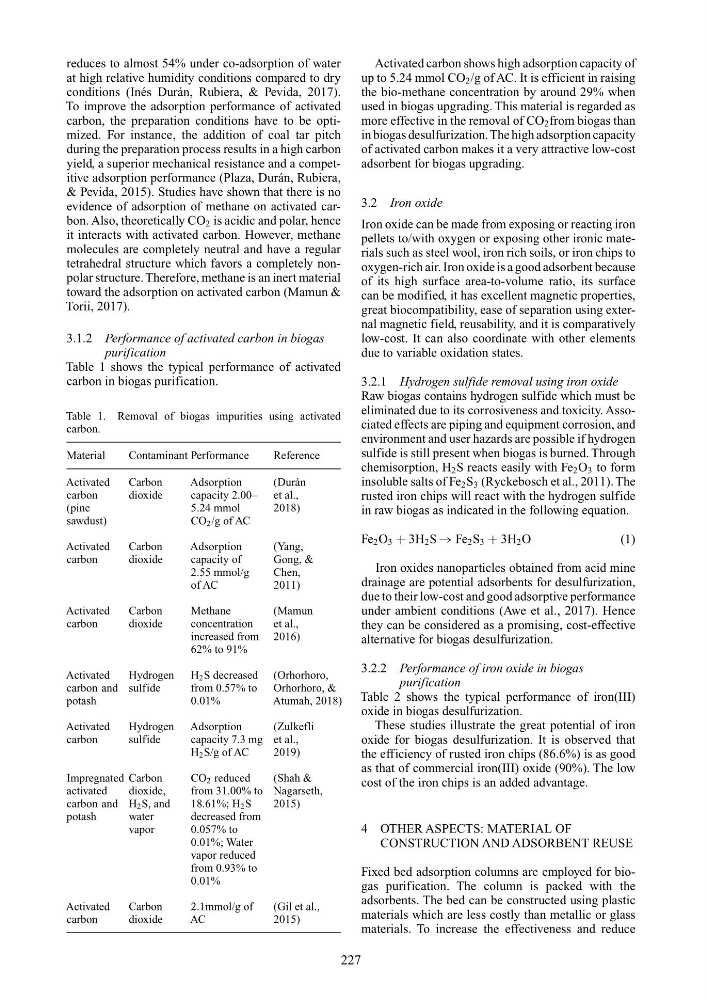
Table 1 shows the typical performance of activated
carbon in biogas purification.
Table 1. Removal of biogas impurities using activated
carbon.
Material
Contaminant Performance
Reference
Activated
carbon
(pine
sawdust)
Carbon
dioxide
Adsorption
capacity 2.00–
5.24 mmol
CO 2 /g of AC
(Durán
et al.,
2018)
Activated
carbon
Carbon
dioxide
Adsorption
capacity of
2.55 mmol/g
of AC
(Yang,
Gong, &
Chen,
2011)
Activated
carbon
Carbon
dioxide
Methane
concentration
increased from
62% to 91%
(Mamun
et al.,
2016)
Activated
carbon and
potash
Hydrogen
sulfide
H 2 S decreased
from 0.57% to
0.01%
(Orhorhoro,
Orhorhoro, &
Atumah, 2018)
Activated
carbon
Hydrogen
sulfide
Adsorption
capacity 7.3 mg
H 2 S/g of AC
(Zulkefli
et al.,
2019)
Impregnated
activated
carbon and
potash
Carbon
dioxide,
H 2 S, and
water
vapor
CO 2 reduced
from 31.00% to
18.61%; H 2 S
decreased from
0.057% to
0.01%; Water
vapor reduced
from 0.93% to
0.01%
(Shah &
Nagarseth,
2015)
Activated
carbon
Carbon
dioxide
2.1mmol/g of
AC
(Gil et al.,
2015)
Activated carbon shows high adsorption capacity of
up to 5.24 mmol CO 2 /g of AC. It is efficient in raising
the bio-methane concentration by around 29% when
used in biogas upgrading. This material is regarded as
more effective in the removal of CO 2 from biogas than
in biogas desulfurization.The high adsorption capacity
of activated carbon makes it a very attractive low-cost
adsorbent for biogas upgrading.
3.2 Iron oxide
Iron oxide can be made from exposing or reacting iron
pellets to/with oxygen or exposing other ironic materials such as steel wool, iron rich soils, or iron chips to
oxygen-rich air. Iron oxide is a good adsorbent because
of its high surface area-to-volume ratio, its surface
can be modified, it has excellent magnetic properties,
great biocompatibility, ease of separation using external magnetic field, reusability, and it is comparatively
low-cost. It can also coordinate with other elements
due to variable oxidation states.
3.2.1 Hydrogen sulfide removal using iron oxide
Raw biogas contains hydrogen sulfide which must be
eliminated due to its corrosiveness and toxicity. Associated effects are piping and equipment corrosion, and
environment and user hazards are possible if hydrogen
sulfide is still present when biogas is burned. Through
chemisorption, H 2 S reacts easily with Fe 2 O 3 to form
insoluble salts of Fe 2 S 3 (Ryckebosch et al., 2011). The
rusted iron chips will react with the hydrogen sulfide
in raw biogas as indicated in the following equation.
Fe 2 O 3 + 3H 2 S → Fe 2 S 3 + 3H 2 O
(1)
Iron oxides nanoparticles obtained from acid mine
drainage are potential adsorbents for desulfurization,
due to their low-cost and good adsorptive performance
under ambient conditions (Awe et al., 2017). Hence
they can be considered as a promising, cost-effective
alternative for biogas desulfurization.
3.2.2 Performance of iron oxide in biogas
purification
Table 2 shows the typical performance of iron(III)
oxide in biogas desulfurization.
These studies illustrate the great potential of iron
oxide for biogas desulfurization. It is observed that
the efficiency of rusted iron chips (86.6%) is as good
as that of commercial iron(III) oxide (90%). The low
cost of the iron chips is an added advantage.
4 OTHER ASPECTS: MATERIAL OF
CONSTRUCTION AND ADSORBENT REUSE
Fixed bed adsorption columns are employed for biogas purification. The column is packed with the
adsorbents. The bed can be constructed using plastic
materials which are less costly than metallic or glass
materials. To increase the effectiveness and reduce
227
at high relative humidity conditions compared to dry
conditions (Inés Durán, Rubiera, & Pevida, 2017).
To improve the adsorption performance of activated
carbon, the preparation conditions have to be optimized. For instance, the addition of coal tar pitch
during the preparation process results in a high carbon
yield, a superior mechanical resistance and a competitive adsorption performance (Plaza, Durán, Rubiera,
& Pevida, 2015). Studies have shown that there is no
evidence of adsorption of methane on activated carbon. Also, theoretically CO 2 is acidic and polar, hence
it interacts with activated carbon. However, methane
molecules are completely neutral and have a regular
tetrahedral structure which favors a completely nonpolar structure. Therefore, methane is an inert material
toward the adsorption on activated carbon (Mamun &
Torii, 2017).
3.1.2 Performance of activated carbon in biogas
purification
Table 1 shows the typical performance of activated
carbon in biogas purification.
Table 1. Removal of biogas impurities using activated
carbon.
Material
Contaminant Performance
Reference
Activated
carbon
(pine
sawdust)
Carbon
dioxide
Adsorption
capacity 2.00–
5.24 mmol
CO 2 /g of AC
(Durán
et al.,
2018)
Activated
carbon
Carbon
dioxide
Adsorption
capacity of
2.55 mmol/g
of AC
(Yang,
Gong, &
Chen,
2011)
Activated
carbon
Carbon
dioxide
Methane
concentration
increased from
62% to 91%
(Mamun
et al.,
2016)
Activated
carbon and
potash
Hydrogen
sulfide
H 2 S decreased
from 0.57% to
0.01%
(Orhorhoro,
Orhorhoro, &
Atumah, 2018)
Activated
carbon
Hydrogen
sulfide
Adsorption
capacity 7.3 mg
H 2 S/g of AC
(Zulkefli
et al.,
2019)
Impregnated
activated
carbon and
potash
Carbon
dioxide,
H 2 S, and
water
vapor
CO 2 reduced
from 31.00% to
18.61%; H 2 S
decreased from
0.057% to
0.01%; Water
vapor reduced
from 0.93% to
0.01%
(Shah &
Nagarseth,
2015)
Activated
carbon
Carbon
dioxide
2.1mmol/g of
AC
(Gil et al.,
2015)
Activated carbon shows high adsorption capacity of
up to 5.24 mmol CO 2 /g of AC. It is efficient in raising
the bio-methane concentration by around 29% when
used in biogas upgrading. This material is regarded as
more effective in the removal of CO 2 from biogas than
in biogas desulfurization.The high adsorption capacity
of activated carbon makes it a very attractive low-cost
adsorbent for biogas upgrading.
3.2 Iron oxide
Iron oxide can be made from exposing or reacting iron
pellets to/with oxygen or exposing other ironic materials such as steel wool, iron rich soils, or iron chips to
oxygen-rich air. Iron oxide is a good adsorbent because
of its high surface area-to-volume ratio, its surface
can be modified, it has excellent magnetic properties,
great biocompatibility, ease of separation using external magnetic field, reusability, and it is comparatively
low-cost. It can also coordinate with other elements
due to variable oxidation states.
3.2.1 Hydrogen sulfide removal using iron oxide
Raw biogas contains hydrogen sulfide which must be
eliminated due to its corrosiveness and toxicity. Associated effects are piping and equipment corrosion, and
environment and user hazards are possible if hydrogen
sulfide is still present when biogas is burned. Through
chemisorption, H 2 S reacts easily with Fe 2 O 3 to form
insoluble salts of Fe 2 S 3 (Ryckebosch et al., 2011). The
rusted iron chips will react with the hydrogen sulfide
in raw biogas as indicated in the following equation.
Fe 2 O 3 + 3H 2 S → Fe 2 S 3 + 3H 2 O
(1)
Iron oxides nanoparticles obtained from acid mine
drainage are potential adsorbents for desulfurization,
due to their low-cost and good adsorptive performance
under ambient conditions (Awe et al., 2017). Hence
they can be considered as a promising, cost-effective
alternative for biogas desulfurization.
3.2.2 Performance of iron oxide in biogas
purification
Table 2 shows the typical performance of iron(III)
oxide in biogas desulfurization.
These studies illustrate the great potential of iron
oxide for biogas desulfurization. It is observed that
the efficiency of rusted iron chips (86.6%) is as good
as that of commercial iron(III) oxide (90%). The low
cost of the iron chips is an added advantage.
4 OTHER ASPECTS: MATERIAL OF
CONSTRUCTION AND ADSORBENT REUSE
Fixed bed adsorption columns are employed for biogas purification. The column is packed with the
adsorbents. The bed can be constructed using plastic
materials which are less costly than metallic or glass
materials. To increase the effectiveness and reduce
227