

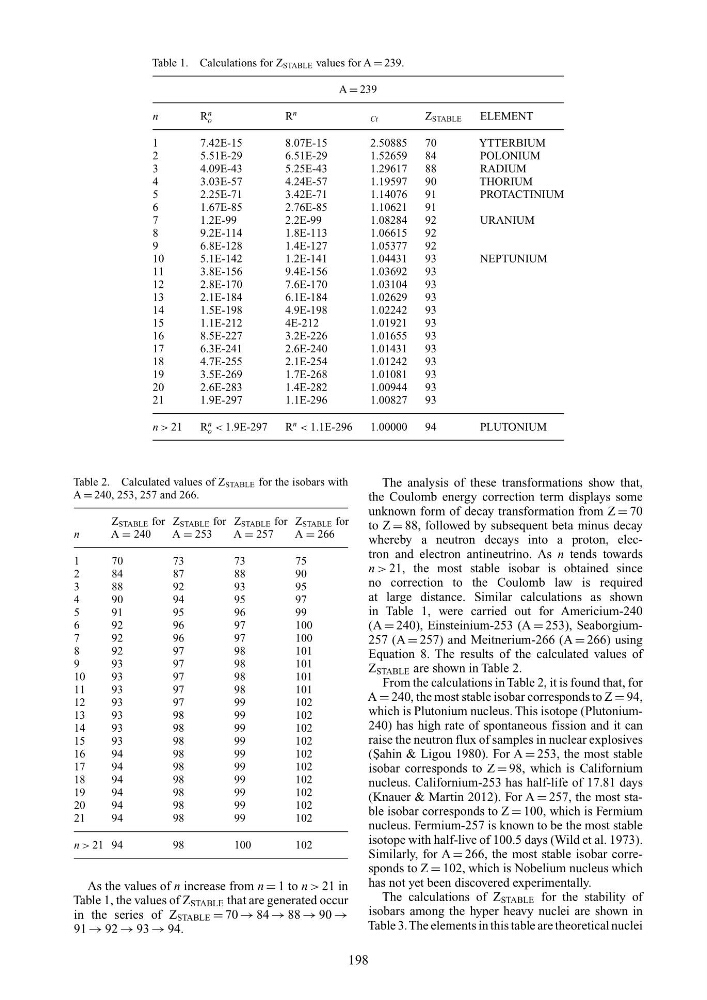
Table 1. Calculations for Z STABLE values for A = 239.
A = 239
n
R
n
o
R
n
Ct
Z STABLE
ELEMENT
1
7.42E-15
8.07E-15
2.50885
70
YTTERBIUM
2
5.51E-29
6.51E-29
1.52659
84
POLONIUM
3
4.09E-43
5.25E-43
1.29617
88
RADIUM
4
3.03E-57
4.24E-57
1.19597
90
THORIUM
5
2.25E-71
3.42E-71
1.14076
91
PROTACTINIUM
6
1.67E-85
2.76E-85
1.10621
91
7
1.2E-99
2.2E-99
1.08284
92
URANIUM
8
9.2E-114
1.8E-113
1.06615
92
9
6.8E-128
1.4E-127
1.05377
92
10
5.1E-142
1.2E-141
1.04431
93
NEPTUNIUM
11
3.8E-156
9.4E-156
1.03692
93
12
2.8E-170
7.6E-170
1.03104
93
13
2.1E-184
6.1E-184
1.02629
93
14
1.5E-198
4.9E-198
1.02242
93
15
1.1E-212
4E-212
1.01921
93
16
8.5E-227
3.2E-226
1.01655
93
17
6.3E-241
2.6E-240
1.01431
93
18
4.7E-255
2.1E-254
1.01242
93
19
3.5E-269
1.7E-268
1.01081
93
20
2.6E-283
1.4E-282
1.00944
93
21
1.9E-297
1.1E-296
1.00827
93
n > 21
R
n
o < 1.9E-297
R
n < 1.1E-296
1.00000
94
PLUTONIUM
Table 2. Calculated values of Z STABLE for the isobars with
A = 240, 253, 257 and 266.
Z STABLE for Z STABLE for Z STABLE for Z STABLE for
n
A = 240
A = 253
A = 257
A = 266
1
7 0
7 3
7 3
7 5
2
8 4
8 7
8 8
9 0
3
8 8
9 2
9 3
9 5
4
9 0
9 4
9 5
9 7
5
9 1
9 5
9 6
9 9
6
9 2
9 6
9 7
1 0 0
7
9 2
9 6
9 7
1 0 0
8
9 2
9 7
9 8
1 0 1
9
9 3
9 7
9 8
1 0 1
10
93
97
98
101
11
93
97
98
101
12
93
97
99
102
13
93
98
99
102
14
93
98
99
102
15
93
98
99
102
16
94
98
99
102
17
94
98
99
102
18
94
98
99
102
19
94
98
99
102
20
94
98
99
102
21
94
98
99
102
n > 21 94
98
100
102
As the values of n increase from n = 1 to n > 21 in
Table 1, the values of Z STABLE that are generated occur
in the series of Z STABLE = 70 → 84 → 88 → 90 →
91 → 92 → 93 → 94.
The analysis of these transformations show that,
the Coulomb energy correction term displays some
unknown form of decay transformation from Z = 70
to Z = 88, followed by subsequent beta minus decay
whereby a neutron decays into a proton, electron and electron antineutrino. As n tends towards
n > 21, the most stable isobar is obtained since
no correction to the Coulomb law is required
at large distance. Similar calculations as shown
in Table 1, were carried out for Americium-240
(A = 240), Einsteinium-253 (A = 253), Seaborgium257 (A = 257) and Meitnerium-266 (A = 266) using
Equation 8. The results of the calculated values of
Z STABLE are shown in Table 2.
From the calculations in Table 2, it is found that, for
A = 240, the most stable isobar corresponds to Z = 94,
which is Plutonium nucleus. This isotope (Plutonium240) has high rate of spontaneous fission and it can
raise the neutron flux of samples in nuclear explosives
(¸ Sahin & Ligou 1980). For A = 253, the most stable
isobar corresponds to Z = 98, which is Californium
nucleus. Californium-253 has half-life of 17.81 days
(Knauer & Martin 2012). For A = 257, the most stable isobar corresponds to Z = 100, which is Fermium
nucleus. Fermium-257 is known to be the most stable
isotope with half-live of 100.5 days (Wild et al. 1973).
Similarly, for A = 266, the most stable isobar corresponds to Z = 102, which is Nobelium nucleus which
has not yet been discovered experimentally.
The calculations of Z STABLE for the stability of
isobars among the hyper heavy nuclei are shown in
Table 3. The elements in this table are theoretical nuclei
198
A = 239
n
R
n
o
R
n
Ct
Z STABLE
ELEMENT
1
7.42E-15
8.07E-15
2.50885
70
YTTERBIUM
2
5.51E-29
6.51E-29
1.52659
84
POLONIUM
3
4.09E-43
5.25E-43
1.29617
88
RADIUM
4
3.03E-57
4.24E-57
1.19597
90
THORIUM
5
2.25E-71
3.42E-71
1.14076
91
PROTACTINIUM
6
1.67E-85
2.76E-85
1.10621
91
7
1.2E-99
2.2E-99
1.08284
92
URANIUM
8
9.2E-114
1.8E-113
1.06615
92
9
6.8E-128
1.4E-127
1.05377
92
10
5.1E-142
1.2E-141
1.04431
93
NEPTUNIUM
11
3.8E-156
9.4E-156
1.03692
93
12
2.8E-170
7.6E-170
1.03104
93
13
2.1E-184
6.1E-184
1.02629
93
14
1.5E-198
4.9E-198
1.02242
93
15
1.1E-212
4E-212
1.01921
93
16
8.5E-227
3.2E-226
1.01655
93
17
6.3E-241
2.6E-240
1.01431
93
18
4.7E-255
2.1E-254
1.01242
93
19
3.5E-269
1.7E-268
1.01081
93
20
2.6E-283
1.4E-282
1.00944
93
21
1.9E-297
1.1E-296
1.00827
93
n > 21
R
n
o < 1.9E-297
R
n < 1.1E-296
1.00000
94
PLUTONIUM
Table 2. Calculated values of Z STABLE for the isobars with
A = 240, 253, 257 and 266.
Z STABLE for Z STABLE for Z STABLE for Z STABLE for
n
A = 240
A = 253
A = 257
A = 266
1
7 0
7 3
7 3
7 5
2
8 4
8 7
8 8
9 0
3
8 8
9 2
9 3
9 5
4
9 0
9 4
9 5
9 7
5
9 1
9 5
9 6
9 9
6
9 2
9 6
9 7
1 0 0
7
9 2
9 6
9 7
1 0 0
8
9 2
9 7
9 8
1 0 1
9
9 3
9 7
9 8
1 0 1
10
93
97
98
101
11
93
97
98
101
12
93
97
99
102
13
93
98
99
102
14
93
98
99
102
15
93
98
99
102
16
94
98
99
102
17
94
98
99
102
18
94
98
99
102
19
94
98
99
102
20
94
98
99
102
21
94
98
99
102
n > 21 94
98
100
102
As the values of n increase from n = 1 to n > 21 in
Table 1, the values of Z STABLE that are generated occur
in the series of Z STABLE = 70 → 84 → 88 → 90 →
91 → 92 → 93 → 94.
The analysis of these transformations show that,
the Coulomb energy correction term displays some
unknown form of decay transformation from Z = 70
to Z = 88, followed by subsequent beta minus decay
whereby a neutron decays into a proton, electron and electron antineutrino. As n tends towards
n > 21, the most stable isobar is obtained since
no correction to the Coulomb law is required
at large distance. Similar calculations as shown
in Table 1, were carried out for Americium-240
(A = 240), Einsteinium-253 (A = 253), Seaborgium257 (A = 257) and Meitnerium-266 (A = 266) using
Equation 8. The results of the calculated values of
Z STABLE are shown in Table 2.
From the calculations in Table 2, it is found that, for
A = 240, the most stable isobar corresponds to Z = 94,
which is Plutonium nucleus. This isotope (Plutonium240) has high rate of spontaneous fission and it can
raise the neutron flux of samples in nuclear explosives
(¸ Sahin & Ligou 1980). For A = 253, the most stable
isobar corresponds to Z = 98, which is Californium
nucleus. Californium-253 has half-life of 17.81 days
(Knauer & Martin 2012). For A = 257, the most stable isobar corresponds to Z = 100, which is Fermium
nucleus. Fermium-257 is known to be the most stable
isotope with half-live of 100.5 days (Wild et al. 1973).
Similarly, for A = 266, the most stable isobar corresponds to Z = 102, which is Nobelium nucleus which
has not yet been discovered experimentally.
The calculations of Z STABLE for the stability of
isobars among the hyper heavy nuclei are shown in
Table 3. The elements in this table are theoretical nuclei
198