

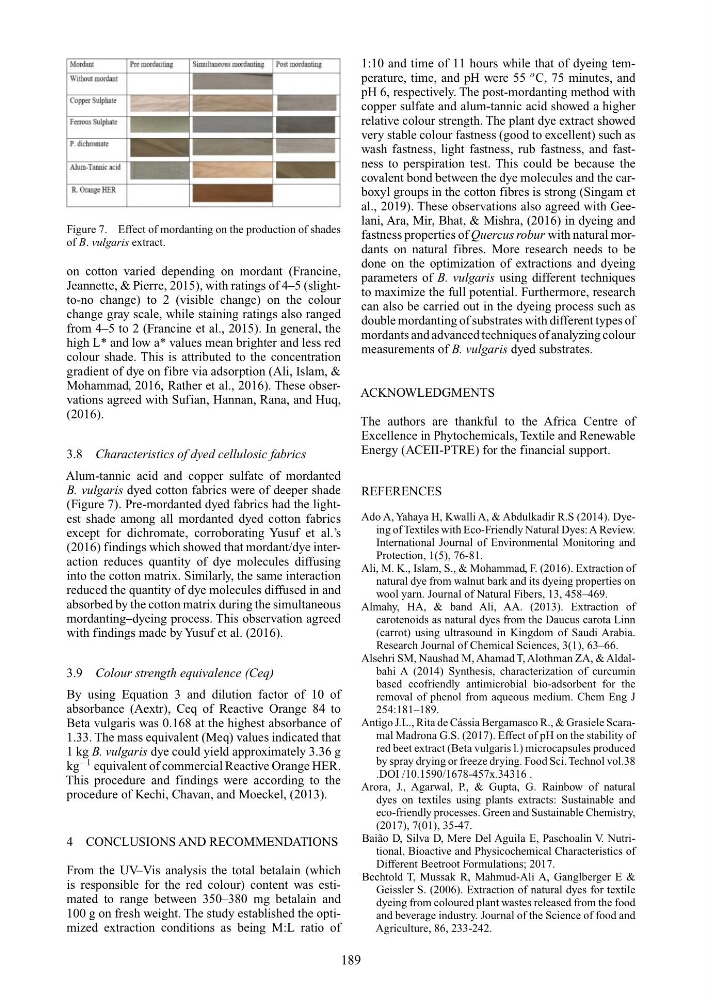
Figure 7. Effect of mordanting on the production of shades
of B. vulgaris extract.
on cotton varied depending on mordant (Francine,
Jeannette, & Pierre, 2015), with ratings of 4–5 (slightto-no change) to 2 (visible change) on the colour
change gray scale, while staining ratings also ranged
from 4–5 to 2 (Francine et al., 2015). In general, the
high L* and low a* values mean brighter and less red
colour shade. This is attributed to the concentration
gradient of dye on fibre via adsorption (Ali, Islam, &
Mohammad, 2016, Rather et al., 2016). These observations agreed with Sufian, Hannan, Rana, and Huq,
(2016).
3.8 Characteristics of dyed cellulosic fabrics
Alum-tannic acid and copper sulfate of mordanted
B. vulgaris dyed cotton fabrics were of deeper shade
(Figure 7). Pre-mordanted dyed fabrics had the lightest shade among all mordanted dyed cotton fabrics
except for dichromate, corroborating Yusuf et al.’s
(2016) findings which showed that mordant/dye interaction reduces quantity of dye molecules diffusing
into the cotton matrix. Similarly, the same interaction
reduced the quantity of dye molecules diffused in and
absorbed by the cotton matrix during the simultaneous
mordanting–dyeing process. This observation agreed
with findings made by Yusuf et al. (2016).
3.9 Colour strength equivalence (Ceq)
By using Equation 3 and dilution factor of 10 of
absorbance (Aextr), Ceq of Reactive Orange 84 to
Beta vulgaris was 0.168 at the highest absorbance of
1.33. The mass equivalent (Meq) values indicated that
1 kg B. vulgaris dye could yield approximately 3.36 g
kg
−1 equivalent of commercial Reactive Orange HER.
This procedure and findings were according to the
procedure of Kechi, Chavan, and Moeckel, (2013).
4 CONCLUSIONS AND RECOMMENDATIONS
From the UV–Vis analysis the total betalain (which
is responsible for the red colour) content was estimated to range between 350–380 mg betalain and
100 g on fresh weight. The study established the optimized extraction conditions as being M:L ratio of
1:10 and time of 11 hours while that of dyeing temperature, time, and pH were 55
o C, 75 minutes, and
pH 6, respectively. The post-mordanting method with
copper sulfate and alum-tannic acid showed a higher
relative colour strength. The plant dye extract showed
very stable colour fastness (good to excellent) such as
wash fastness, light fastness, rub fastness, and fastness to perspiration test. This could be because the
covalent bond between the dye molecules and the carboxyl groups in the cotton fibres is strong (Singam et
al., 2019). These observations also agreed with Geelani, Ara, Mir, Bhat, & Mishra, (2016) in dyeing and
fastness properties of Quercus robur with natural mordants on natural fibres. More research needs to be
done on the optimization of extractions and dyeing
parameters of B. vulgaris using different techniques
to maximize the full potential. Furthermore, research
can also be carried out in the dyeing process such as
double mordanting of substrates with different types of
mordants and advanced techniques of analyzing colour
measurements of B. vulgaris dyed substrates.
ACKNOWLEDGMENTS
The authors are thankful to the Africa Centre of
Excellence in Phytochemicals, Textile and Renewable
Energy (ACEII-PTRE) for the financial support.
REFERENCES
Ado A, Yahaya H, Kwalli A, & Abdulkadir R.S (2014). Dyeing of Textiles with Eco-Friendly Natural Dyes: A Review.
International Journal of Environmental Monitoring and
Protection, 1(5), 76-81.
Ali, M. K., Islam, S., & Mohammad, F. (2016). Extraction of
natural dye from walnut bark and its dyeing properties on
wool yarn. Journal of Natural Fibers, 13, 458–469.
Almahy, HA, & band Ali, AA. (2013). Extraction of
carotenoids as natural dyes from the Daucus carota Linn
(carrot) using ultrasound in Kingdom of Saudi Arabia.
Research Journal of Chemical Sciences, 3(1), 63–66.
Alsehri SM, Naushad M, Ahamad T, Alothman ZA, & Aldalbahi A (2014) Synthesis, characterization of curcumin
based ecofriendly antimicrobial bio-adsorbent for the
removal of phenol from aqueous medium. Chem Eng J
254:181–189.
Antigo J.L., Rita de Cássia Bergamasco R., & Grasiele Scaramal Madrona G.S. (2017). Effect of pH on the stability of
red beet extract (Beta vulgaris l.) microcapsules produced
by spray drying or freeze drying. Food Sci. Technol vol.38
.DOI /10.1590/1678-457x.34316 .
Arora, J., Agarwal, P., & Gupta, G. Rainbow of natural
dyes on textiles using plants extracts: Sustainable and
eco-friendly processes. Green and Sustainable Chemistry,
(2017), 7(01), 35-47.
Baião D, Silva D, Mere Del Aguila E, Paschoalin V. Nutritional, Bioactive and Physicochemical Characteristics of
Different Beetroot Formulations; 2017.
Bechtold T, Mussak R, Mahmud-Ali A, Ganglberger E &
Geissler S. (2006). Extraction of natural dyes for textile
dyeing from coloured plant wastes released from the food
and beverage industry. Journal of the Science of food and
Agriculture, 86, 233-242.
189
of B. vulgaris extract.
on cotton varied depending on mordant (Francine,
Jeannette, & Pierre, 2015), with ratings of 4–5 (slightto-no change) to 2 (visible change) on the colour
change gray scale, while staining ratings also ranged
from 4–5 to 2 (Francine et al., 2015). In general, the
high L* and low a* values mean brighter and less red
colour shade. This is attributed to the concentration
gradient of dye on fibre via adsorption (Ali, Islam, &
Mohammad, 2016, Rather et al., 2016). These observations agreed with Sufian, Hannan, Rana, and Huq,
(2016).
3.8 Characteristics of dyed cellulosic fabrics
Alum-tannic acid and copper sulfate of mordanted
B. vulgaris dyed cotton fabrics were of deeper shade
(Figure 7). Pre-mordanted dyed fabrics had the lightest shade among all mordanted dyed cotton fabrics
except for dichromate, corroborating Yusuf et al.’s
(2016) findings which showed that mordant/dye interaction reduces quantity of dye molecules diffusing
into the cotton matrix. Similarly, the same interaction
reduced the quantity of dye molecules diffused in and
absorbed by the cotton matrix during the simultaneous
mordanting–dyeing process. This observation agreed
with findings made by Yusuf et al. (2016).
3.9 Colour strength equivalence (Ceq)
By using Equation 3 and dilution factor of 10 of
absorbance (Aextr), Ceq of Reactive Orange 84 to
Beta vulgaris was 0.168 at the highest absorbance of
1.33. The mass equivalent (Meq) values indicated that
1 kg B. vulgaris dye could yield approximately 3.36 g
kg
−1 equivalent of commercial Reactive Orange HER.
This procedure and findings were according to the
procedure of Kechi, Chavan, and Moeckel, (2013).
4 CONCLUSIONS AND RECOMMENDATIONS
From the UV–Vis analysis the total betalain (which
is responsible for the red colour) content was estimated to range between 350–380 mg betalain and
100 g on fresh weight. The study established the optimized extraction conditions as being M:L ratio of
1:10 and time of 11 hours while that of dyeing temperature, time, and pH were 55
o C, 75 minutes, and
pH 6, respectively. The post-mordanting method with
copper sulfate and alum-tannic acid showed a higher
relative colour strength. The plant dye extract showed
very stable colour fastness (good to excellent) such as
wash fastness, light fastness, rub fastness, and fastness to perspiration test. This could be because the
covalent bond between the dye molecules and the carboxyl groups in the cotton fibres is strong (Singam et
al., 2019). These observations also agreed with Geelani, Ara, Mir, Bhat, & Mishra, (2016) in dyeing and
fastness properties of Quercus robur with natural mordants on natural fibres. More research needs to be
done on the optimization of extractions and dyeing
parameters of B. vulgaris using different techniques
to maximize the full potential. Furthermore, research
can also be carried out in the dyeing process such as
double mordanting of substrates with different types of
mordants and advanced techniques of analyzing colour
measurements of B. vulgaris dyed substrates.
ACKNOWLEDGMENTS
The authors are thankful to the Africa Centre of
Excellence in Phytochemicals, Textile and Renewable
Energy (ACEII-PTRE) for the financial support.
REFERENCES
Ado A, Yahaya H, Kwalli A, & Abdulkadir R.S (2014). Dyeing of Textiles with Eco-Friendly Natural Dyes: A Review.
International Journal of Environmental Monitoring and
Protection, 1(5), 76-81.
Ali, M. K., Islam, S., & Mohammad, F. (2016). Extraction of
natural dye from walnut bark and its dyeing properties on
wool yarn. Journal of Natural Fibers, 13, 458–469.
Almahy, HA, & band Ali, AA. (2013). Extraction of
carotenoids as natural dyes from the Daucus carota Linn
(carrot) using ultrasound in Kingdom of Saudi Arabia.
Research Journal of Chemical Sciences, 3(1), 63–66.
Alsehri SM, Naushad M, Ahamad T, Alothman ZA, & Aldalbahi A (2014) Synthesis, characterization of curcumin
based ecofriendly antimicrobial bio-adsorbent for the
removal of phenol from aqueous medium. Chem Eng J
254:181–189.
Antigo J.L., Rita de Cássia Bergamasco R., & Grasiele Scaramal Madrona G.S. (2017). Effect of pH on the stability of
red beet extract (Beta vulgaris l.) microcapsules produced
by spray drying or freeze drying. Food Sci. Technol vol.38
.DOI /10.1590/1678-457x.34316 .
Arora, J., Agarwal, P., & Gupta, G. Rainbow of natural
dyes on textiles using plants extracts: Sustainable and
eco-friendly processes. Green and Sustainable Chemistry,
(2017), 7(01), 35-47.
Baião D, Silva D, Mere Del Aguila E, Paschoalin V. Nutritional, Bioactive and Physicochemical Characteristics of
Different Beetroot Formulations; 2017.
Bechtold T, Mussak R, Mahmud-Ali A, Ganglberger E &
Geissler S. (2006). Extraction of natural dyes for textile
dyeing from coloured plant wastes released from the food
and beverage industry. Journal of the Science of food and
Agriculture, 86, 233-242.
189