

Repellent activity
The repellent effects of the acetonic essential oils
against maize and bean weevils were evaluated using
the modified area preference method (Omara et al.,
2018). The test area consisted of a filter paper cut
into two halves. Petri dishes (9 cm in diameter) were
used to confine the weevils during the experiment. The
crude essential oil was diluted in 1 ml of acetone to
four concentrations (2µL, 4µL, 6µL and 8µL). Acetone was used as the control. The filter paper was
cut into half and 500 µL of each concentration was
applied separately to half of the filter paper as uniformly as possible with a micropipette. The other half
(control) was treated with 500 µL of acetone. Both
halves were left for 5 minutes for acetone to evaporate.
The treated and control halves were attached together
using adhesive tapes and placed in petri dishes.
Counted 10 adult weevils were released at the center
of each filter paper and the petri dishes covered and
kept in an incubator at 27 ± 2 C and observations made
on the number of insects present on both the treated
and untreated halves and then recorded every after 30
minutes for 2.5 hours of exposure. The experiment was
repeated thrice using both maize and bean weevils. The
number of insects present on the control and treated
areas of the filter paper were recorded every after 30
minutes for 24 hours of exposure.
Percentage repellency (PR) of the essential oils was
calculated using Equation 1 (Abdelghany, Awadalla,
Abdel-Baky, El-Syrafi, & Fields, 2010; Omara et al.,
2018).
PR =
N c − N t
N c + N c
x100
(2)
From which N c is number of insects on control
experiment and N t is number of insects on treated areas
of the filter paper.
2.3 Statistical analysis
Data obtained from each dose-response bioassay were
subjected to probit analysis (Finney, 1971) in which
probit-transformed mortality was regressed against
log 10 transformed doses. Median lethal concentration (LC 50 ) was determined from the linear regression
equation using the intercept and slope generated. Analyses were performed using Minitab statistical software
(version 17, Minitab Inc., USA) and Microsoft Excel
365 (Microsoft Corporation, USA) at 95% confidence
interval.
3 RESULTS AND DISCUSSION
The essential oil was a pale-yellow liquid with a
strong aroma. The mean yield of the oils was 0.33%
(v/w). This is comparable to 0.02-1.0% reported for
fresh needles of P. caribaea by Sonibare and Olakunle
(2008), Chowdhury et al. (2008) and Moronkola et al.
(2009). A total of 39 compounds were identified and
quantified, representing 95.6% of the essential oils
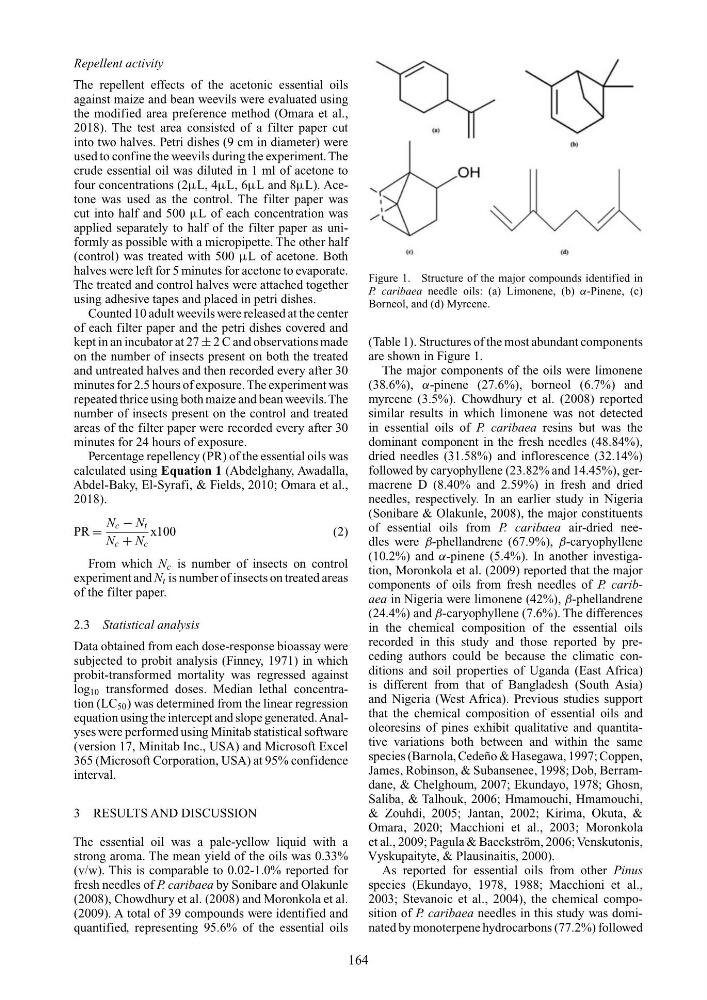
Figure 1. Structure of the major compounds identified in
P. caribaea needle oils: (a) Limonene, (b) α-Pinene, (c)
Borneol, and (d) Myrcene.
(Table 1). Structures of the most abundant components
are shown in Figure 1.
The major components of the oils were limonene
(38.6%), α-pinene (27.6%), borneol (6.7%) and
myrcene (3.5%). Chowdhury et al. (2008) reported
similar results in which limonene was not detected
in essential oils of P. caribaea resins but was the
dominant component in the fresh needles (48.84%),
dried needles (31.58%) and inflorescence (32.14%)
followed by caryophyllene (23.82% and 14.45%), germacrene D (8.40% and 2.59%) in fresh and dried
needles, respectively. In an earlier study in Nigeria
(Sonibare & Olakunle, 2008), the major constituents
of essential oils from P. caribaea air-dried needles were β-phellandrene (67.9%), β-caryophyllene
(10.2%) and α-pinene (5.4%). In another investigation, Moronkola et al. (2009) reported that the major
components of oils from fresh needles of P. caribaea in Nigeria were limonene (42%), β-phellandrene
(24.4%) and β-caryophyllene (7.6%). The differences
in the chemical composition of the essential oils
recorded in this study and those reported by preceding authors could be because the climatic conditions and soil properties of Uganda (East Africa)
is different from that of Bangladesh (South Asia)
and Nigeria (West Africa). Previous studies support
that the chemical composition of essential oils and
oleoresins of pines exhibit qualitative and quantitative variations both between and within the same
species (Barnola, Cedeño & Hasegawa, 1997; Coppen,
James, Robinson, & Subansenee, 1998; Dob, Berramdane, & Chelghoum, 2007; Ekundayo, 1978; Ghosn,
Saliba, & Talhouk, 2006; Hmamouchi, Hmamouchi,
& Zouhdi, 2005; Jantan, 2002; Kirima, Okuta, &
Omara, 2020; Macchioni et al., 2003; Moronkola
et al., 2009; Pagula & Baeckström, 2006; Venskutonis,
Vyskupaityte, & Plausinaitis, 2000).
As reported for essential oils from other Pinus
species (Ekundayo, 1978, 1988; Macchioni et al.,
2003; Stevanoic et al., 2004), the chemical composition of P. caribaea needles in this study was dominated by monoterpene hydrocarbons (77.2%) followed
164
The repellent effects of the acetonic essential oils
against maize and bean weevils were evaluated using
the modified area preference method (Omara et al.,
2018). The test area consisted of a filter paper cut
into two halves. Petri dishes (9 cm in diameter) were
used to confine the weevils during the experiment. The
crude essential oil was diluted in 1 ml of acetone to
four concentrations (2µL, 4µL, 6µL and 8µL). Acetone was used as the control. The filter paper was
cut into half and 500 µL of each concentration was
applied separately to half of the filter paper as uniformly as possible with a micropipette. The other half
(control) was treated with 500 µL of acetone. Both
halves were left for 5 minutes for acetone to evaporate.
The treated and control halves were attached together
using adhesive tapes and placed in petri dishes.
Counted 10 adult weevils were released at the center
of each filter paper and the petri dishes covered and
kept in an incubator at 27 ± 2 C and observations made
on the number of insects present on both the treated
and untreated halves and then recorded every after 30
minutes for 2.5 hours of exposure. The experiment was
repeated thrice using both maize and bean weevils. The
number of insects present on the control and treated
areas of the filter paper were recorded every after 30
minutes for 24 hours of exposure.
Percentage repellency (PR) of the essential oils was
calculated using Equation 1 (Abdelghany, Awadalla,
Abdel-Baky, El-Syrafi, & Fields, 2010; Omara et al.,
2018).
PR =
N c − N t
N c + N c
x100
(2)
From which N c is number of insects on control
experiment and N t is number of insects on treated areas
of the filter paper.
2.3 Statistical analysis
Data obtained from each dose-response bioassay were
subjected to probit analysis (Finney, 1971) in which
probit-transformed mortality was regressed against
log 10 transformed doses. Median lethal concentration (LC 50 ) was determined from the linear regression
equation using the intercept and slope generated. Analyses were performed using Minitab statistical software
(version 17, Minitab Inc., USA) and Microsoft Excel
365 (Microsoft Corporation, USA) at 95% confidence
interval.
3 RESULTS AND DISCUSSION
The essential oil was a pale-yellow liquid with a
strong aroma. The mean yield of the oils was 0.33%
(v/w). This is comparable to 0.02-1.0% reported for
fresh needles of P. caribaea by Sonibare and Olakunle
(2008), Chowdhury et al. (2008) and Moronkola et al.
(2009). A total of 39 compounds were identified and
quantified, representing 95.6% of the essential oils
Figure 1. Structure of the major compounds identified in
P. caribaea needle oils: (a) Limonene, (b) α-Pinene, (c)
Borneol, and (d) Myrcene.
(Table 1). Structures of the most abundant components
are shown in Figure 1.
The major components of the oils were limonene
(38.6%), α-pinene (27.6%), borneol (6.7%) and
myrcene (3.5%). Chowdhury et al. (2008) reported
similar results in which limonene was not detected
in essential oils of P. caribaea resins but was the
dominant component in the fresh needles (48.84%),
dried needles (31.58%) and inflorescence (32.14%)
followed by caryophyllene (23.82% and 14.45%), germacrene D (8.40% and 2.59%) in fresh and dried
needles, respectively. In an earlier study in Nigeria
(Sonibare & Olakunle, 2008), the major constituents
of essential oils from P. caribaea air-dried needles were β-phellandrene (67.9%), β-caryophyllene
(10.2%) and α-pinene (5.4%). In another investigation, Moronkola et al. (2009) reported that the major
components of oils from fresh needles of P. caribaea in Nigeria were limonene (42%), β-phellandrene
(24.4%) and β-caryophyllene (7.6%). The differences
in the chemical composition of the essential oils
recorded in this study and those reported by preceding authors could be because the climatic conditions and soil properties of Uganda (East Africa)
is different from that of Bangladesh (South Asia)
and Nigeria (West Africa). Previous studies support
that the chemical composition of essential oils and
oleoresins of pines exhibit qualitative and quantitative variations both between and within the same
species (Barnola, Cedeño & Hasegawa, 1997; Coppen,
James, Robinson, & Subansenee, 1998; Dob, Berramdane, & Chelghoum, 2007; Ekundayo, 1978; Ghosn,
Saliba, & Talhouk, 2006; Hmamouchi, Hmamouchi,
& Zouhdi, 2005; Jantan, 2002; Kirima, Okuta, &
Omara, 2020; Macchioni et al., 2003; Moronkola
et al., 2009; Pagula & Baeckström, 2006; Venskutonis,
Vyskupaityte, & Plausinaitis, 2000).
As reported for essential oils from other Pinus
species (Ekundayo, 1978, 1988; Macchioni et al.,
2003; Stevanoic et al., 2004), the chemical composition of P. caribaea needles in this study was dominated by monoterpene hydrocarbons (77.2%) followed
164