

Scopeman Digital Microscope (Herter Instruments,
Barcelona, Spain). Five specimens were prepared and
analysed.
2.7 Evaluation of water absorption
The water absorption test was done according to
ASTM D 570–98 standard. The test specimens were in
the form of discs 50 mm in diameter and 6.23 mm in
thickness. The specimens were oven dried at 105
◦ C for
1 hour and then placed in a container of distilled water
maintained at a temperature of 23 ± 1
◦ C, to rest on
edge and entirely immersed. At the end of 0, 12 and 24
hours, the specimens were removed from the water one
at a time, all surface water wiped off with a dry cloth,
and weighed to the nearest 0.001g immediately. The
percentage increase in weight during immersion, was
calculated to the nearest 0.01%. In the current study,
the specimens were prepared and analysed at least in
triplicate.
3 RESULTS AND DISCUSSION
3.1 Properties of the treated and untreated
calotropis bast fibres
The average linear density for untreated Calotropis
procera bast fibres was found to be 18.08 ± 6.42 Tex
while those of alkalitreated Calotropis procera bast
fibres in 1% w/v, 3% w/v and 5% w/v sodium hydroxide solution for 1 hour, 2 hours and 3 hours exhibited
a reduction in linear densities. The higher mean linear density was recorded for the fibres treated at 1%
w/v for 1 hour (15.21 ± 3.22 Tex) while the lowest was the fibres treated in 5% w/v solution for 3
hours (11.91 ± 4.51 Tex). The linear densities for the
Calotropis procera fibres irradiation were found to
be higher than those of alkalinetreated fibres with the
higher value obtained from those exposed to radiation
of 119 watts power for 2 minutes (17.26 ± 5.31 Tex)
while the lowest was recorded for microwavetreated
fibres at 385 watts for 2 minutes (13.78 ± 4.29 Tex). It
was observed that fibres treated by microwave irradiation at 385 watts for 8 minutes were entirely damaged
and were discarded for they could not be analysed.
These variations and differences could be ascribed to
the exposure of the inner central lumen of the fibre
which may affect the fibre and reduction in fibre diameter due to the loss of weight due to the removal of
carbonaceous materials after treatment (Imoisili et al.,
2018; Raghu & Goud, 2019)
The tenacity (in cN/Tex) of the treated and untreated
Calotropis procera bast fibres were also determined
and the mean tenacity of the untreated Calotropis procera bast fibres was found to be 37.88 cN/Tex. The
highest mean tenacity of 72.06 cN/Tex was recorded
for Calotropis procera bast fibres treated in 5% w/v
alkali solution for 1 hour while the lowest mean
tenacity of 28.79 cN/Tex was recorded for Calotropis
procera bast fibres treated in 5% w/v alkali solution
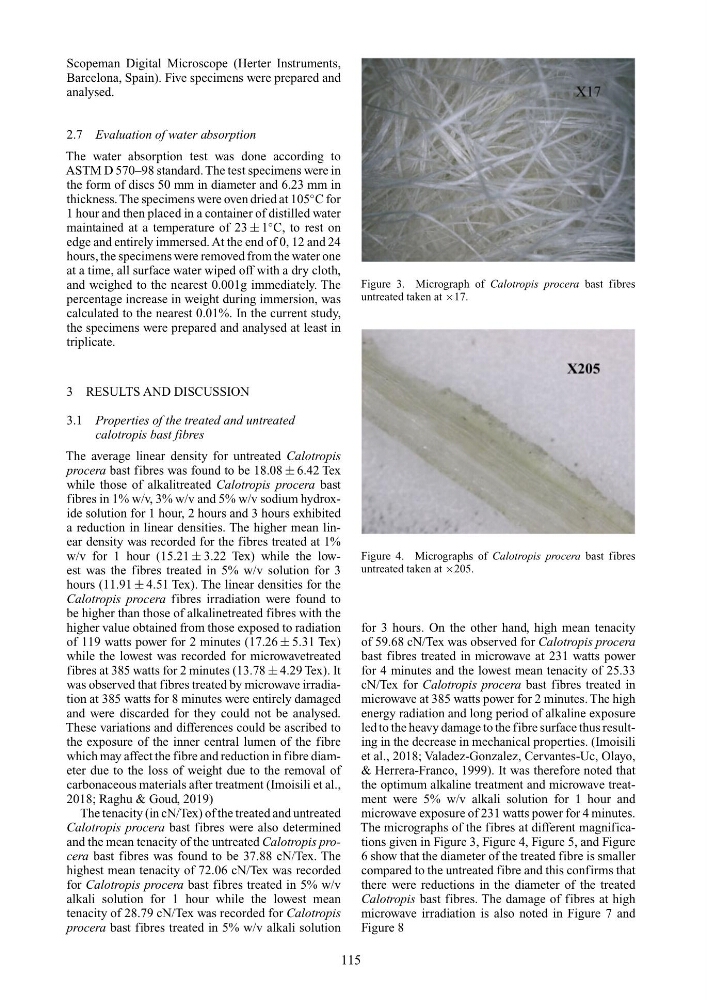
Figure 3. Micrograph of Calotropis procera bast fibres
untreated taken at ×17.
Figure 4. Micrographs of Calotropis procera bast fibres
untreated taken at ×205.
for 3 hours. On the other hand, high mean tenacity
of 59.68 cN/Tex was observed for Calotropis procera
bast fibres treated in microwave at 231 watts power
for 4 minutes and the lowest mean tenacity of 25.33
cN/Tex for Calotropis procera bast fibres treated in
microwave at 385 watts power for 2 minutes. The high
energy radiation and long period of alkaline exposure
led to the heavy damage to the fibre surface thus resulting in the decrease in mechanical properties. (Imoisili
et al., 2018; Valadez-Gonzalez, Cervantes-Uc, Olayo,
& Herrera-Franco, 1999). It was therefore noted that
the optimum alkaline treatment and microwave treatment were 5% w/v alkali solution for 1 hour and
microwave exposure of 231 watts power for 4 minutes.
The micrographs of the fibres at different magnifications given in Figure 3, Figure 4, Figure 5, and Figure
6 show that the diameter of the treated fibre is smaller
compared to the untreated fibre and this confirms that
there were reductions in the diameter of the treated
Calotropis bast fibres. The damage of fibres at high
microwave irradiation is also noted in Figure 7 and
Figure 8
115
Barcelona, Spain). Five specimens were prepared and
analysed.
2.7 Evaluation of water absorption
The water absorption test was done according to
ASTM D 570–98 standard. The test specimens were in
the form of discs 50 mm in diameter and 6.23 mm in
thickness. The specimens were oven dried at 105
◦ C for
1 hour and then placed in a container of distilled water
maintained at a temperature of 23 ± 1
◦ C, to rest on
edge and entirely immersed. At the end of 0, 12 and 24
hours, the specimens were removed from the water one
at a time, all surface water wiped off with a dry cloth,
and weighed to the nearest 0.001g immediately. The
percentage increase in weight during immersion, was
calculated to the nearest 0.01%. In the current study,
the specimens were prepared and analysed at least in
triplicate.
3 RESULTS AND DISCUSSION
3.1 Properties of the treated and untreated
calotropis bast fibres
The average linear density for untreated Calotropis
procera bast fibres was found to be 18.08 ± 6.42 Tex
while those of alkalitreated Calotropis procera bast
fibres in 1% w/v, 3% w/v and 5% w/v sodium hydroxide solution for 1 hour, 2 hours and 3 hours exhibited
a reduction in linear densities. The higher mean linear density was recorded for the fibres treated at 1%
w/v for 1 hour (15.21 ± 3.22 Tex) while the lowest was the fibres treated in 5% w/v solution for 3
hours (11.91 ± 4.51 Tex). The linear densities for the
Calotropis procera fibres irradiation were found to
be higher than those of alkalinetreated fibres with the
higher value obtained from those exposed to radiation
of 119 watts power for 2 minutes (17.26 ± 5.31 Tex)
while the lowest was recorded for microwavetreated
fibres at 385 watts for 2 minutes (13.78 ± 4.29 Tex). It
was observed that fibres treated by microwave irradiation at 385 watts for 8 minutes were entirely damaged
and were discarded for they could not be analysed.
These variations and differences could be ascribed to
the exposure of the inner central lumen of the fibre
which may affect the fibre and reduction in fibre diameter due to the loss of weight due to the removal of
carbonaceous materials after treatment (Imoisili et al.,
2018; Raghu & Goud, 2019)
The tenacity (in cN/Tex) of the treated and untreated
Calotropis procera bast fibres were also determined
and the mean tenacity of the untreated Calotropis procera bast fibres was found to be 37.88 cN/Tex. The
highest mean tenacity of 72.06 cN/Tex was recorded
for Calotropis procera bast fibres treated in 5% w/v
alkali solution for 1 hour while the lowest mean
tenacity of 28.79 cN/Tex was recorded for Calotropis
procera bast fibres treated in 5% w/v alkali solution
Figure 3. Micrograph of Calotropis procera bast fibres
untreated taken at ×17.
Figure 4. Micrographs of Calotropis procera bast fibres
untreated taken at ×205.
for 3 hours. On the other hand, high mean tenacity
of 59.68 cN/Tex was observed for Calotropis procera
bast fibres treated in microwave at 231 watts power
for 4 minutes and the lowest mean tenacity of 25.33
cN/Tex for Calotropis procera bast fibres treated in
microwave at 385 watts power for 2 minutes. The high
energy radiation and long period of alkaline exposure
led to the heavy damage to the fibre surface thus resulting in the decrease in mechanical properties. (Imoisili
et al., 2018; Valadez-Gonzalez, Cervantes-Uc, Olayo,
& Herrera-Franco, 1999). It was therefore noted that
the optimum alkaline treatment and microwave treatment were 5% w/v alkali solution for 1 hour and
microwave exposure of 231 watts power for 4 minutes.
The micrographs of the fibres at different magnifications given in Figure 3, Figure 4, Figure 5, and Figure
6 show that the diameter of the treated fibre is smaller
compared to the untreated fibre and this confirms that
there were reductions in the diameter of the treated
Calotropis bast fibres. The damage of fibres at high
microwave irradiation is also noted in Figure 7 and
Figure 8
115