

iii. To develop a biodegradable composite structure
from polylactic acid and Calotropis procera bast
fibres and characterize the tensile strength and
water absorption properties.
2 MATERIALS AND METHODS
2.1 Fibre samples and chemicals used
The plant material, Calotropis procera stems, were
collected by cutting and removing leaves from the
wild-growing Calotropis procera shrubs near Marigat in Baringo County, Kenya. The treatment reagents:
sodium hydroxide (NaOH), acetic acid and distilled
water were obtained from Indo Kenya enterprises.
Polylactic acid (PLA), Ingeo
™ biopolymer 4032D
were obtained in the form of pellets from Nature Works
LLC and used as the matrix. The polymer has a density
of 1.24 g/cm
3 , its MFI is 3.9 g/10 min at 190
◦ C and
load is 2.16 kg.
2.2 Extraction and preparation of calotropis
procera bast fibres
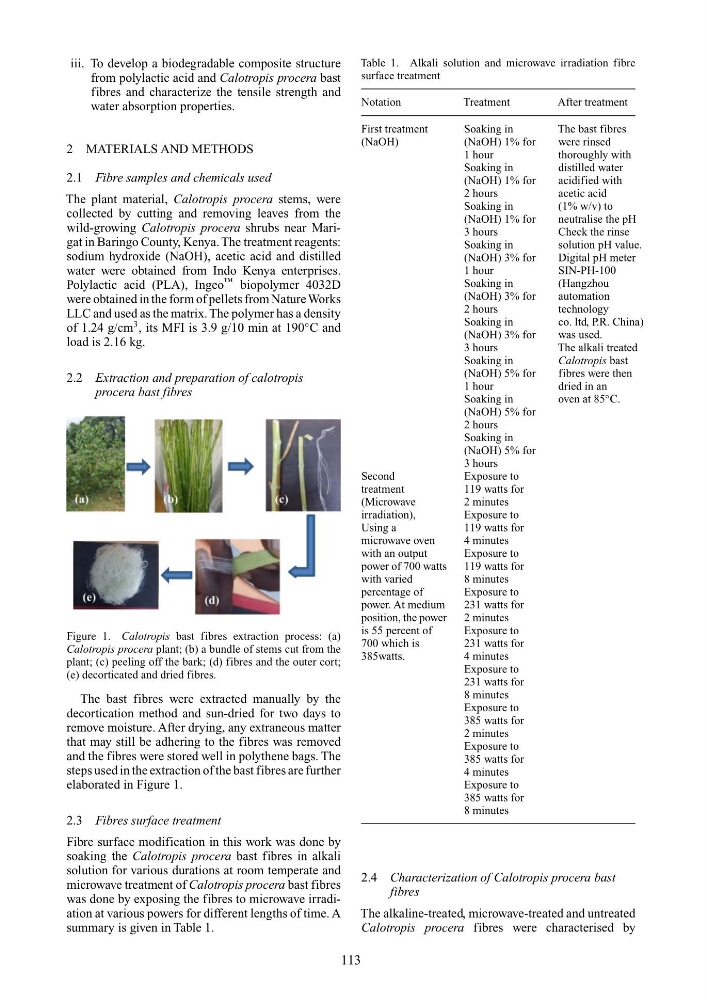
Figure 1. Calotropis bast fibres extraction process: (a)
Calotropis procera plant; (b) a bundle of stems cut from the
plant; (c) peeling off the bark; (d) fibres and the outer cort;
(e) decorticated and dried fibres.
The bast fibres were extracted manually by the
decortication method and sun-dried for two days to
remove moisture. After drying, any extraneous matter
that may still be adhering to the fibres was removed
and the fibres were stored well in polythene bags. The
steps used in the extraction of the bast fibres are further
elaborated in Figure 1.
2.3 Fibres surface treatment
Fibre surface modification in this work was done by
soaking the Calotropis procera bast fibres in alkali
solution for various durations at room temperate and
microwave treatment of Calotropis procera bast fibres
was done by exposing the fibres to microwave irradiation at various powers for different lengths of time. A
summary is given in Table 1.
Table 1. Alkali solution and microwave irradiation fibre
surface treatment
Notation
Treatment
After treatment
First treatment
(NaOH)
Soaking in
(NaOH) 1% for
1 hour
Soaking in
(NaOH) 1% for
2 hours
Soaking in
(NaOH) 1% for
3 hours
Soaking in
(NaOH) 3% for
1 hour
Soaking in
(NaOH) 3% for
2 hours
Soaking in
(NaOH) 3% for
3 hours
Soaking in
(NaOH) 5% for
1 hour
Soaking in
(NaOH) 5% for
2 hours
Soaking in
(NaOH) 5% for
3 hours
The bast fibres
were rinsed
thoroughly with
distilled water
acidified with
acetic acid
(1% w/v) to
neutralise the pH
Check the rinse
solution pH value.
Digital pH meter
SIN-PH-100
(Hangzhou
automation
technology
co. ltd, P.R. China)
was used.
The alkali treated
Calotropis bast
fibres were then
dried in an
oven at 85
◦ C.
Second
treatment
(Microwave
irradiation),
Using a
microwave oven
with an output
power of 700 watts
with varied
percentage of
power. At medium
position, the power
is 55 percent of
700 which is
385watts.
Exposure to
119 watts for
2 minutes
Exposure to
119 watts for
4 minutes
Exposure to
119 watts for
8 minutes
Exposure to
231 watts for
2 minutes
Exposure to
231 watts for
4 minutes
Exposure to
231 watts for
8 minutes
Exposure to
385 watts for
2 minutes
Exposure to
385 watts for
4 minutes
Exposure to
385 watts for
8 minutes
2.4 Characterization of Calotropis procera bast
fibres
The alkaline-treated, microwave-treated and untreated
Calotropis procera fibres were characterised by
113
from polylactic acid and Calotropis procera bast
fibres and characterize the tensile strength and
water absorption properties.
2 MATERIALS AND METHODS
2.1 Fibre samples and chemicals used
The plant material, Calotropis procera stems, were
collected by cutting and removing leaves from the
wild-growing Calotropis procera shrubs near Marigat in Baringo County, Kenya. The treatment reagents:
sodium hydroxide (NaOH), acetic acid and distilled
water were obtained from Indo Kenya enterprises.
Polylactic acid (PLA), Ingeo
™ biopolymer 4032D
were obtained in the form of pellets from Nature Works
LLC and used as the matrix. The polymer has a density
of 1.24 g/cm
3 , its MFI is 3.9 g/10 min at 190
◦ C and
load is 2.16 kg.
2.2 Extraction and preparation of calotropis
procera bast fibres
Figure 1. Calotropis bast fibres extraction process: (a)
Calotropis procera plant; (b) a bundle of stems cut from the
plant; (c) peeling off the bark; (d) fibres and the outer cort;
(e) decorticated and dried fibres.
The bast fibres were extracted manually by the
decortication method and sun-dried for two days to
remove moisture. After drying, any extraneous matter
that may still be adhering to the fibres was removed
and the fibres were stored well in polythene bags. The
steps used in the extraction of the bast fibres are further
elaborated in Figure 1.
2.3 Fibres surface treatment
Fibre surface modification in this work was done by
soaking the Calotropis procera bast fibres in alkali
solution for various durations at room temperate and
microwave treatment of Calotropis procera bast fibres
was done by exposing the fibres to microwave irradiation at various powers for different lengths of time. A
summary is given in Table 1.
Table 1. Alkali solution and microwave irradiation fibre
surface treatment
Notation
Treatment
After treatment
First treatment
(NaOH)
Soaking in
(NaOH) 1% for
1 hour
Soaking in
(NaOH) 1% for
2 hours
Soaking in
(NaOH) 1% for
3 hours
Soaking in
(NaOH) 3% for
1 hour
Soaking in
(NaOH) 3% for
2 hours
Soaking in
(NaOH) 3% for
3 hours
Soaking in
(NaOH) 5% for
1 hour
Soaking in
(NaOH) 5% for
2 hours
Soaking in
(NaOH) 5% for
3 hours
The bast fibres
were rinsed
thoroughly with
distilled water
acidified with
acetic acid
(1% w/v) to
neutralise the pH
Check the rinse
solution pH value.
Digital pH meter
SIN-PH-100
(Hangzhou
automation
technology
co. ltd, P.R. China)
was used.
The alkali treated
Calotropis bast
fibres were then
dried in an
oven at 85
◦ C.
Second
treatment
(Microwave
irradiation),
Using a
microwave oven
with an output
power of 700 watts
with varied
percentage of
power. At medium
position, the power
is 55 percent of
700 which is
385watts.
Exposure to
119 watts for
2 minutes
Exposure to
119 watts for
4 minutes
Exposure to
119 watts for
8 minutes
Exposure to
231 watts for
2 minutes
Exposure to
231 watts for
4 minutes
Exposure to
231 watts for
8 minutes
Exposure to
385 watts for
2 minutes
Exposure to
385 watts for
4 minutes
Exposure to
385 watts for
8 minutes
2.4 Characterization of Calotropis procera bast
fibres
The alkaline-treated, microwave-treated and untreated
Calotropis procera fibres were characterised by
113