

f
35
The Co-Evolution of Different Sciences
Science
Factors
Traditional
Science 1
Traditional
Science 2
Mainstream
Science
Ontology
Worldview 1
(holistic)
Worldview 2
(holistic)
Worldview 3
(dualistic:
matter-mind)
Gnoseology
Methods for
learning,
experimenting
and teaching
Methods for
learning,
experimenting
and teaching
Methodology
for learning,
experimenting
and teaching
Epistemology
Logic,
theories,
paradigms
Logic,
theories,
paradigms
Logic,
theories,
paradigms
Axiology
Values,
aesthetics
Values,
aesthetics
Values,
aesthetics
Community
of knowledge
holders
Local leaders,
healers,
guides, experts
Local leaders,
healers,
guides, experts
Associations
of experts,
disciplines,
academies
f
x
Sources:
Methods,
parameters and
data of multiple
sciences and
actors
Transdisciplinary
Research
Design,
Implementation,
Follow-up
(
)
M ethods f or
g, , , ,
ti in n n n n n ng g g
n n n n n
f
e e e e e ex
,
ing g
n
e e e p
x
cs s
s
a
g
, p
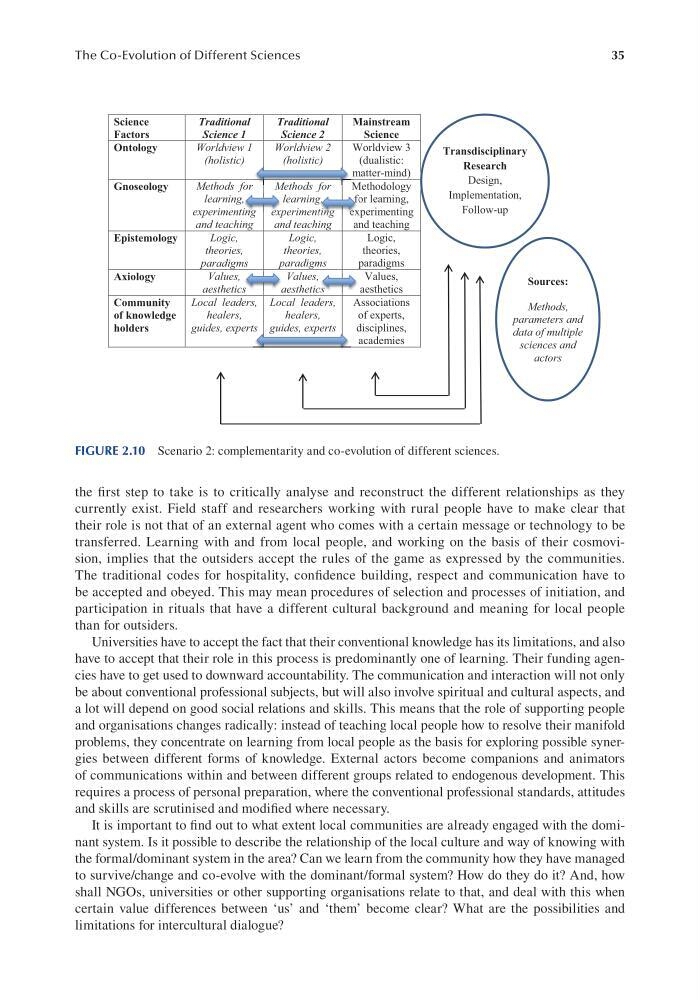
FIGURE 2.10 Scenario 2: complementarity and co-evolution of different sciences.
the frst step to take is to critically analyse and reconstruct the different relationships as they
currently exist. Field staff and researchers working with rural people have to make clear that
their role is not that of an external agent who comes with a certain message or technology to be
transferred. Learning with and from local people, and working on the basis of their cosmovision, implies that the outsiders accept the rules of the game as expressed by the communities.
The traditional codes for hospitality, confdence building, respect and communication have to
be accepted and obeyed. This may mean procedures of selection and processes of initiation, and
participation in rituals that have a different cultural background and meaning for local people
than for outsiders.
Universities have to accept the fact that their conventional knowledge has its limitations, and also
have to accept that their role in this process is predominantly one of learning. Their funding agencies have to get used to downward accountability. The communication and interaction will not only
be about conventional professional subjects, but will also involve spiritual and cultural aspects, and
a lot will depend on good social relations and skills. This means that the role of supporting people
and organisations changes radically: instead of teaching local people how to resolve their manifold
problems, they concentrate on learning from local people as the basis for exploring possible synergies between different forms of knowledge. External actors become companions and animators
of communications within and between different groups related to endogenous development. This
requires a process of personal preparation, where the conventional professional standards, attitudes
and skills are scrutinised and modifed where necessary.
It is important to fnd out to what extent local communities are already engaged with the dominant system. Is it possible to describe the relationship of the local culture and way of knowing with
the formal/dominant system in the area? Can we learn from the community how they have managed
to survive/change and co-evolve with the dominant/formal system? How do they do it? And, how
shall NGOs, universities or other supporting organisations relate to that, and deal with this when
certain value differences between ‘us’ and ‘them’ become clear? What are the possibilities and
limitations for intercultural dialogue?
35
The Co-Evolution of Different Sciences
Science
Factors
Traditional
Science 1
Traditional
Science 2
Mainstream
Science
Ontology
Worldview 1
(holistic)
Worldview 2
(holistic)
Worldview 3
(dualistic:
matter-mind)
Gnoseology
Methods for
learning,
experimenting
and teaching
Methods for
learning,
experimenting
and teaching
Methodology
for learning,
experimenting
and teaching
Epistemology
Logic,
theories,
paradigms
Logic,
theories,
paradigms
Logic,
theories,
paradigms
Axiology
Values,
aesthetics
Values,
aesthetics
Values,
aesthetics
Community
of knowledge
holders
Local leaders,
healers,
guides, experts
Local leaders,
healers,
guides, experts
Associations
of experts,
disciplines,
academies
f
x
Sources:
Methods,
parameters and
data of multiple
sciences and
actors
Transdisciplinary
Research
Design,
Implementation,
Follow-up
(
)
M ethods f or
g, , , ,
ti in n n n n n ng g g
n n n n n
f
e e e e e ex
,
ing g
n
e e e p
x
cs s
s
a
g
, p
FIGURE 2.10 Scenario 2: complementarity and co-evolution of different sciences.
the frst step to take is to critically analyse and reconstruct the different relationships as they
currently exist. Field staff and researchers working with rural people have to make clear that
their role is not that of an external agent who comes with a certain message or technology to be
transferred. Learning with and from local people, and working on the basis of their cosmovision, implies that the outsiders accept the rules of the game as expressed by the communities.
The traditional codes for hospitality, confdence building, respect and communication have to
be accepted and obeyed. This may mean procedures of selection and processes of initiation, and
participation in rituals that have a different cultural background and meaning for local people
than for outsiders.
Universities have to accept the fact that their conventional knowledge has its limitations, and also
have to accept that their role in this process is predominantly one of learning. Their funding agencies have to get used to downward accountability. The communication and interaction will not only
be about conventional professional subjects, but will also involve spiritual and cultural aspects, and
a lot will depend on good social relations and skills. This means that the role of supporting people
and organisations changes radically: instead of teaching local people how to resolve their manifold
problems, they concentrate on learning from local people as the basis for exploring possible synergies between different forms of knowledge. External actors become companions and animators
of communications within and between different groups related to endogenous development. This
requires a process of personal preparation, where the conventional professional standards, attitudes
and skills are scrutinised and modifed where necessary.
It is important to fnd out to what extent local communities are already engaged with the dominant system. Is it possible to describe the relationship of the local culture and way of knowing with
the formal/dominant system in the area? Can we learn from the community how they have managed
to survive/change and co-evolve with the dominant/formal system? How do they do it? And, how
shall NGOs, universities or other supporting organisations relate to that, and deal with this when
certain value differences between ‘us’ and ‘them’ become clear? What are the possibilities and
limitations for intercultural dialogue?