

34
Subtle Agroecologies
Science
Factors
Traditional
Science 1
Traditional
Science 2
Mainstream
Science
Ontology
Worldview 1
(holistic)
Worldview 2
(holistic)
Worldview 3
(dualistic:
matter-mind)
Gnoseology
Methods for
learning,
experimenting
and teaching
Methods for
learning,
experimenting
and teaching
Methodology
for learning,
experimenting
and teaching
Epistemology
Logic,
theories,
paradigms
Logic,
theories,
paradigms
Logic,
theories,
paradigms
Axiology
Values,
aesthetics
Values,
aesthetics
Values,
aesthetics
Community
of knowledge
holders
Local leaders,
healers,
guides, experts
Local leaders,
healers,
guides, experts
Associations
of experts,
disciplines,
academies
Sources:
Data of
traditional
sciences,
Mainstream
methods &
parameters
Research
(positivistic)
Design,
Implementation,
Follow-up
Selective inclusion
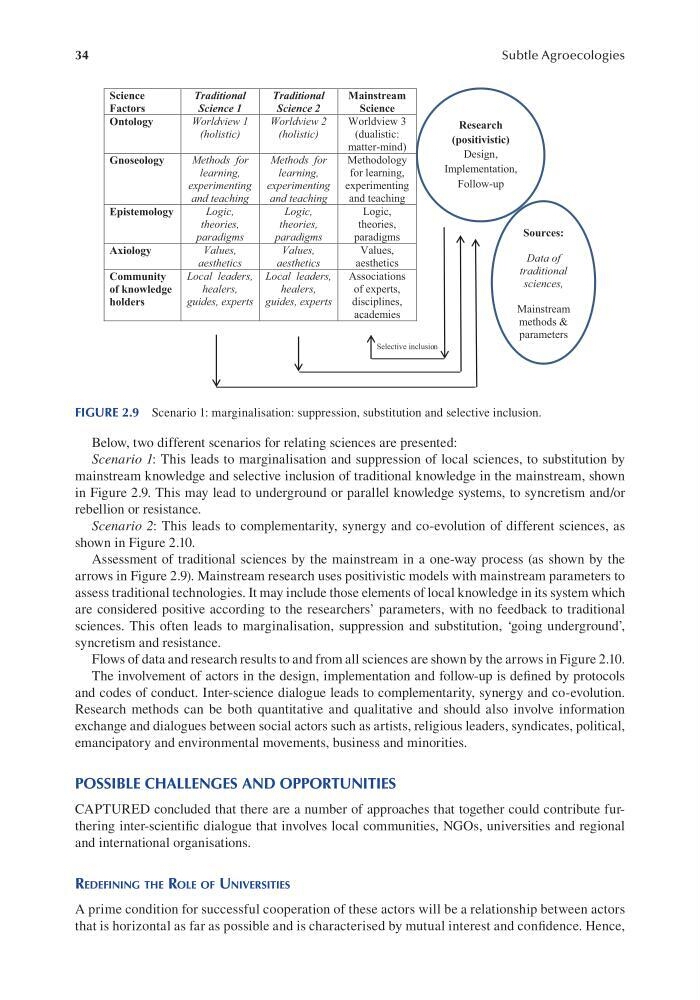
FIGURE 2.9 Scenario 1: marginalisation: suppression, substitution and selective inclusion.
Below, two different scenarios for relating sciences are presented:
Scenario 1: This leads to marginalisation and suppression of local sciences, to substitution by
mainstream knowledge and selective inclusion of traditional knowledge in the mainstream, shown
in Figure 2.9. This may lead to underground or parallel knowledge systems, to syncretism and/or
rebellion or resistance.
Scenario 2: This leads to complementarity, synergy and co-evolution of different sciences, as
shown in Figure 2.10.
Assessment of traditional sciences by the mainstream in a one-way process (as shown by the
arrows in Figure 2.9). Mainstream research uses positivistic models with mainstream parameters to
assess traditional technologies. It may include those elements of local knowledge in its system which
are considered positive according to the researchers’ parameters, with no feedback to traditional
sciences. This often leads to marginalisation, suppression and substitution, ‘going underground’,
syncretism and resistance.
Flows of data and research results to and from all sciences are shown by the arrows in Figure 2.10.
The involvement of actors in the design, implementation and follow-up is defned by protocols
and codes of conduct. Inter-science dialogue leads to complementarity, synergy and co-evolution.
Research methods can be both quantitative and qualitative and should also involve information
exchange and dialogues between social actors such as artists, religious leaders, syndicates, political,
emancipatory and environmental movements, business and minorities.
POSSIBLE CHALLENGES AND OPPORTUNITIES
CAPTURED concluded that there are a number of approaches that together could contribute furthering inter-scientifc dialogue that involves local communities, NGOs, universities and regional
and international organisations.
REDEFINING THE ROLE OF UNIVERSITIES
A prime condition for successful cooperation of these actors will be a relationship between actors
that is horizontal as far as possible and is characterised by mutual interest and confdence. Hence,
Subtle Agroecologies
Science
Factors
Traditional
Science 1
Traditional
Science 2
Mainstream
Science
Ontology
Worldview 1
(holistic)
Worldview 2
(holistic)
Worldview 3
(dualistic:
matter-mind)
Gnoseology
Methods for
learning,
experimenting
and teaching
Methods for
learning,
experimenting
and teaching
Methodology
for learning,
experimenting
and teaching
Epistemology
Logic,
theories,
paradigms
Logic,
theories,
paradigms
Logic,
theories,
paradigms
Axiology
Values,
aesthetics
Values,
aesthetics
Values,
aesthetics
Community
of knowledge
holders
Local leaders,
healers,
guides, experts
Local leaders,
healers,
guides, experts
Associations
of experts,
disciplines,
academies
Sources:
Data of
traditional
sciences,
Mainstream
methods &
parameters
Research
(positivistic)
Design,
Implementation,
Follow-up
Selective inclusion
FIGURE 2.9 Scenario 1: marginalisation: suppression, substitution and selective inclusion.
Below, two different scenarios for relating sciences are presented:
Scenario 1: This leads to marginalisation and suppression of local sciences, to substitution by
mainstream knowledge and selective inclusion of traditional knowledge in the mainstream, shown
in Figure 2.9. This may lead to underground or parallel knowledge systems, to syncretism and/or
rebellion or resistance.
Scenario 2: This leads to complementarity, synergy and co-evolution of different sciences, as
shown in Figure 2.10.
Assessment of traditional sciences by the mainstream in a one-way process (as shown by the
arrows in Figure 2.9). Mainstream research uses positivistic models with mainstream parameters to
assess traditional technologies. It may include those elements of local knowledge in its system which
are considered positive according to the researchers’ parameters, with no feedback to traditional
sciences. This often leads to marginalisation, suppression and substitution, ‘going underground’,
syncretism and resistance.
Flows of data and research results to and from all sciences are shown by the arrows in Figure 2.10.
The involvement of actors in the design, implementation and follow-up is defned by protocols
and codes of conduct. Inter-science dialogue leads to complementarity, synergy and co-evolution.
Research methods can be both quantitative and qualitative and should also involve information
exchange and dialogues between social actors such as artists, religious leaders, syndicates, political,
emancipatory and environmental movements, business and minorities.
POSSIBLE CHALLENGES AND OPPORTUNITIES
CAPTURED concluded that there are a number of approaches that together could contribute furthering inter-scientifc dialogue that involves local communities, NGOs, universities and regional
and international organisations.
REDEFINING THE ROLE OF UNIVERSITIES
A prime condition for successful cooperation of these actors will be a relationship between actors
that is horizontal as far as possible and is characterised by mutual interest and confdence. Hence,