

181
Picturing Vitality
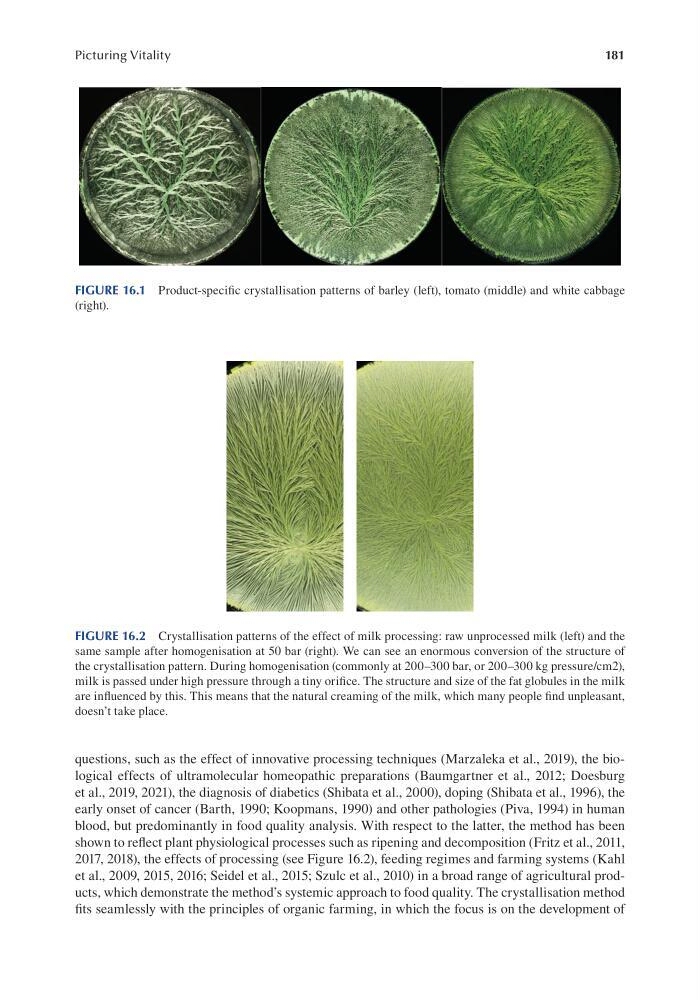
FIGURE 16.1 Product-specifc crystallisation patterns of barley (left), tomato (middle) and white cabbage
(right).
FIGURE 16.2 Crystallisation patterns of the effect of milk processing: raw unprocessed milk (left) and the
same sample after homogenisation at 50 bar (right). We can see an enormous conversion of the structure of
the crystallisation pattern. During homogenisation (commonly at 200–300 bar, or 200–300 kg pressure/cm2),
milk is passed under high pressure through a tiny orifce. The structure and size of the fat globules in the milk
are infuenced by this. This means that the natural creaming of the milk, which many people fnd unpleasant,
doesn’t take place.
questions, such as the effect of innovative processing techniques (Marzaleka et al., 2019), the biological effects of ultramolecular homeopathic preparations (Baumgartner et al., 2012; Doesburg
et al., 2019, 2021), the diagnosis of diabetics (Shibata et al., 2000), doping (Shibata et al., 1996), the
early onset of cancer (Barth, 1990; Koopmans, 1990) and other pathologies (Piva, 1994) in human
blood, but predominantly in food quality analysis. With respect to the latter, the method has been
shown to refect plant physiological processes such as ripening and decomposition (Fritz et al., 2011,
2017, 2018), the effects of processing (see Figure 16.2), feeding regimes and farming systems (Kahl
et al., 2009, 2015, 2016; Seidel et al., 2015; Szulc et al., 2010) in a broad range of agricultural products, which demonstrate the method’s systemic approach to food quality. The crystallisation method
fts seamlessly with the principles of organic farming, in which the focus is on the development of