

149
Homeopathy Applied to Agriculture
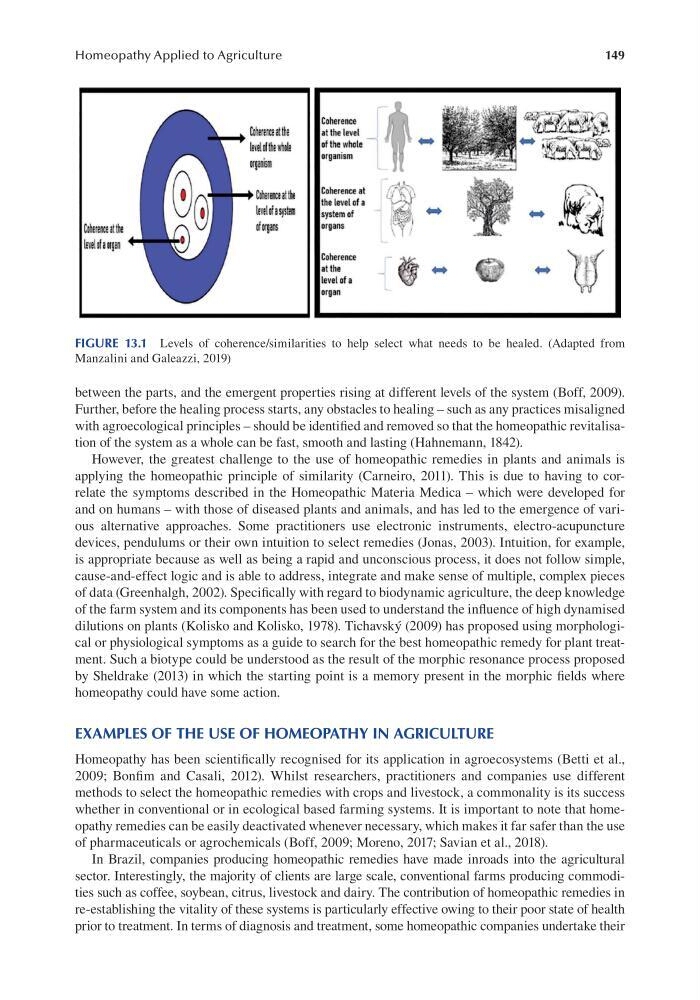
FIGURE 13.1 Levels of coherence/similarities to help select what needs to be healed. (Adapted from
Manzalini and Galeazzi, 2019)
between the parts, and the emergent properties rising at different levels of the system (Boff, 2009).
Further, before the healing process starts, any obstacles to healing – such as any practices misaligned
with agroecological principles – should be identifed and removed so that the homeopathic revitalisation of the system as a whole can be fast, smooth and lasting (Hahnemann, 1842).
However, the greatest challenge to the use of homeopathic remedies in plants and animals is
applying the homeopathic principle of similarity (Carneiro, 2011). This is due to having to correlate the symptoms described in the Homeopathic Materia Medica – which were developed for
and on humans – with those of diseased plants and animals, and has led to the emergence of various alternative approaches. Some practitioners use electronic instruments, electro-acupuncture
devices, pendulums or their own intuition to select remedies (Jonas, 2003). Intuition, for example,
is appropriate because as well as being a rapid and unconscious process, it does not follow simple,
cause-and-effect logic and is able to address, integrate and make sense of multiple, complex pieces
of data (Greenhalgh, 2002). Specifcally with regard to biodynamic agriculture, the deep knowledge
of the farm system and its components has been used to understand the infuence of high dynamised
dilutions on plants (Kolisko and Kolisko, 1978). Tichavský (2009) has proposed using morphological or physiological symptoms as a guide to search for the best homeopathic remedy for plant treatment. Such a biotype could be understood as the result of the morphic resonance process proposed
by Sheldrake (2013) in which the starting point is a memory present in the morphic felds where
homeopathy could have some action.
EXAMPLES OF THE USE OF HOMEOPATHY IN AGRICULTURE
Homeopathy has been scientifcally recognised for its application in agroecosystems (Betti et al.,
2009; Bonfm and Casali, 2012). Whilst researchers, practitioners and companies use different
methods to select the homeopathic remedies with crops and livestock, a commonality is its success
whether in conventional or in ecological based farming systems. It is important to note that homeopathy remedies can be easily deactivated whenever necessary, which makes it far safer than the use
of pharmaceuticals or agrochemicals (Boff, 2009; Moreno, 2017; Savian et al., 2018).
In Brazil, companies producing homeopathic remedies have made inroads into the agricultural
sector. Interestingly, the majority of clients are large scale, conventional farms producing commodities such as coffee, soybean, citrus, livestock and dairy. The contribution of homeopathic remedies in
re-establishing the vitality of these systems is particularly effective owing to their poor state of health
prior to treatment. In terms of diagnosis and treatment, some homeopathic companies undertake their