

13 Plant Growth-Promoting Bacteria …
295
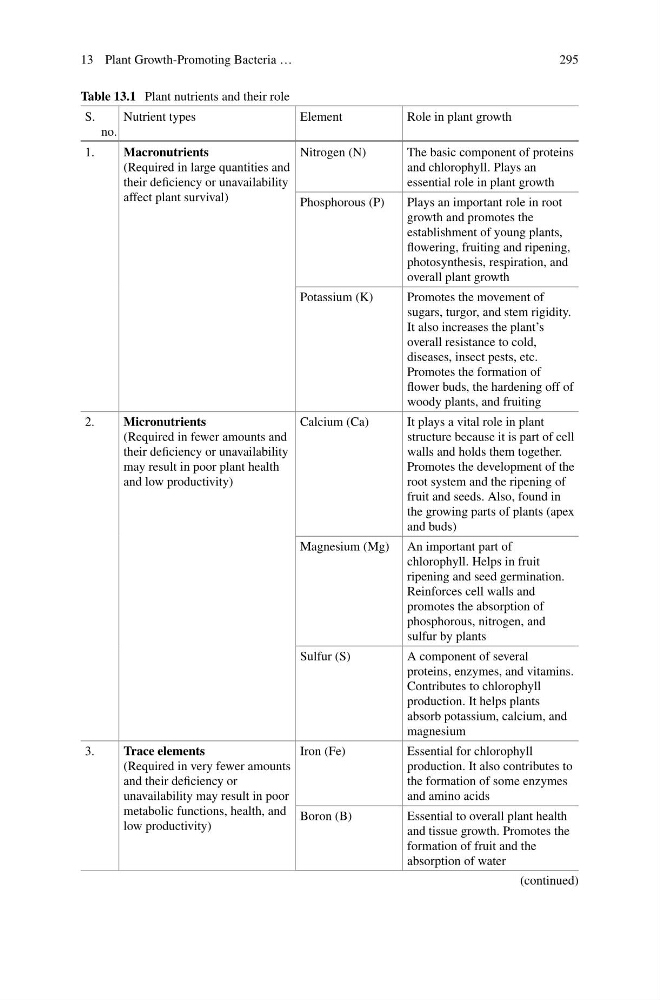
Table 13.1 Plant nutrients and their role
S.
no.
Nutrient types
Element
Role in plant growth
1.
Macronutrients
(Required in large quantities and
their deficiency or unavailability
affect plant survival)
Nitrogen (N)
The basic component of proteins
and chlorophyll. Plays an
essential role in plant growth
Phosphorous (P)
Plays an important role in root
growth and promotes the
establishment of young plants,
flowering, fruiting and ripening,
photosynthesis, respiration, and
overall plant growth
Potassium (K)
Promotes the movement of
sugars, turgor, and stem rigidity.
It also increases the plant’s
overall resistance to cold,
diseases, insect pests, etc.
Promotes the formation of
flower buds, the hardening off of
woody plants, and fruiting
2.
Micronutrients
(Required in fewer amounts and
their deficiency or unavailability
may result in poor plant health
and low productivity)
Calcium (Ca)
It plays a vital role in plant
structure because it is part of cell
walls and holds them together.
Promotes the development of the
root system and the ripening of
fruit and seeds. Also, found in
the growing parts of plants (apex
and buds)
Magnesium (Mg) An important part of
chlorophyll. Helps in fruit
ripening and seed germination.
Reinforces cell walls and
promotes the absorption of
phosphorous, nitrogen, and
sulfur by plants
Sulfur (S)
A component of several
proteins, enzymes, and vitamins.
Contributes to chlorophyll
production. It helps plants
absorb potassium, calcium, and
magnesium
3.
Trace elements
(Required in very fewer amounts
and their deficiency or
unavailability may result in poor
metabolic functions, health, and
low productivity)
Iron (Fe)
Essential for chlorophyll
production. It also contributes to
the formation of some enzymes
and amino acids
Boron (B)
Essential to overall plant health
and tissue growth. Promotes the
formation of fruit and the
absorption of water
(continued)
295
Table 13.1 Plant nutrients and their role
S.
no.
Nutrient types
Element
Role in plant growth
1.
Macronutrients
(Required in large quantities and
their deficiency or unavailability
affect plant survival)
Nitrogen (N)
The basic component of proteins
and chlorophyll. Plays an
essential role in plant growth
Phosphorous (P)
Plays an important role in root
growth and promotes the
establishment of young plants,
flowering, fruiting and ripening,
photosynthesis, respiration, and
overall plant growth
Potassium (K)
Promotes the movement of
sugars, turgor, and stem rigidity.
It also increases the plant’s
overall resistance to cold,
diseases, insect pests, etc.
Promotes the formation of
flower buds, the hardening off of
woody plants, and fruiting
2.
Micronutrients
(Required in fewer amounts and
their deficiency or unavailability
may result in poor plant health
and low productivity)
Calcium (Ca)
It plays a vital role in plant
structure because it is part of cell
walls and holds them together.
Promotes the development of the
root system and the ripening of
fruit and seeds. Also, found in
the growing parts of plants (apex
and buds)
Magnesium (Mg) An important part of
chlorophyll. Helps in fruit
ripening and seed germination.
Reinforces cell walls and
promotes the absorption of
phosphorous, nitrogen, and
sulfur by plants
Sulfur (S)
A component of several
proteins, enzymes, and vitamins.
Contributes to chlorophyll
production. It helps plants
absorb potassium, calcium, and
magnesium
3.
Trace elements
(Required in very fewer amounts
and their deficiency or
unavailability may result in poor
metabolic functions, health, and
low productivity)
Iron (Fe)
Essential for chlorophyll
production. It also contributes to
the formation of some enzymes
and amino acids
Boron (B)
Essential to overall plant health
and tissue growth. Promotes the
formation of fruit and the
absorption of water
(continued)