

186
H. B. Slama et al.
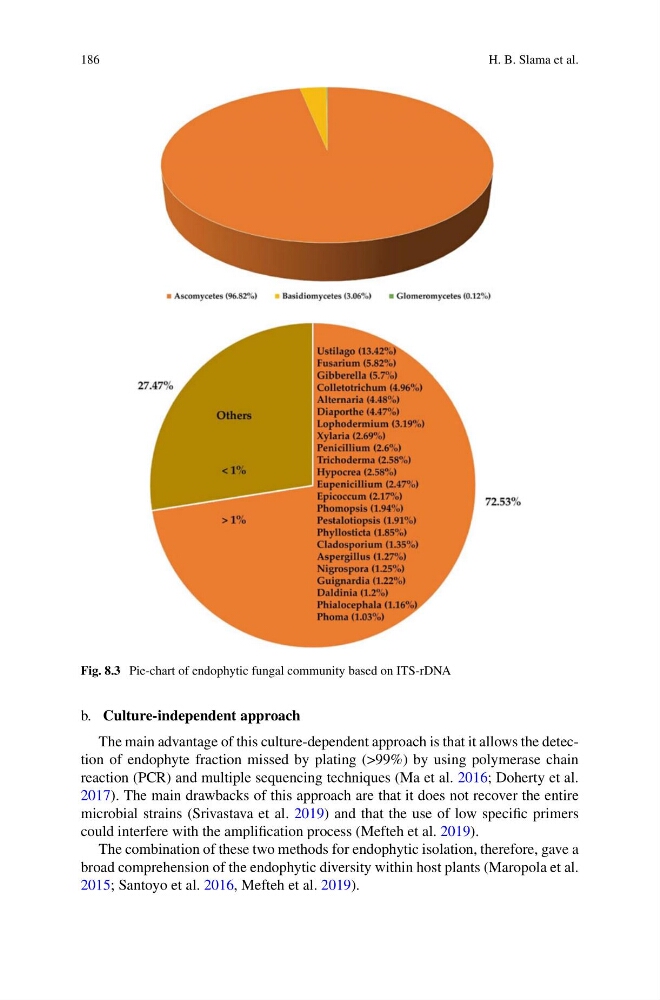
Fig. 8.3 Pie-chart of endophytic fungal community based on ITS-rDNA
b. Culture-independent approach
The main advantage of this culture-dependent approach is that it allows the detection of endophyte fraction missed by plating (>99%) by using polymerase chain
reaction (PCR) and multiple sequencing techniques (Ma et al. 2016; Doherty et al.
2017). The main drawbacks of this approach are that it does not recover the entire
microbial strains (Srivastava et al. 2019) and that the use of low specific primers
could interfere with the amplification process (Mefteh et al. 2019).
The combination of these two methods for endophytic isolation, therefore, gave a
broad comprehension of the endophytic diversity within host plants (Maropola et al.
2015; Santoyo et al. 2016, Mefteh et al. 2019).
H. B. Slama et al.
Fig. 8.3 Pie-chart of endophytic fungal community based on ITS-rDNA
b. Culture-independent approach
The main advantage of this culture-dependent approach is that it allows the detection of endophyte fraction missed by plating (>99%) by using polymerase chain
reaction (PCR) and multiple sequencing techniques (Ma et al. 2016; Doherty et al.
2017). The main drawbacks of this approach are that it does not recover the entire
microbial strains (Srivastava et al. 2019) and that the use of low specific primers
could interfere with the amplification process (Mefteh et al. 2019).
The combination of these two methods for endophytic isolation, therefore, gave a
broad comprehension of the endophytic diversity within host plants (Maropola et al.
2015; Santoyo et al. 2016, Mefteh et al. 2019).