

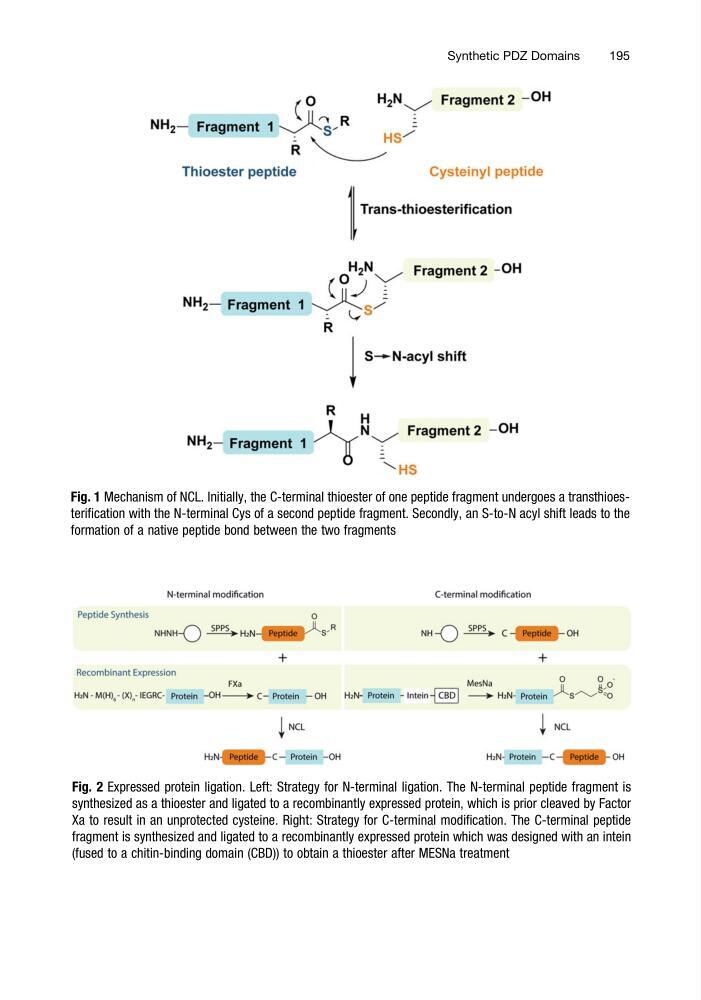
Fig. 1 Mechanism of NCL. Initially, the C-terminal thioester of one peptide fragment undergoes a transthioesterification with the N-terminal Cys of a second peptide fragment. Secondly, an S-to-N acyl shift leads to the
formation of a native peptide bond between the two fragments
Fig. 2 Expressed protein ligation. Left: Strategy for N-terminal ligation. The N-terminal peptide fragment is
synthesized as a thioester and ligated to a recombinantly expressed protein, which is prior cleaved by Factor
Xa to result in an unprotected cysteine. Right: Strategy for C-terminal modification. The C-terminal peptide
fragment is synthesized and ligated to a recombinantly expressed protein which was designed with an intein
(fused to a chitin-binding domain (CBD)) to obtain a thioester after MESNa treatment
Synthetic PDZ Domains
195
formation of a native peptide bond between the two fragments
Fig. 2 Expressed protein ligation. Left: Strategy for N-terminal ligation. The N-terminal peptide fragment is
synthesized as a thioester and ligated to a recombinantly expressed protein, which is prior cleaved by Factor
Xa to result in an unprotected cysteine. Right: Strategy for C-terminal modification. The C-terminal peptide
fragment is synthesized and ligated to a recombinantly expressed protein which was designed with an intein
(fused to a chitin-binding domain (CBD)) to obtain a thioester after MESNa treatment
Synthetic PDZ Domains
195