

obtained by calculating the ratio of the folding rate constant and
unfolding rate constant obtained with the kinetic folding experiment at the same conditions. They must return the same equilibrium constant [1].
4 Notes
1. Some proteins can be photosensitive. In these cases, fluorescence emission might decrease in time, when the sample is
exposed to emission light. A test can be made by comparing
the emission spectra of the same sample, when measured multiple times. If this effect is present, it might be limited by
closing the slit in the emission monochromator.
2. Reversibility must be checked by repeating equilibrium experiments and by confronting folding and unfolding independent
equilibrium experiments.
3. In a stopped-flow device the pressure hold should be used for
acquisition times bellow 1 s. The typical dead-time of a
stopped-flow device is 1–2 ms.
4. It is known that in some cases folding might be affected by
transient aggregation effect. Therefore, folding studies should
be carried out at different protein concentration, at the same
experimental conditions, to exclude protein aggregation
effects.
a
b
2.5
3
1.5
0.5
–0.5
–1
0
1
2
0
1
2
3
4
5
6
7
TS1
TS2
U
N
8
[Urea] (M)
k
obs (S –1
)
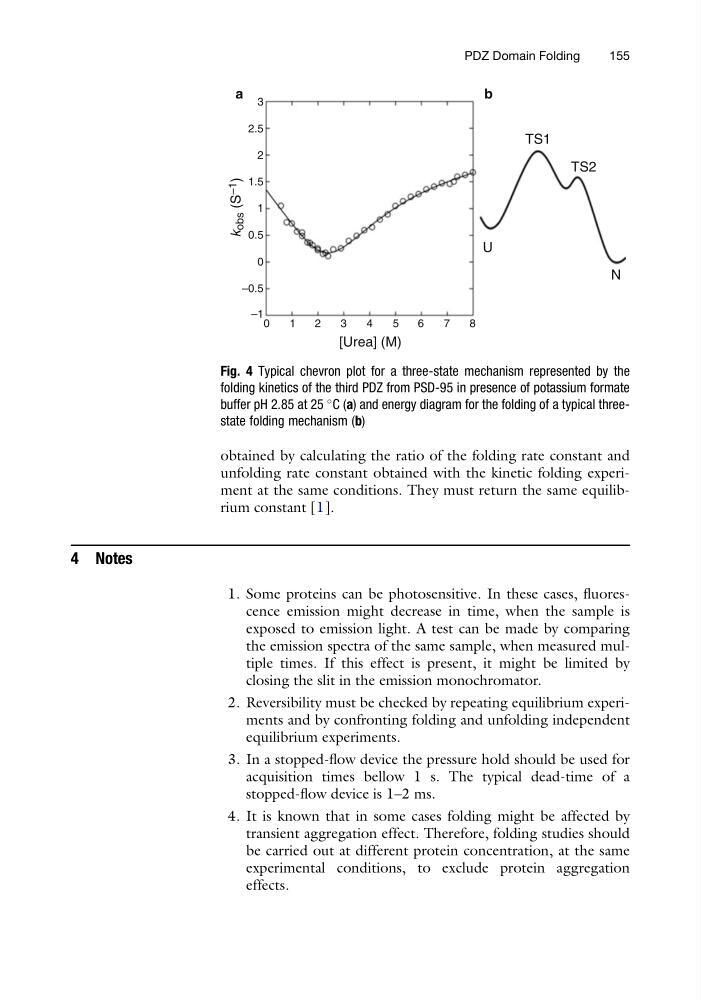
Fig. 4 Typical chevron plot for a three-state mechanism represented by the
folding kinetics of the third PDZ from PSD-95 in presence of potassium formate
buffer pH 2.85 at 25
C (a) and energy diagram for the folding of a typical threestate folding mechanism (b)
PDZ Domain Folding
155
unfolding rate constant obtained with the kinetic folding experiment at the same conditions. They must return the same equilibrium constant [1].
4 Notes
1. Some proteins can be photosensitive. In these cases, fluorescence emission might decrease in time, when the sample is
exposed to emission light. A test can be made by comparing
the emission spectra of the same sample, when measured multiple times. If this effect is present, it might be limited by
closing the slit in the emission monochromator.
2. Reversibility must be checked by repeating equilibrium experiments and by confronting folding and unfolding independent
equilibrium experiments.
3. In a stopped-flow device the pressure hold should be used for
acquisition times bellow 1 s. The typical dead-time of a
stopped-flow device is 1–2 ms.
4. It is known that in some cases folding might be affected by
transient aggregation effect. Therefore, folding studies should
be carried out at different protein concentration, at the same
experimental conditions, to exclude protein aggregation
effects.
a
b
2.5
3
1.5
0.5
–0.5
–1
0
1
2
0
1
2
3
4
5
6
7
TS1
TS2
U
N
8
[Urea] (M)
k
obs (S –1
)
Fig. 4 Typical chevron plot for a three-state mechanism represented by the
folding kinetics of the third PDZ from PSD-95 in presence of potassium formate
buffer pH 2.85 at 25
C (a) and energy diagram for the folding of a typical threestate folding mechanism (b)
PDZ Domain Folding
155