

of peptide should be kept ~tenfold lower than the K d to obtain
reliable fits of the data.
3. The peptide ligand can be either a C-terminal or internal ligand
derived from the target full-length protein. For C-terminal
ligands, generally 6–8 terminal residues are used but additional
residues may be involved, and this should be determined
empirically. Internal PBM sequences can also be used
[16]. Again, the exact residues will vary for each interaction
and should be determined empirically. Internal ligands also
PDZ [ M]
NRXN1
SCD1
Caspr4
SGEF
A
B
PDZ/ligand
Kd ( m)
∆Gb (kcal/mol)
Scribble PDZ1/SGEF
7.3 ± 1.5
-7.01 ± 0.12
CASK PDZ/NRXN1
32.2 ± 4.6
-6.13 ± 0.08
CASK PDZ/SCD1
121 ± 19
-5.34 ± 0.10
CASK PDZ/Caspr4
N. B.
N. B.
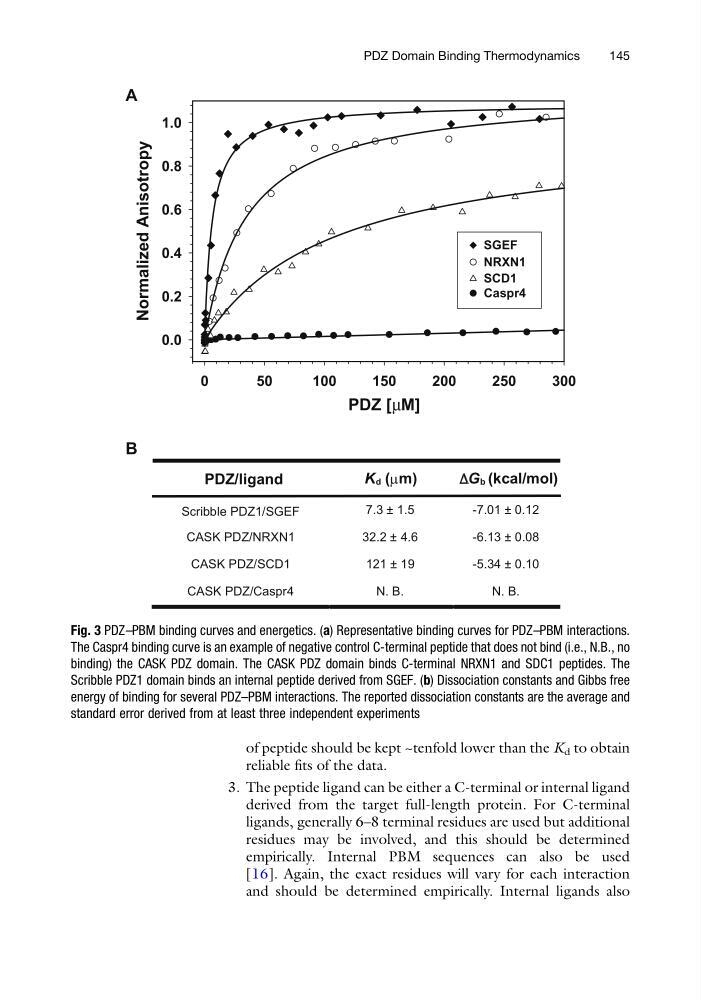
Fig. 3 PDZ–PBM binding curves and energetics. (a) Representative binding curves for PDZ–PBM interactions.
The Caspr4 binding curve is an example of negative control C-terminal peptide that does not bind (i.e., N.B., no
binding) the CASK PDZ domain. The CASK PDZ domain binds C-terminal NRXN1 and SDC1 peptides. The
Scribble PDZ1 domain binds an internal peptide derived from SGEF. (b) Dissociation constants and Gibbs free
energy of binding for several PDZ–PBM interactions. The reported dissociation constants are the average and
standard error derived from at least three independent experiments
PDZ Domain Binding Thermodynamics
145
reliable fits of the data.
3. The peptide ligand can be either a C-terminal or internal ligand
derived from the target full-length protein. For C-terminal
ligands, generally 6–8 terminal residues are used but additional
residues may be involved, and this should be determined
empirically. Internal PBM sequences can also be used
[16]. Again, the exact residues will vary for each interaction
and should be determined empirically. Internal ligands also
PDZ [ M]
NRXN1
SCD1
Caspr4
SGEF
A
B
PDZ/ligand
Kd ( m)
∆Gb (kcal/mol)
Scribble PDZ1/SGEF
7.3 ± 1.5
-7.01 ± 0.12
CASK PDZ/NRXN1
32.2 ± 4.6
-6.13 ± 0.08
CASK PDZ/SCD1
121 ± 19
-5.34 ± 0.10
CASK PDZ/Caspr4
N. B.
N. B.
Fig. 3 PDZ–PBM binding curves and energetics. (a) Representative binding curves for PDZ–PBM interactions.
The Caspr4 binding curve is an example of negative control C-terminal peptide that does not bind (i.e., N.B., no
binding) the CASK PDZ domain. The CASK PDZ domain binds C-terminal NRXN1 and SDC1 peptides. The
Scribble PDZ1 domain binds an internal peptide derived from SGEF. (b) Dissociation constants and Gibbs free
energy of binding for several PDZ–PBM interactions. The reported dissociation constants are the average and
standard error derived from at least three independent experiments
PDZ Domain Binding Thermodynamics
145