

9. In particular, the liquid level in the CR should be monitored
closely. The input flow rate setting on the peristaltic pump
should always be less than the output rate, so any increase in
the CR level usually indicates a change in negative pressure in
the waste line due to a tubing blockage or pump failure. The
waste line carries excess medium out of the CR via the peristaltic pump to the waste tank (Fig. 1). Setting the output waste
pump at a higher rate than the input pump and using wider
tubing creates a “downhill flow”, guarding against backflow in
the system. Blockages may be due to kinked/twisted tubing,
air bubbles, or loosened junctions. Check Luer connections,
especially those coupled to steel tubes in the CR headpiece.
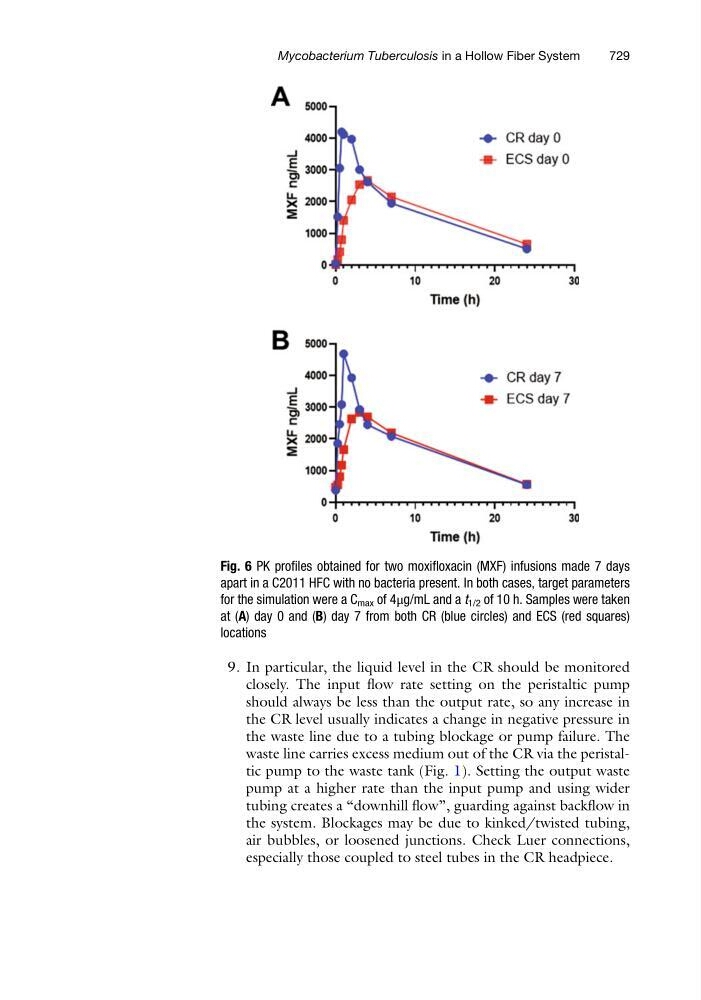
Fig. 6 PK profiles obtained for two moxifloxacin (MXF) infusions made 7 days
apart in a C2011 HFC with no bacteria present. In both cases, target parameters
for the simulation were a C max of 4μg/mL and a t 1/2 of 10 h. Samples were taken
at (A) day 0 and (B) day 7 from both CR (blue circles) and ECS (red squares)
locations
Mycobacterium Tuberculosis in a Hollow Fiber System
729