

16. In mock conditions, using the semipermeable carbonate membrane described previously [16], we noticed that two cell lines
(Ax2(Ka) and Ax2-214), which usually have identical interdivision time of around 8 h in standard culture conditions, exhibited significantly different and more heterogeneous
interdivision times in the InfectChip. We show here that
exchanging the original carbonate membrane with an agarose
sheet with larger pores fully restored optimal and homogeneous doubling times (Fig. 4).
17. Integrated intensity sum is calculated from the sum of all pixels
of bacteria for each field, then averaged for each well.
18. In this chapter, the stitching algorithm implemented in SlideBook is used; however, various other stitching algorithms can
be applied. The result will often show artefacts in the overlapping areas of the single frames. To correct for this, a background subtraction is carried out by subtracting a blurred
version of the image, making use of the ImageJ functions
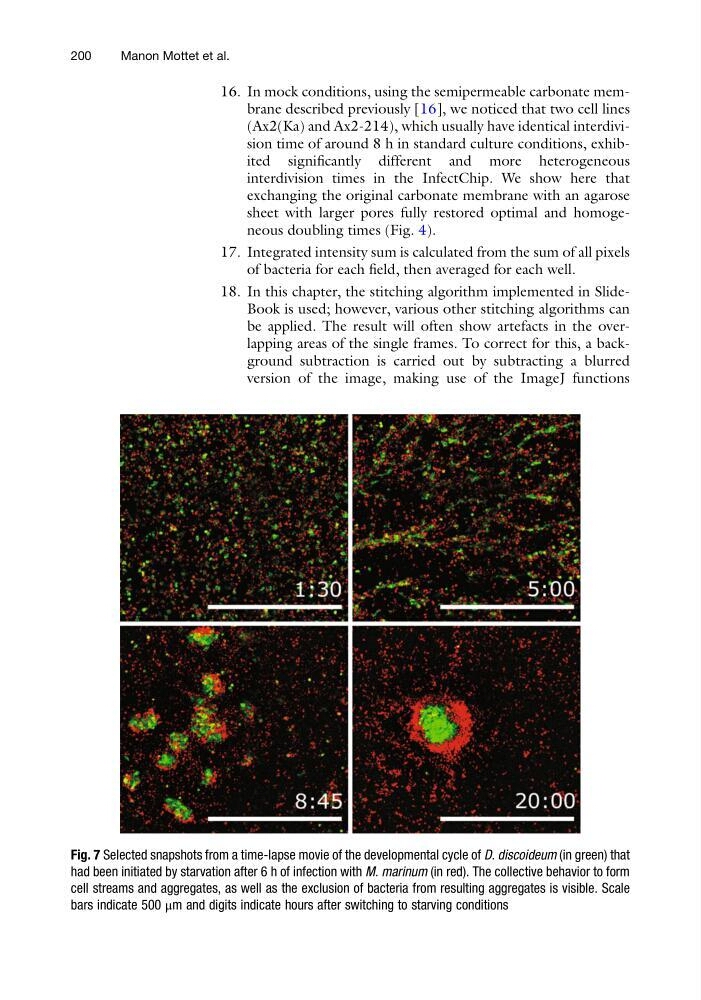
Fig. 7 Selected snapshots from a time-lapse movie of the developmental cycle of D. discoideum (in green) that
had been initiated by starvation after 6 h of infection with M. marinum (in red). The collective behavior to form
cell streams and aggregates, as well as the exclusion of bacteria from resulting aggregates is visible. Scale
bars indicate 500 μm and digits indicate hours after switching to starving conditions
200
Manon Mottet et al.
(Ax2(Ka) and Ax2-214), which usually have identical interdivision time of around 8 h in standard culture conditions, exhibited significantly different and more heterogeneous
interdivision times in the InfectChip. We show here that
exchanging the original carbonate membrane with an agarose
sheet with larger pores fully restored optimal and homogeneous doubling times (Fig. 4).
17. Integrated intensity sum is calculated from the sum of all pixels
of bacteria for each field, then averaged for each well.
18. In this chapter, the stitching algorithm implemented in SlideBook is used; however, various other stitching algorithms can
be applied. The result will often show artefacts in the overlapping areas of the single frames. To correct for this, a background subtraction is carried out by subtracting a blurred
version of the image, making use of the ImageJ functions
Fig. 7 Selected snapshots from a time-lapse movie of the developmental cycle of D. discoideum (in green) that
had been initiated by starvation after 6 h of infection with M. marinum (in red). The collective behavior to form
cell streams and aggregates, as well as the exclusion of bacteria from resulting aggregates is visible. Scale
bars indicate 500 μm and digits indicate hours after switching to starving conditions
200
Manon Mottet et al.