

Processes 2019, 7,37
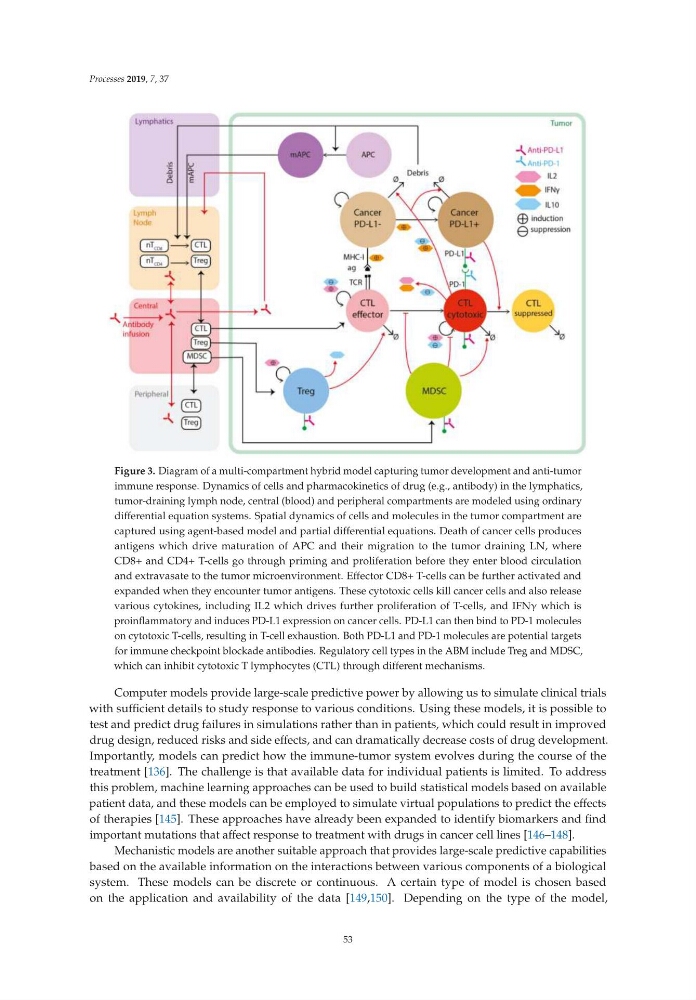
Figure 3. Diagram of a multi-compartment hybrid model capturing tumor development and anti-tumor
immune response. Dynamics of cells and pharmacokinetics of drug (e.g., antibody) in the lymphatics,
tumor-draining lymph node, central (blood) and peripheral compartments are modeled using ordinary
differential equation systems. Spatial dynamics of cells and molecules in the tumor compartment are
captured using agent-based model and partial differential equations. Death of cancer cells produces
antigens which drive maturation of APC and their migration to the tumor draining LN, where
CD8+ and CD4+ T-cells go through priming and proliferation before they enter blood circulation
and extravasate to the tumor microenvironment. Effector CD8+ T-cells can be further activated and
expanded when they encounter tumor antigens. These cytotoxic cells kill cancer cells and also release
various cytokines, including IL2 which drives further proliferation of T-cells, and IFNγ which is
proinflammatory and induces PD-L1 expression on cancer cells. PD-L1 can then bind to PD-1 molecules
on cytotoxic T-cells, resulting in T-cell exhaustion. Both PD-L1 and PD-1 molecules are potential targets
for immune checkpoint blockade antibodies. Regulatory cell types in the ABM include Treg and MDSC,
which can inhibit cytotoxic T lymphocytes (CTL) through different mechanisms.
Computer models provide large-scale predictive power by allowing us to simulate clinical trials
with sufficient details to study response to various conditions. Using these models, it is possible to
test and predict drug failures in simulations rather than in patients, which could result in improved
drug design, reduced risks and side effects, and can dramatically decrease costs of drug development.
Importantly, models can predict how the immune-tumor system evolves during the course of the
treatment [136]. The challenge is that available data for individual patients is limited. To address
this problem, machine learning approaches can be used to build statistical models based on available
patient data, and these models can be employed to simulate virtual populations to predict the effects
of therapies [145]. These approaches have already been expanded to identify biomarkers and find
important mutations that affect response to treatment with drugs in cancer cell lines [146–148].
Mechanistic models are another suitable approach that provides large-scale predictive capabilities
based on the available information on the interactions between various components of a biological
system. These models can be discrete or continuous. A certain type of model is chosen based
on the application and availability of the data [149,150]. Depending on the type of the model,
53
Figure 3. Diagram of a multi-compartment hybrid model capturing tumor development and anti-tumor
immune response. Dynamics of cells and pharmacokinetics of drug (e.g., antibody) in the lymphatics,
tumor-draining lymph node, central (blood) and peripheral compartments are modeled using ordinary
differential equation systems. Spatial dynamics of cells and molecules in the tumor compartment are
captured using agent-based model and partial differential equations. Death of cancer cells produces
antigens which drive maturation of APC and their migration to the tumor draining LN, where
CD8+ and CD4+ T-cells go through priming and proliferation before they enter blood circulation
and extravasate to the tumor microenvironment. Effector CD8+ T-cells can be further activated and
expanded when they encounter tumor antigens. These cytotoxic cells kill cancer cells and also release
various cytokines, including IL2 which drives further proliferation of T-cells, and IFNγ which is
proinflammatory and induces PD-L1 expression on cancer cells. PD-L1 can then bind to PD-1 molecules
on cytotoxic T-cells, resulting in T-cell exhaustion. Both PD-L1 and PD-1 molecules are potential targets
for immune checkpoint blockade antibodies. Regulatory cell types in the ABM include Treg and MDSC,
which can inhibit cytotoxic T lymphocytes (CTL) through different mechanisms.
Computer models provide large-scale predictive power by allowing us to simulate clinical trials
with sufficient details to study response to various conditions. Using these models, it is possible to
test and predict drug failures in simulations rather than in patients, which could result in improved
drug design, reduced risks and side effects, and can dramatically decrease costs of drug development.
Importantly, models can predict how the immune-tumor system evolves during the course of the
treatment [136]. The challenge is that available data for individual patients is limited. To address
this problem, machine learning approaches can be used to build statistical models based on available
patient data, and these models can be employed to simulate virtual populations to predict the effects
of therapies [145]. These approaches have already been expanded to identify biomarkers and find
important mutations that affect response to treatment with drugs in cancer cell lines [146–148].
Mechanistic models are another suitable approach that provides large-scale predictive capabilities
based on the available information on the interactions between various components of a biological
system. These models can be discrete or continuous. A certain type of model is chosen based
on the application and availability of the data [149,150]. Depending on the type of the model,
53