

Processes 2019, 7,37
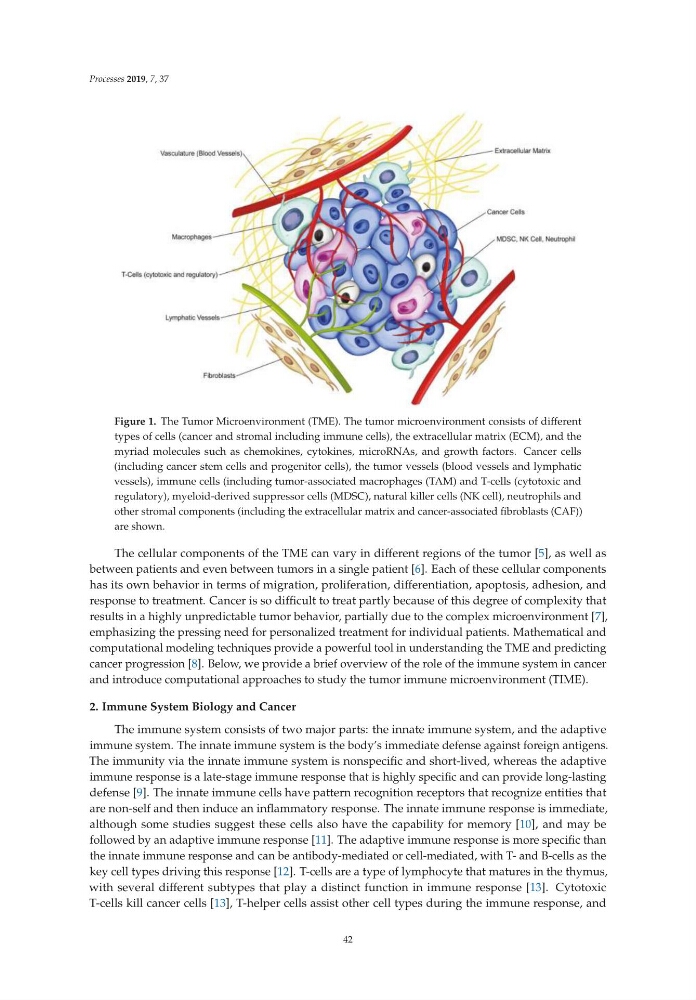
Figure 1. The Tumor Microenvironment (TME). The tumor microenvironment consists of different
types of cells (cancer and stromal including immune cells), the extracellular matrix (ECM), and the
myriad molecules such as chemokines, cytokines, microRNAs, and growth factors. Cancer cells
(including cancer stem cells and progenitor cells), the tumor vessels (blood vessels and lymphatic
vessels), immune cells (including tumor-associated macrophages (TAM) and T-cells (cytotoxic and
regulatory), myeloid-derived suppressor cells (MDSC), natural killer cells (NK cell), neutrophils and
other stromal components (including the extracellular matrix and cancer-associated fibroblasts (CAF))
are shown.
The cellular components of the TME can vary in different regions of the tumor [5], as well as
between patients and even between tumors in a single patient [6]. Each of these cellular components
has its own behavior in terms of migration, proliferation, differentiation, apoptosis, adhesion, and
response to treatment. Cancer is so difficult to treat partly because of this degree of complexity that
results in a highly unpredictable tumor behavior, partially due to the complex microenvironment [7],
emphasizing the pressing need for personalized treatment for individual patients. Mathematical and
computational modeling techniques provide a powerful tool in understanding the TME and predicting
cancer progression [8]. Below, we provide a brief overview of the role of the immune system in cancer
and introduce computational approaches to study the tumor immune microenvironment (TIME).
2. Immune System Biology and Cancer
The immune system consists of two major parts: the innate immune system, and the adaptive
immune system. The innate immune system is the body’s immediate defense against foreign antigens.
The immunity via the innate immune system is nonspecific and short-lived, whereas the adaptive
immune response is a late-stage immune response that is highly specific and can provide long-lasting
defense [9]. The innate immune cells have pattern recognition receptors that recognize entities that
are non-self and then induce an inflammatory response. The innate immune response is immediate,
although some studies suggest these cells also have the capability for memory [10], and may be
followed by an adaptive immune response [11]. The adaptive immune response is more specific than
the innate immune response and can be antibody-mediated or cell-mediated, with T- and B-cells as the
key cell types driving this response [12]. T-cells are a type of lymphocyte that matures in the thymus,
with several different subtypes that play a distinct function in immune response [13]. Cytotoxic
T-cells kill cancer cells [13], T-helper cells assist other cell types during the immune response, and
42
Figure 1. The Tumor Microenvironment (TME). The tumor microenvironment consists of different
types of cells (cancer and stromal including immune cells), the extracellular matrix (ECM), and the
myriad molecules such as chemokines, cytokines, microRNAs, and growth factors. Cancer cells
(including cancer stem cells and progenitor cells), the tumor vessels (blood vessels and lymphatic
vessels), immune cells (including tumor-associated macrophages (TAM) and T-cells (cytotoxic and
regulatory), myeloid-derived suppressor cells (MDSC), natural killer cells (NK cell), neutrophils and
other stromal components (including the extracellular matrix and cancer-associated fibroblasts (CAF))
are shown.
The cellular components of the TME can vary in different regions of the tumor [5], as well as
between patients and even between tumors in a single patient [6]. Each of these cellular components
has its own behavior in terms of migration, proliferation, differentiation, apoptosis, adhesion, and
response to treatment. Cancer is so difficult to treat partly because of this degree of complexity that
results in a highly unpredictable tumor behavior, partially due to the complex microenvironment [7],
emphasizing the pressing need for personalized treatment for individual patients. Mathematical and
computational modeling techniques provide a powerful tool in understanding the TME and predicting
cancer progression [8]. Below, we provide a brief overview of the role of the immune system in cancer
and introduce computational approaches to study the tumor immune microenvironment (TIME).
2. Immune System Biology and Cancer
The immune system consists of two major parts: the innate immune system, and the adaptive
immune system. The innate immune system is the body’s immediate defense against foreign antigens.
The immunity via the innate immune system is nonspecific and short-lived, whereas the adaptive
immune response is a late-stage immune response that is highly specific and can provide long-lasting
defense [9]. The innate immune cells have pattern recognition receptors that recognize entities that
are non-self and then induce an inflammatory response. The innate immune response is immediate,
although some studies suggest these cells also have the capability for memory [10], and may be
followed by an adaptive immune response [11]. The adaptive immune response is more specific than
the innate immune response and can be antibody-mediated or cell-mediated, with T- and B-cells as the
key cell types driving this response [12]. T-cells are a type of lymphocyte that matures in the thymus,
with several different subtypes that play a distinct function in immune response [13]. Cytotoxic
T-cells kill cancer cells [13], T-helper cells assist other cell types during the immune response, and
42