

210
Phytotechnology with Biomass Production
Cooking of pulp from Miscanthus stalks was done by the peracetic method,
which is environmentally friendly than traditional sulfate and sulfite methods of cellulose production and is characterized by lower energy costs compared with conventional and other organosolvent methods of delignification
(Barbash et al., 2011, 2020).
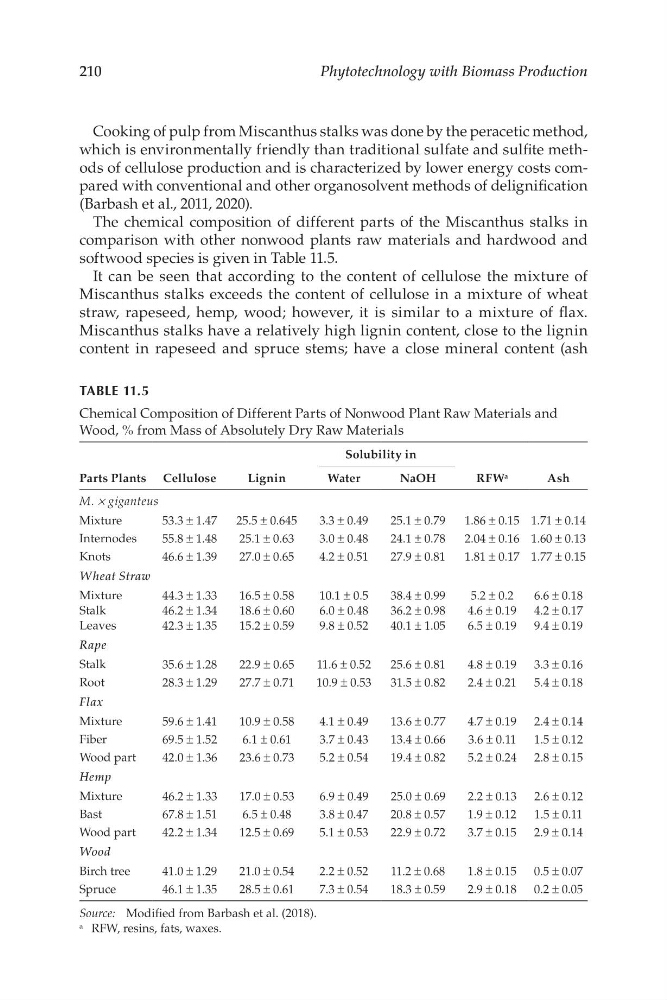
The chemical composition of different parts of the Miscanthus stalks in
comparison with other nonwood plants raw materials and hardwood and
softwood species is given in Table 11.5.
It can be seen that according to the content of cellulose the mixture of
Miscanthus stalks exceeds the content of cellulose in a mixture of wheat
straw, rapeseed, hemp, wood; however, it is similar to a mixture of flax.
Miscanthus stalks have a relatively high lignin content, close to the lignin
content in rapeseed and spruce stems; have a close mineral content (ash
TABLE 11.5
Chemical Composition of Different Parts of Nonwood Plant Raw Materials and
Wood, % from Mass of Absolutely Dry Raw Materials
Solubility in
Parts Plants Cellulose
Lignin
Water
NaOH
RFW a
Ash
M. × giganteus
Mixture
53.3 ± 1.47
25.5 ± 0.645
3.3 ± 0.49
25.1 ± 0.79
1.86 ± 0.15 1.71 ± 0.14
Internodes
55.8 ± 1.48
25.1 ± 0.63
3.0 ± 0.48
24.1 ± 0.78
2.04 ± 0.16 1.60 ± 0.13
Knots
46.6 ± 1.39
27.0 ± 0.65
4.2 ± 0.51
27.9 ± 0.81
1.81 ± 0.17 1.77 ± 0.15
Wheat Straw
Mixture
44.3 ± 1.33
16.5 ± 0.58
10.1 ± 0.5
38.4 ± 0.99
5.2 ± 0.2
6.6 ± 0.18
Stalk
46.2 ± 1.34
18.6 ± 0.60
6.0 ± 0.48
36.2 ± 0.98
4.6 ± 0.19 4.2 ± 0.17
Leaves
42.3 ± 1.35
15.2 ± 0.59
9.8 ± 0.52
40.1 ± 1.05
6.5 ± 0.19 9.4 ± 0.19
Rape
Stalk
35.6 ± 1.28
22.9 ± 0.65
11.6 ± 0.52
25.6 ± 0.81
4.8 ± 0.19 3.3 ± 0.16
Root
28.3 ± 1.29
27.7 ± 0.71
10.9 ± 0.53
31.5 ± 0.82
2.4 ± 0.21 5.4 ± 0.18
Flax
Mixture
59.6 ± 1.41
10.9 ± 0.58
4.1 ± 0.49
13.6 ± 0.77
4.7 ± 0.19 2.4 ± 0.14
Fiber
69.5 ± 1.52
6.1 ± 0.61
3.7 ± 0.43
13.4 ± 0.66
3.6 ± 0.11 1.5 ± 0.12
Wood part
42.0 ± 1.36
23.6 ± 0.73
5.2 ± 0.54
19.4 ± 0.82
5.2 ± 0.24 2.8 ± 0.15
Hemp
Mixture
46.2 ± 1.33
17.0 ± 0.53
6.9 ± 0.49
25.0 ± 0.69
2.2 ± 0.13 2.6 ± 0.12
Bast
67.8 ± 1.51
6.5 ± 0.48
3.8 ± 0.47
20.8 ± 0.57
1.9 ± 0.12 1.5 ± 0.11
Wood part
42.2 ± 1.34
12.5 ± 0.69
5.1 ± 0.53
22.9 ± 0.72
3.7 ± 0.15 2.9 ± 0.14
Wood
Birch tree
41.0 ± 1.29
21.0 ± 0.54
2.2 ± 0.52
11.2 ± 0.68
1.8 ± 0.15 0.5 ± 0.07
Spruce
46.1 ± 1.35
28.5 ± 0.61
7.3 ± 0.54
18.3 ± 0.59
2.9 ± 0.18 0.2 ± 0.05
Source: Modified from Barbash et al. (2018).
a RFW, resins, fats, waxes.
Phytotechnology with Biomass Production
Cooking of pulp from Miscanthus stalks was done by the peracetic method,
which is environmentally friendly than traditional sulfate and sulfite methods of cellulose production and is characterized by lower energy costs compared with conventional and other organosolvent methods of delignification
(Barbash et al., 2011, 2020).
The chemical composition of different parts of the Miscanthus stalks in
comparison with other nonwood plants raw materials and hardwood and
softwood species is given in Table 11.5.
It can be seen that according to the content of cellulose the mixture of
Miscanthus stalks exceeds the content of cellulose in a mixture of wheat
straw, rapeseed, hemp, wood; however, it is similar to a mixture of flax.
Miscanthus stalks have a relatively high lignin content, close to the lignin
content in rapeseed and spruce stems; have a close mineral content (ash
TABLE 11.5
Chemical Composition of Different Parts of Nonwood Plant Raw Materials and
Wood, % from Mass of Absolutely Dry Raw Materials
Solubility in
Parts Plants Cellulose
Lignin
Water
NaOH
RFW a
Ash
M. × giganteus
Mixture
53.3 ± 1.47
25.5 ± 0.645
3.3 ± 0.49
25.1 ± 0.79
1.86 ± 0.15 1.71 ± 0.14
Internodes
55.8 ± 1.48
25.1 ± 0.63
3.0 ± 0.48
24.1 ± 0.78
2.04 ± 0.16 1.60 ± 0.13
Knots
46.6 ± 1.39
27.0 ± 0.65
4.2 ± 0.51
27.9 ± 0.81
1.81 ± 0.17 1.77 ± 0.15
Wheat Straw
Mixture
44.3 ± 1.33
16.5 ± 0.58
10.1 ± 0.5
38.4 ± 0.99
5.2 ± 0.2
6.6 ± 0.18
Stalk
46.2 ± 1.34
18.6 ± 0.60
6.0 ± 0.48
36.2 ± 0.98
4.6 ± 0.19 4.2 ± 0.17
Leaves
42.3 ± 1.35
15.2 ± 0.59
9.8 ± 0.52
40.1 ± 1.05
6.5 ± 0.19 9.4 ± 0.19
Rape
Stalk
35.6 ± 1.28
22.9 ± 0.65
11.6 ± 0.52
25.6 ± 0.81
4.8 ± 0.19 3.3 ± 0.16
Root
28.3 ± 1.29
27.7 ± 0.71
10.9 ± 0.53
31.5 ± 0.82
2.4 ± 0.21 5.4 ± 0.18
Flax
Mixture
59.6 ± 1.41
10.9 ± 0.58
4.1 ± 0.49
13.6 ± 0.77
4.7 ± 0.19 2.4 ± 0.14
Fiber
69.5 ± 1.52
6.1 ± 0.61
3.7 ± 0.43
13.4 ± 0.66
3.6 ± 0.11 1.5 ± 0.12
Wood part
42.0 ± 1.36
23.6 ± 0.73
5.2 ± 0.54
19.4 ± 0.82
5.2 ± 0.24 2.8 ± 0.15
Hemp
Mixture
46.2 ± 1.33
17.0 ± 0.53
6.9 ± 0.49
25.0 ± 0.69
2.2 ± 0.13 2.6 ± 0.12
Bast
67.8 ± 1.51
6.5 ± 0.48
3.8 ± 0.47
20.8 ± 0.57
1.9 ± 0.12 1.5 ± 0.11
Wood part
42.2 ± 1.34
12.5 ± 0.69
5.1 ± 0.53
22.9 ± 0.72
3.7 ± 0.15 2.9 ± 0.14
Wood
Birch tree
41.0 ± 1.29
21.0 ± 0.54
2.2 ± 0.52
11.2 ± 0.68
1.8 ± 0.15 0.5 ± 0.07
Spruce
46.1 ± 1.35
28.5 ± 0.61
7.3 ± 0.54
18.3 ± 0.59
2.9 ± 0.18 0.2 ± 0.05
Source: Modified from Barbash et al. (2018).
a RFW, resins, fats, waxes.