

106
Phytotechnology with Biomass Production
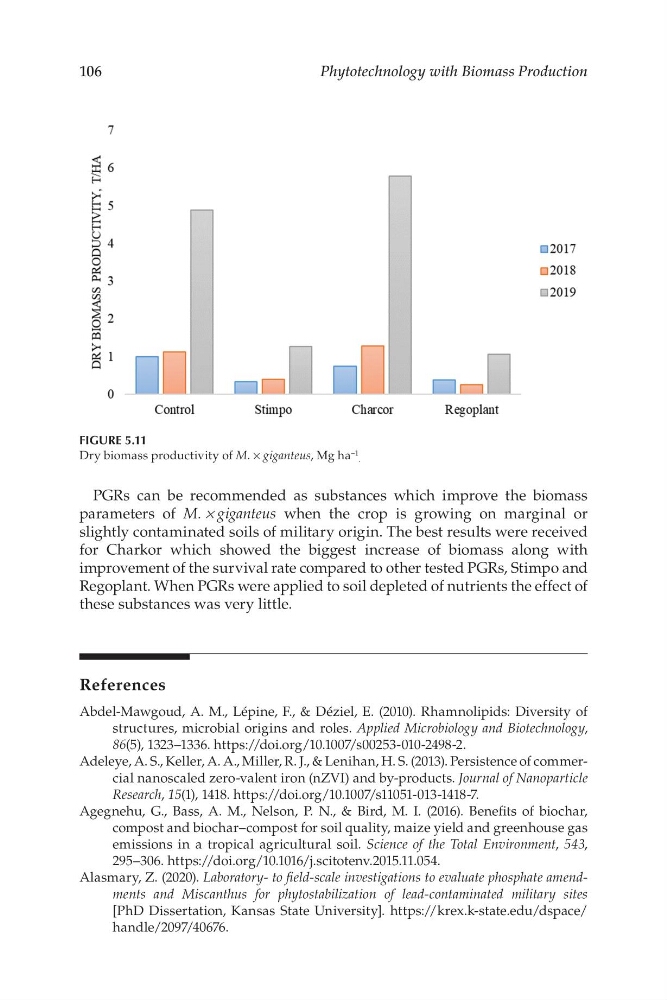
FIGURE 5.11
Dry biomass productivity of M. × giganteus, Mg ha −1
.
PGRs can be recommended as substances which improve the biomass
parameters of M. × giganteus when the crop is growing on marginal or
slightly contaminated soils of military origin. The best results were received
for Charkor which showed the biggest increase of biomass along with
improvement of the survival rate compared to other tested PGRs, Stimpo and
Regoplant. When PGRs were applied to soil depleted of nutrients the effect of
these substances was very little.
References
Abdel-Mawgoud, A. M., Lépine, F., & Déziel, E. (2010). Rhamnolipids: Diversity of
structures, microbial origins and roles. Applied Microbiology and Biotechnology,
86(5), 1323–1336. https://doi.org/10.1007/s00253-010-2498-2.
Adeleye, A. S., Keller, A. A., Miller, R. J., & Lenihan, H. S. (2013). Persistence of commercial nanoscaled zero-valent iron (nZVI) and by-products. Journal of Nanoparticle
Research, 15(1), 1418. https://doi.org/10.1007/s11051-013-1418-7.
Agegnehu, G., Bass, A. M., Nelson, P. N., & Bird, M. I. (2016). Benefits of biochar,
compost and biochar–compost for soil quality, maize yield and greenhouse gas
emissions in a tropical agricultural soil. Science of the Total Environment, 543,
295–306. https://doi.org/10.1016/j.scitotenv.2015.11.054.
Alasmary, Z. (2020). Laboratory- to field-scale investigations to evaluate phosphate amendments and Miscanthus for phytostabilization of lead-contaminated military sites
[PhD Dissertation, Kansas State University]. https://krex.k-state.edu/dspace/
handle/2097/40676.
Phytotechnology with Biomass Production
FIGURE 5.11
Dry biomass productivity of M. × giganteus, Mg ha −1
.
PGRs can be recommended as substances which improve the biomass
parameters of M. × giganteus when the crop is growing on marginal or
slightly contaminated soils of military origin. The best results were received
for Charkor which showed the biggest increase of biomass along with
improvement of the survival rate compared to other tested PGRs, Stimpo and
Regoplant. When PGRs were applied to soil depleted of nutrients the effect of
these substances was very little.
References
Abdel-Mawgoud, A. M., Lépine, F., & Déziel, E. (2010). Rhamnolipids: Diversity of
structures, microbial origins and roles. Applied Microbiology and Biotechnology,
86(5), 1323–1336. https://doi.org/10.1007/s00253-010-2498-2.
Adeleye, A. S., Keller, A. A., Miller, R. J., & Lenihan, H. S. (2013). Persistence of commercial nanoscaled zero-valent iron (nZVI) and by-products. Journal of Nanoparticle
Research, 15(1), 1418. https://doi.org/10.1007/s11051-013-1418-7.
Agegnehu, G., Bass, A. M., Nelson, P. N., & Bird, M. I. (2016). Benefits of biochar,
compost and biochar–compost for soil quality, maize yield and greenhouse gas
emissions in a tropical agricultural soil. Science of the Total Environment, 543,
295–306. https://doi.org/10.1016/j.scitotenv.2015.11.054.
Alasmary, Z. (2020). Laboratory- to field-scale investigations to evaluate phosphate amendments and Miscanthus for phytostabilization of lead-contaminated military sites
[PhD Dissertation, Kansas State University]. https://krex.k-state.edu/dspace/
handle/2097/40676.