

Water Analytics and Management with Real-time Linked Dataspaces
19
more advanced mechanisms for receiving notifications through smart devices. The
wearable info-center application was developed for mobile notifications.
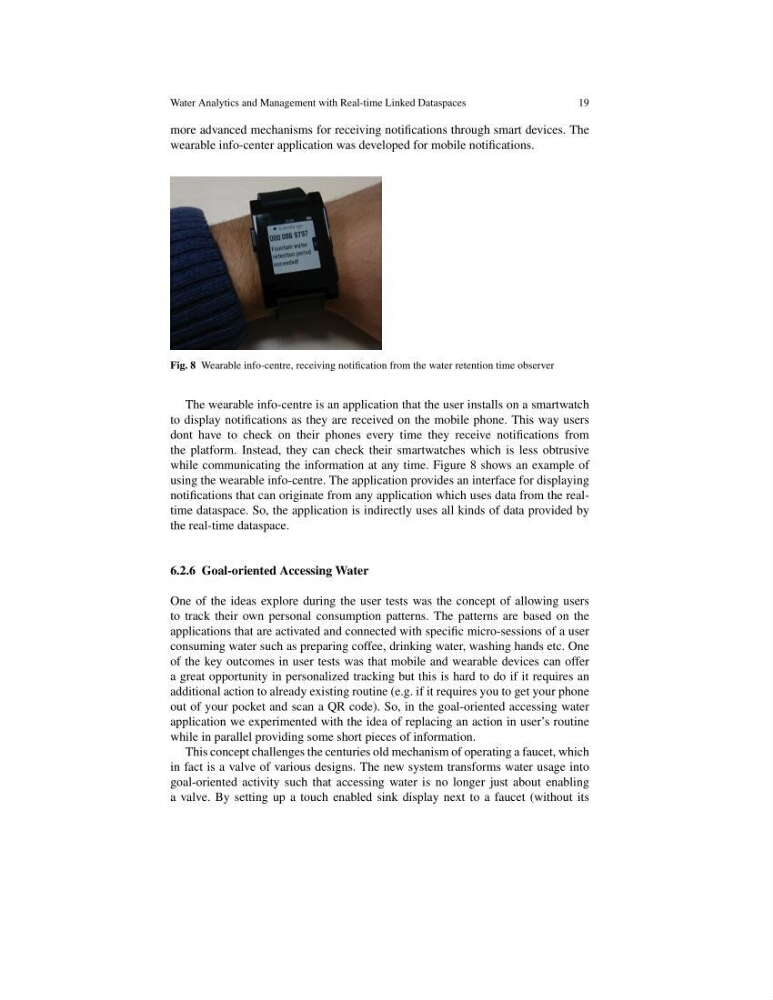
Fig. 8 Wearable info-centre, receiving notification from the water retention time observer
The wearable info-centre is an application that the user installs on a smartwatch
to display notifications as they are received on the mobile phone. This way users
dont have to check on their phones every time they receive notifications from
the platform. Instead, they can check their smartwatches which is less obtrusive
while communicating the information at any time. Figure 8 shows an example of
using the wearable info-centre. The application provides an interface for displaying
notifications that can originate from any application which uses data from the realtime dataspace. So, the application is indirectly uses all kinds of data provided by
the real-time dataspace.
6.2.6 Goal-oriented Accessing Water
One of the ideas explore during the user tests was the concept of allowing users
to track their own personal consumption patterns. The patterns are based on the
applications that are activated and connected with specific micro-sessions of a user
consuming water such as preparing coffee, drinking water, washing hands etc. One
of the key outcomes in user tests was that mobile and wearable devices can offer
a great opportunity in personalized tracking but this is hard to do if it requires an
additional action to already existing routine (e.g. if it requires you to get your phone
out of your pocket and scan a QR code). So, in the goal-oriented accessing water
application we experimented with the idea of replacing an action in user’s routine
while in parallel providing some short pieces of information.
This concept challenges the centuries old mechanism of operating a faucet, which
in fact is a valve of various designs. The new system transforms water usage into
goal-oriented activity such that accessing water is no longer just about enabling
a valve. By setting up a touch enabled sink display next to a faucet (without its
19
more advanced mechanisms for receiving notifications through smart devices. The
wearable info-center application was developed for mobile notifications.
Fig. 8 Wearable info-centre, receiving notification from the water retention time observer
The wearable info-centre is an application that the user installs on a smartwatch
to display notifications as they are received on the mobile phone. This way users
dont have to check on their phones every time they receive notifications from
the platform. Instead, they can check their smartwatches which is less obtrusive
while communicating the information at any time. Figure 8 shows an example of
using the wearable info-centre. The application provides an interface for displaying
notifications that can originate from any application which uses data from the realtime dataspace. So, the application is indirectly uses all kinds of data provided by
the real-time dataspace.
6.2.6 Goal-oriented Accessing Water
One of the ideas explore during the user tests was the concept of allowing users
to track their own personal consumption patterns. The patterns are based on the
applications that are activated and connected with specific micro-sessions of a user
consuming water such as preparing coffee, drinking water, washing hands etc. One
of the key outcomes in user tests was that mobile and wearable devices can offer
a great opportunity in personalized tracking but this is hard to do if it requires an
additional action to already existing routine (e.g. if it requires you to get your phone
out of your pocket and scan a QR code). So, in the goal-oriented accessing water
application we experimented with the idea of replacing an action in user’s routine
while in parallel providing some short pieces of information.
This concept challenges the centuries old mechanism of operating a faucet, which
in fact is a valve of various designs. The new system transforms water usage into
goal-oriented activity such that accessing water is no longer just about enabling
a valve. By setting up a touch enabled sink display next to a faucet (without its