

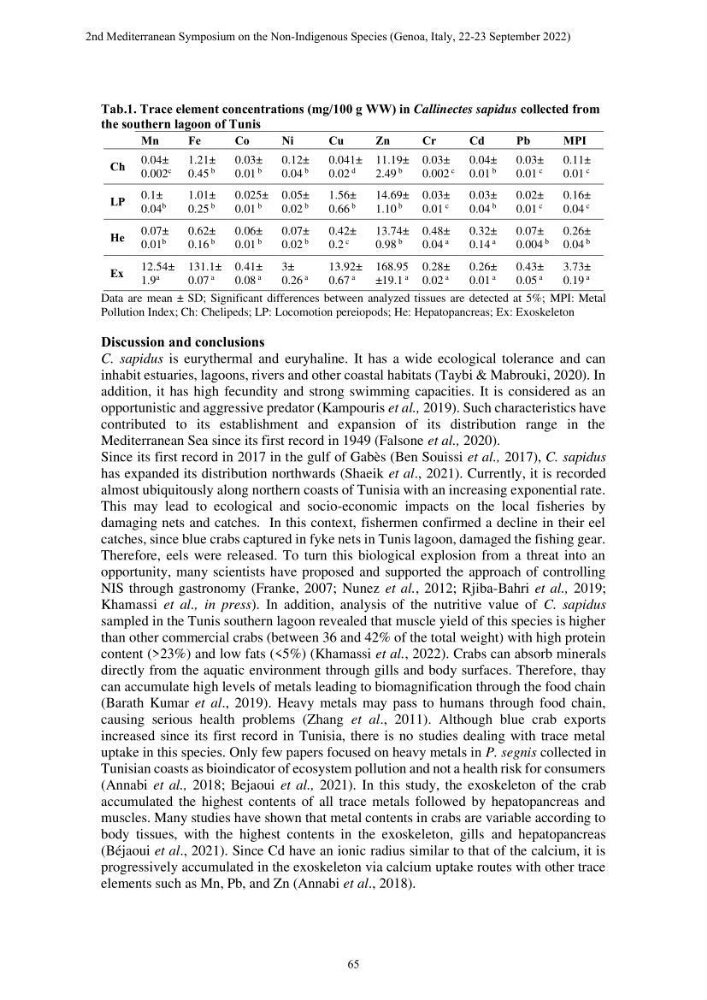
Tab.1. Trace element concentrations (mg/100 g WW) in Callinectes sapidus collected from
the southern lagoon of Tunis
Mn
Fe
Co
Ni
Cu
Zn
Cr
Cd
Pb
MPI
Ch
0.04±
0.002
c
1.21±
0.45
b
0.03±
0.01
b
0.12±
0.04
b
0.041±
0.02
d
11.19±
2.49
b
0.03±
0.002
c
0.04±
0.01
b
0.03±
0.01
c
0.11±
0.01
c
LP
0.1±
0.04
b
1.01±
0.25
b
0.025±
0.01
b
0.05±
0.02
b
1.56±
0.66
b
14.69±
1.10
b
0.03±
0.01
c
0.03±
0.04
b
0.02±
0.01
c
0.16±
0.04
c
He
0.07±
0.01
b
0.62±
0.16
b
0.06±
0.01
b
0.07±
0.02
b
0.42±
0.2
c
13.74±
0.98
b
0.48±
0.04
a
0.32±
0.14
a
0.07±
0.004
b
0.26±
0.04
b
Ex
12.54±
1.9
a
131.1±
0.07
a
0.41±
0.08
a
3±
0.26
a
13.92±
0.67
a
168.95
±19.1
a
0.28±
0.02
a
0.26±
0.01
a
0.43±
0.05
a
3.73±
0.19
a
Data are mean ± SD; Significant differences between analyzed tissues are detected at 5%; MPI: Metal
Pollution Index; Ch: Chelipeds; LP: Locomotion pereiopods; He: Hepatopancreas; Ex: Exoskeleton
Discussion and conclusions
C. sapidus is eurythermal and euryhaline. It has a wide ecological tolerance and can
inhabit estuaries, lagoons, rivers and other coastal habitats (Taybi & Mabrouki, 2020). In
addition, it has high fecundity and strong swimming capacities. It is considered as an
opportunistic and aggressive predator (Kampouris et al., 2019). Such characteristics have
contributed to its establishment and expansion of its distribution range in the
Mediterranean Sea since its first record in 1949 (Falsone et al., 2020).
Since its first record in 2017 in the gulf of Gabès (Ben Souissi et al., 2017), C. sapidus
has expanded its distribution northwards (Shaeik et al., 2021). Currently, it is recorded
almost ubiquitously along northern coasts of Tunisia with an increasing exponential rate.
This may lead to ecological and socio-economic impacts on the local fisheries by
damaging nets and catches. In this context, fishermen confirmed a decline in their eel
catches, since blue crabs captured in fyke nets in Tunis lagoon, damaged the fishing gear.
Therefore, eels were released. To turn this biological explosion from a threat into an
opportunity, many scientists have proposed and supported the approach of controlling
NIS through gastronomy (Franke, 2007; Nunez et al., 2012; Rjiba-Bahri et al., 2019;
Khamassi et al., in press). In addition, analysis of the nutritive value of C. sapidus
sampled in the Tunis southern lagoon revealed that muscle yield of this species is higher
than other commercial crabs (between 36 and 42% of the total weight) with high protein
content (>23%) and low fats (<5%) (Khamassi et al., 2022). Crabs can absorb minerals
directly from the aquatic environment through gills and body surfaces. Therefore, thay
can accumulate high levels of metals leading to biomagnification through the food chain
(Barath Kumar et al., 2019). Heavy metals may pass to humans through food chain,
causing serious health problems (Zhang et al., 2011). Although blue crab exports
increased since its first record in Tunisia, there is no studies dealing with trace metal
uptake in this species. Only few papers focused on heavy metals in P. segnis collected in
Tunisian coasts as bioindicator of ecosystem pollution and not a health risk for consumers
(Annabi et al., 2018; Bejaoui et al., 2021). In this study, the exoskeleton of the crab
accumulated the highest contents of all trace metals followed by hepatopancreas and
muscles. Many studies have shown that metal contents in crabs are variable according to
body tissues, with the highest contents in the exoskeleton, gills and hepatopancreas
(Béjaoui et al., 2021). Since Cd have an ionic radius similar to that of the calcium, it is
progressively accumulated in the exoskeleton via calcium uptake routes with other trace
elements such as Mn, Pb, and Zn (Annabi et al., 2018).
2nd Mediterranean Symposium on the Non-Indigenous Species (Genoa, Italy, 22-23 September 2022)
65
the southern lagoon of Tunis
Mn
Fe
Co
Ni
Cu
Zn
Cr
Cd
Pb
MPI
Ch
0.04±
0.002
c
1.21±
0.45
b
0.03±
0.01
b
0.12±
0.04
b
0.041±
0.02
d
11.19±
2.49
b
0.03±
0.002
c
0.04±
0.01
b
0.03±
0.01
c
0.11±
0.01
c
LP
0.1±
0.04
b
1.01±
0.25
b
0.025±
0.01
b
0.05±
0.02
b
1.56±
0.66
b
14.69±
1.10
b
0.03±
0.01
c
0.03±
0.04
b
0.02±
0.01
c
0.16±
0.04
c
He
0.07±
0.01
b
0.62±
0.16
b
0.06±
0.01
b
0.07±
0.02
b
0.42±
0.2
c
13.74±
0.98
b
0.48±
0.04
a
0.32±
0.14
a
0.07±
0.004
b
0.26±
0.04
b
Ex
12.54±
1.9
a
131.1±
0.07
a
0.41±
0.08
a
3±
0.26
a
13.92±
0.67
a
168.95
±19.1
a
0.28±
0.02
a
0.26±
0.01
a
0.43±
0.05
a
3.73±
0.19
a
Data are mean ± SD; Significant differences between analyzed tissues are detected at 5%; MPI: Metal
Pollution Index; Ch: Chelipeds; LP: Locomotion pereiopods; He: Hepatopancreas; Ex: Exoskeleton
Discussion and conclusions
C. sapidus is eurythermal and euryhaline. It has a wide ecological tolerance and can
inhabit estuaries, lagoons, rivers and other coastal habitats (Taybi & Mabrouki, 2020). In
addition, it has high fecundity and strong swimming capacities. It is considered as an
opportunistic and aggressive predator (Kampouris et al., 2019). Such characteristics have
contributed to its establishment and expansion of its distribution range in the
Mediterranean Sea since its first record in 1949 (Falsone et al., 2020).
Since its first record in 2017 in the gulf of Gabès (Ben Souissi et al., 2017), C. sapidus
has expanded its distribution northwards (Shaeik et al., 2021). Currently, it is recorded
almost ubiquitously along northern coasts of Tunisia with an increasing exponential rate.
This may lead to ecological and socio-economic impacts on the local fisheries by
damaging nets and catches. In this context, fishermen confirmed a decline in their eel
catches, since blue crabs captured in fyke nets in Tunis lagoon, damaged the fishing gear.
Therefore, eels were released. To turn this biological explosion from a threat into an
opportunity, many scientists have proposed and supported the approach of controlling
NIS through gastronomy (Franke, 2007; Nunez et al., 2012; Rjiba-Bahri et al., 2019;
Khamassi et al., in press). In addition, analysis of the nutritive value of C. sapidus
sampled in the Tunis southern lagoon revealed that muscle yield of this species is higher
than other commercial crabs (between 36 and 42% of the total weight) with high protein
content (>23%) and low fats (<5%) (Khamassi et al., 2022). Crabs can absorb minerals
directly from the aquatic environment through gills and body surfaces. Therefore, thay
can accumulate high levels of metals leading to biomagnification through the food chain
(Barath Kumar et al., 2019). Heavy metals may pass to humans through food chain,
causing serious health problems (Zhang et al., 2011). Although blue crab exports
increased since its first record in Tunisia, there is no studies dealing with trace metal
uptake in this species. Only few papers focused on heavy metals in P. segnis collected in
Tunisian coasts as bioindicator of ecosystem pollution and not a health risk for consumers
(Annabi et al., 2018; Bejaoui et al., 2021). In this study, the exoskeleton of the crab
accumulated the highest contents of all trace metals followed by hepatopancreas and
muscles. Many studies have shown that metal contents in crabs are variable according to
body tissues, with the highest contents in the exoskeleton, gills and hepatopancreas
(Béjaoui et al., 2021). Since Cd have an ionic radius similar to that of the calcium, it is
progressively accumulated in the exoskeleton via calcium uptake routes with other trace
elements such as Mn, Pb, and Zn (Annabi et al., 2018).
2nd Mediterranean Symposium on the Non-Indigenous Species (Genoa, Italy, 22-23 September 2022)
65