

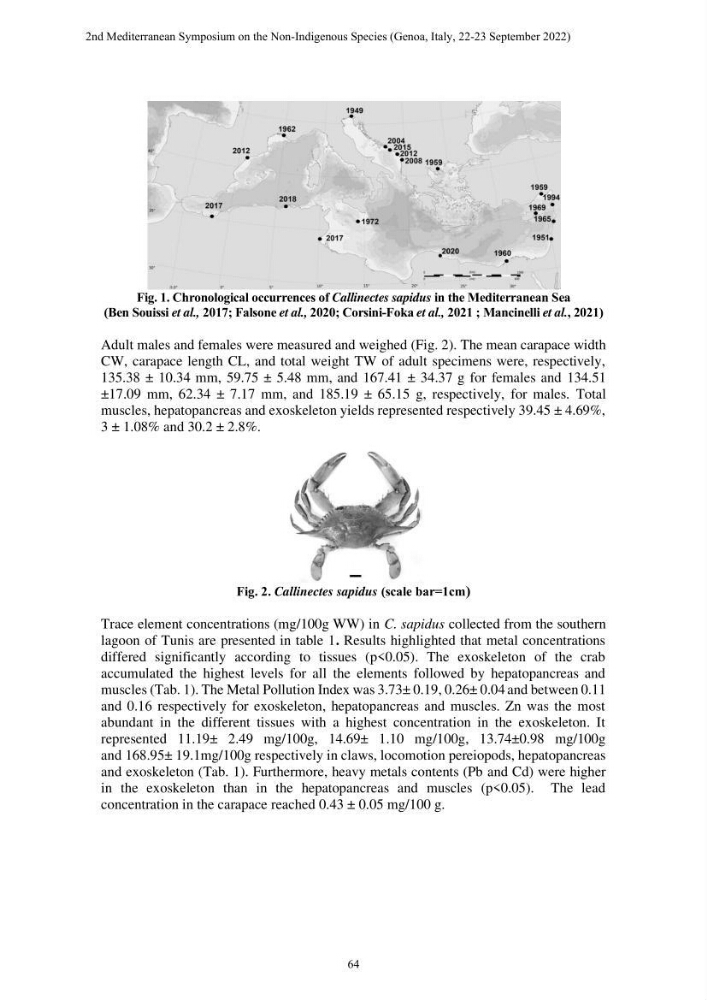
Fig. 1. Chronological occurrences of Callinectes sapidus in the Mediterranean Sea
(Ben Souissi et al., 2017; Falsone et al., 2020; Corsini-Foka et al., 2021 ; Mancinelli et al., 2021)
Adult males and females were measured and weighed (Fig. 2). The mean carapace width
CW, carapace length CL, and total weight TW of adult specimens were, respectively,
135.38 ± 10.34 mm, 59.75 ± 5.48 mm, and 167.41 ± 34.37 g for females and 134.51
±17.09 mm, 62.34 ± 7.17 mm, and 185.19 ± 65.15 g, respectively, for males. Total
muscles, hepatopancreas and exoskeleton yields represented respectively 39.45 ± 4.69%,
3 ± 1.08% and 30.2 ± 2.8%.
Fig. 2. Callinectes sapidus (scale bar=1cm)
Trace element concentrations (mg/100g WW) in C. sapidus collected from the southern
lagoon of Tunis are presented in table 1. Results highlighted that metal concentrations
differed significantly according to tissues (p<0.05). The exoskeleton of the crab
accumulated the highest levels for all the elements followed by hepatopancreas and
muscles (Tab. 1). The Metal Pollution Index was 3.73± 0.19, 0.26± 0.04 and between 0.11
and 0.16 respectively for exoskeleton, hepatopancreas and muscles. Zn was the most
abundant in the different tissues with a highest concentration in the exoskeleton. It
represented 11.19± 2.49 mg/100g, 14.69± 1.10 mg/100g, 13.74±0.98 mg/100g
and 168.95± 19.1mg/100g respectively in claws, locomotion pereiopods, hepatopancreas
and exoskeleton (Tab. 1). Furthermore, heavy metals contents (Pb and Cd) were higher
in the exoskeleton than in the hepatopancreas and muscles (p<0.05). The lead
concentration in the carapace reached 0.43 ± 0.05 mg/100 g.
2nd Mediterranean Symposium on the Non-Indigenous Species (Genoa, Italy, 22-23 September 2022)
64
(Ben Souissi et al., 2017; Falsone et al., 2020; Corsini-Foka et al., 2021 ; Mancinelli et al., 2021)
Adult males and females were measured and weighed (Fig. 2). The mean carapace width
CW, carapace length CL, and total weight TW of adult specimens were, respectively,
135.38 ± 10.34 mm, 59.75 ± 5.48 mm, and 167.41 ± 34.37 g for females and 134.51
±17.09 mm, 62.34 ± 7.17 mm, and 185.19 ± 65.15 g, respectively, for males. Total
muscles, hepatopancreas and exoskeleton yields represented respectively 39.45 ± 4.69%,
3 ± 1.08% and 30.2 ± 2.8%.
Fig. 2. Callinectes sapidus (scale bar=1cm)
Trace element concentrations (mg/100g WW) in C. sapidus collected from the southern
lagoon of Tunis are presented in table 1. Results highlighted that metal concentrations
differed significantly according to tissues (p<0.05). The exoskeleton of the crab
accumulated the highest levels for all the elements followed by hepatopancreas and
muscles (Tab. 1). The Metal Pollution Index was 3.73± 0.19, 0.26± 0.04 and between 0.11
and 0.16 respectively for exoskeleton, hepatopancreas and muscles. Zn was the most
abundant in the different tissues with a highest concentration in the exoskeleton. It
represented 11.19± 2.49 mg/100g, 14.69± 1.10 mg/100g, 13.74±0.98 mg/100g
and 168.95± 19.1mg/100g respectively in claws, locomotion pereiopods, hepatopancreas
and exoskeleton (Tab. 1). Furthermore, heavy metals contents (Pb and Cd) were higher
in the exoskeleton than in the hepatopancreas and muscles (p<0.05). The lead
concentration in the carapace reached 0.43 ± 0.05 mg/100 g.
2nd Mediterranean Symposium on the Non-Indigenous Species (Genoa, Italy, 22-23 September 2022)
64