

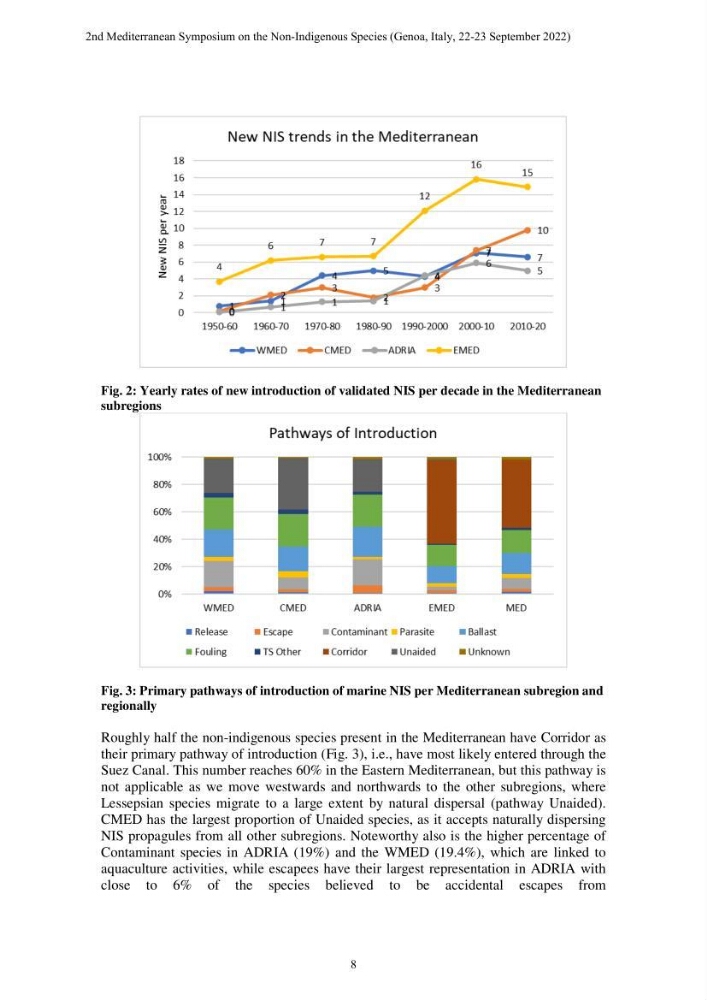
Fig. 2: Yearly rates of new introduction of validated NIS per decade in the Mediterranean
subregions
Fig. 3: Primary pathways of introduction of marine NIS per Mediterranean subregion and
regionally
Roughly half the non-indigenous species present in the Mediterranean have Corridor as
their primary pathway of introduction (Fig. 3), i.e., have most likely entered through the
Suez Canal. This number reaches 60% in the Eastern Mediterranean, but this pathway is
not applicable as we move westwards and northwards to the other subregions, where
Lessepsian species migrate to a large extent by natural dispersal (pathway Unaided).
CMED has the largest proportion of Unaided species, as it accepts naturally dispersing
NIS propagules from all other subregions. Noteworthy also is the higher percentage of
Contaminant species in ADRIA (19%) and the WMED (19.4%), which are linked to
aquaculture activities, while escapees have their largest representation in ADRIA with
close to 6% of the species believed to be accidental escapes from
2nd Mediterranean Symposium on the Non-Indigenous Species (Genoa, Italy, 22-23 September 2022)
8
subregions
Fig. 3: Primary pathways of introduction of marine NIS per Mediterranean subregion and
regionally
Roughly half the non-indigenous species present in the Mediterranean have Corridor as
their primary pathway of introduction (Fig. 3), i.e., have most likely entered through the
Suez Canal. This number reaches 60% in the Eastern Mediterranean, but this pathway is
not applicable as we move westwards and northwards to the other subregions, where
Lessepsian species migrate to a large extent by natural dispersal (pathway Unaided).
CMED has the largest proportion of Unaided species, as it accepts naturally dispersing
NIS propagules from all other subregions. Noteworthy also is the higher percentage of
Contaminant species in ADRIA (19%) and the WMED (19.4%), which are linked to
aquaculture activities, while escapees have their largest representation in ADRIA with
close to 6% of the species believed to be accidental escapes from
2nd Mediterranean Symposium on the Non-Indigenous Species (Genoa, Italy, 22-23 September 2022)
8