

,
_
.
…
.
…
\
Airâupply
—
‘
\
.
\
Total Effective Surface Area
Oxygen
lncreased by Turbulence
|
l‘
Water
'
..
FISH
‘
l
Cari>on
ï
%°°% Carbon
Di0Xide
_
°êë
Dioxide
’
(
___)
8xÊen }…ght
_
_
,
” /(<—
sa
_
.
_
Ëi£îiËe
ABSORPTION \\ (
/
/{__, ËÎËÏË
‘
._“
\ /PLANT ?HOTOSYNTHESIS
.
—.-—.—
ta=:“nW
...
«
«
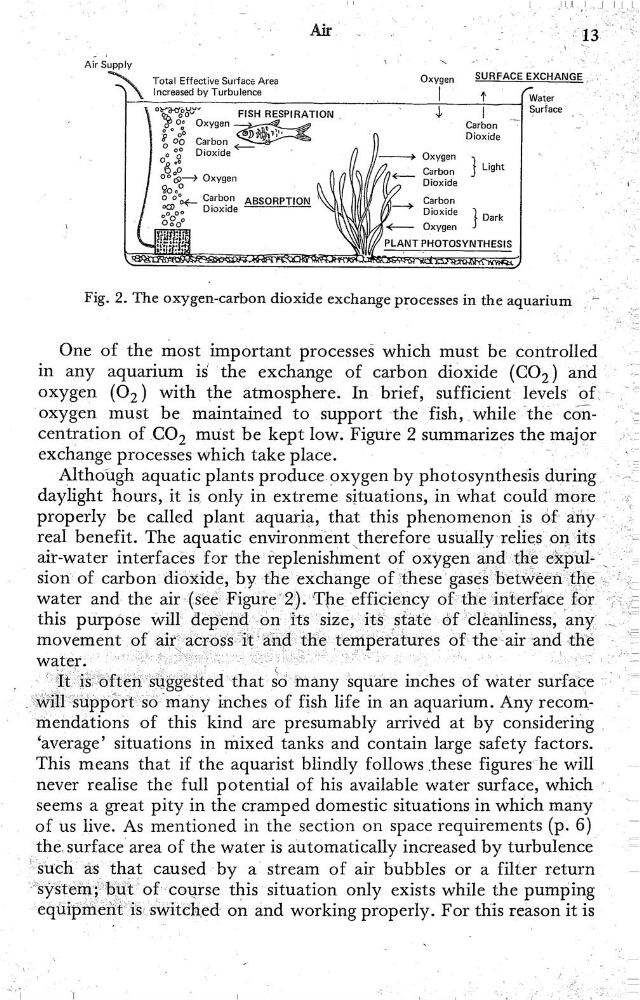
Fig. 2. The oxygen-carbon dioxide exchange processes
in the aquarium
'
_
One of the most important processes which must be controlled.
in any aquarium is' the exchange of carbon dioxide (002) and Ï ‘ ÏÏ_;
oxygen (02) with the atmosphere. In- brief, sufficient levels Ofy
oxygen must be maintained to support the fish,_while the cdi—
centration of C02 must be kept low. Figure 2 summarizes the major
exchange processes Which take place.
*
«
'
_
Although aquatic-plants producepxygen by photosyntheSis during
'daylight hours, it
only in extreme situations, in what
properly be called plant
that this phen0menon' _is of any ,
real benefit. The aquatic
Ïï—
air—water
for the replenishment of
Ï
.
sion"of carbon“ dièXi‘de, by. the exchange of
water and» the air :(;s—eëà 1gure2)The efficiency“ off'the “interface
_
this
will depend
"size;
of
any?
Î
movement of a1racr0851tandthe temperatures of the
and the -
__
It150ftensuggested
"square inches ”of water Surface
w1115upportsomany inches of fish life in an aquarium. Any reco'ni—
_
‘
‘
mendations of this kind are presumably arrivéd at by considerihg
‘average’ situations in mixed tanks and contain large safety factors.
This means that if the aquarist blindly follows these figures"he Will
-
never realise the full potential of his available water surface, which
seems a great pity in the cramped domestic situations in which many
.
of us live. As mentioned in the section on space requirements (p.— 6)
of the water is automatically increased by
that caused by a stream of air bubbles or a filter return
system,butofcout5e thissituation only exists while the pumping
on and working properly. For this reason it is
_
.
…
.
…
\
Airâupply
—
‘
\
.
\
Total Effective Surface Area
Oxygen
lncreased by Turbulence
|
l‘
Water
'
..
FISH
‘
l
Cari>on
ï
%°°% Carbon
Di0Xide
_
°êë
Dioxide
’
(
___)
8xÊen }…ght
_
_
,
” /(<—
sa
_
.
_
Ëi£îiËe
ABSORPTION \\ (
/
/{__, ËÎËÏË
‘
._“
\ /PLANT ?HOTOSYNTHESIS
.
—.-—.—
ta=:“nW
...
«
«
Fig. 2. The oxygen-carbon dioxide exchange processes
in the aquarium
'
_
One of the most important processes which must be controlled.
in any aquarium is' the exchange of carbon dioxide (002) and Ï ‘ ÏÏ_;
oxygen (02) with the atmosphere. In- brief, sufficient levels Ofy
oxygen must be maintained to support the fish,_while the cdi—
centration of C02 must be kept low. Figure 2 summarizes the major
exchange processes Which take place.
*
«
'
_
Although aquatic-plants producepxygen by photosyntheSis during
'daylight hours, it
only in extreme situations, in what
properly be called plant
that this phen0menon' _is of any ,
real benefit. The aquatic
Ïï—
air—water
for the replenishment of
Ï
.
sion"of carbon“ dièXi‘de, by. the exchange of
water and» the air :(;s—eëà 1gure2)The efficiency“ off'the “interface
_
this
will depend
"size;
of
any?
Î
movement of a1racr0851tandthe temperatures of the
and the -
__
It150ftensuggested
"square inches ”of water Surface
w1115upportsomany inches of fish life in an aquarium. Any reco'ni—
_
‘
‘
mendations of this kind are presumably arrivéd at by considerihg
‘average’ situations in mixed tanks and contain large safety factors.
This means that if the aquarist blindly follows these figures"he Will
-
never realise the full potential of his available water surface, which
seems a great pity in the cramped domestic situations in which many
.
of us live. As mentioned in the section on space requirements (p.— 6)
of the water is automatically increased by
that caused by a stream of air bubbles or a filter return
system,butofcout5e thissituation only exists while the pumping
on and working properly. For this reason it is