

180
Coastal Engineering: Theory and Practice
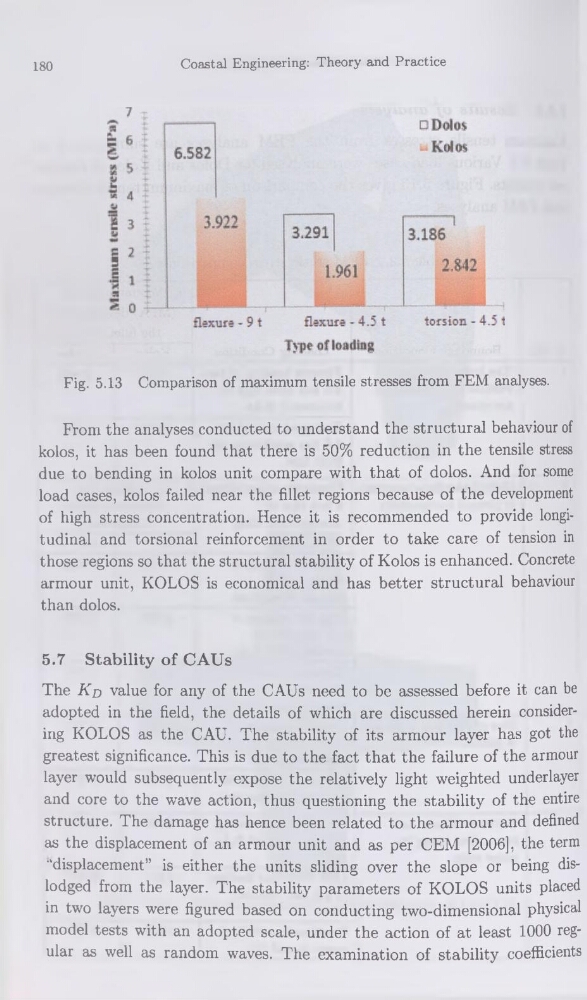
Fig. 5.13 Comparison of maximum tensile stresses from FEM analyses.
From the analyses conducted to understand the structural behaviour of
kolos, it has been found that there is 50% réduction in the tensile stress
due to bending in kolos unit compare with that of dolos. And for some
load cases, kolos failed near the fillet régions because of the development
of high stress concentration. Hence it is recommended to provide longitudinal and torsional reinforcement in order to take care of tension in
those régions so that the structural stability of Kolos is enhanced. Concrète
armour unit, KOLOS is economical and has better structural behaviour
than dolos.
5.7 Stability of CAUs
The Kd value for any of the CAUs need to be assessed before it can be
adopted in the field, the details of which are discussed herein considering KOLOS as the CAU. The stability of its armour layer has got the
greatest significance. This is due to the fact that the failure of the armour
layer would subsequently expose the relatively light weighted underlayer
and core to the wave action, thus questioning the stability of the entire
structure. The damage has hence been related to the armour and defined
as the displacement of an armour unit and as per CEM [2006], the term
■'displacement” is either the units sliding over the slope or being dislodged from the layer. The stability parameters of KOLOS units placed
in two layers were figured based on conducting two-dimensional physical
model tests with an adopted scale, under the action of at least 1000 régulât as well as random waves. The examination of stability coefficients
Coastal Engineering: Theory and Practice
Fig. 5.13 Comparison of maximum tensile stresses from FEM analyses.
From the analyses conducted to understand the structural behaviour of
kolos, it has been found that there is 50% réduction in the tensile stress
due to bending in kolos unit compare with that of dolos. And for some
load cases, kolos failed near the fillet régions because of the development
of high stress concentration. Hence it is recommended to provide longitudinal and torsional reinforcement in order to take care of tension in
those régions so that the structural stability of Kolos is enhanced. Concrète
armour unit, KOLOS is economical and has better structural behaviour
than dolos.
5.7 Stability of CAUs
The Kd value for any of the CAUs need to be assessed before it can be
adopted in the field, the details of which are discussed herein considering KOLOS as the CAU. The stability of its armour layer has got the
greatest significance. This is due to the fact that the failure of the armour
layer would subsequently expose the relatively light weighted underlayer
and core to the wave action, thus questioning the stability of the entire
structure. The damage has hence been related to the armour and defined
as the displacement of an armour unit and as per CEM [2006], the term
■'displacement” is either the units sliding over the slope or being dislodged from the layer. The stability parameters of KOLOS units placed
in two layers were figured based on conducting two-dimensional physical
model tests with an adopted scale, under the action of at least 1000 régulât as well as random waves. The examination of stability coefficients