

Thermohaline Data and Océan Circulation on the Ross Sea Continental Shelf
11
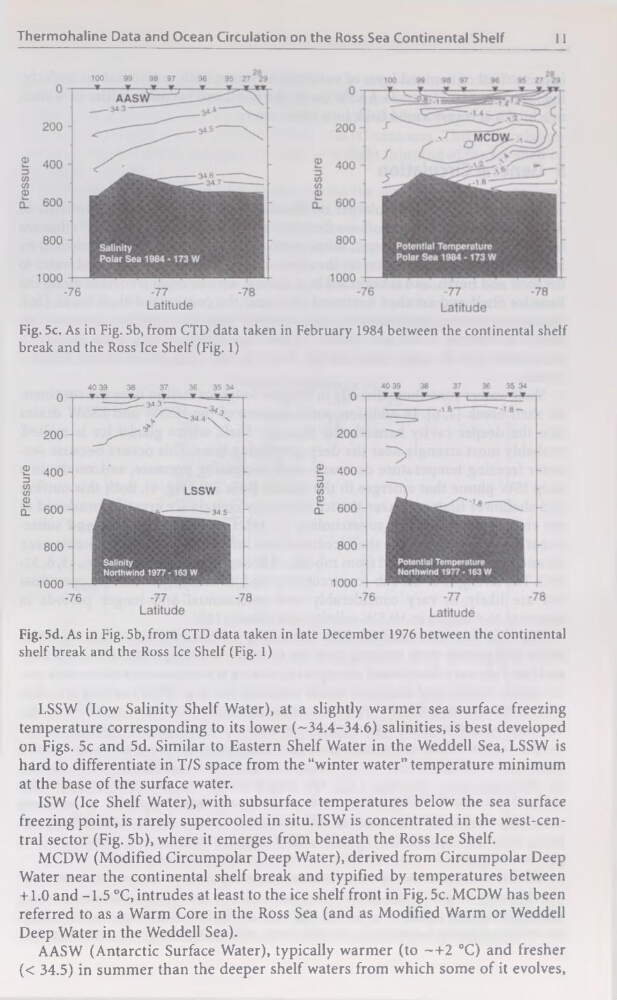
Fig. 5c. As in Fig. 5b, from CTD data taken in February 1984 between the continental shelf
break and the Ross Ice Shelf (Fig. 1)
Fig. 5d. As in Fig. 5b, from CTD data taken in late December 1976 between the continental
shelf break and the Ross Ice Shelf (Fig. 1)
LSSW (Low Salinity Shelf Water), at a slightly warmer sea surface freezing
température corresponding to its lower (-34.4-34.6) salinities, is best developed
on Figs. 5c and 5d. Similar to Eastern Shelf Water in the Weddell Sea, LSSW is
hard to differentiate in T/S space from the “winter water” température minimum
at the base of the surface water.
ISW (Ice Shelf Water), with subsurface températures below the sea surface
freezing point, is rarely supercooled in situ. ISW is concentrated in the west-central sector (Fig. 5b), where it emerges from beneath the Ross Ice Shelf.
MCDW (Modified Circumpolar Deep Water), derived from Circumpolar Deep
Water near the continental shelf break and typified by températures between
+1.0 and -1.5 °C, intrudes at least to the ice shelf front in Fig. 5c. MCDW has been
referred to as a Warm Core in the Ross Sea (and as Modified Warm or Weddell
Deep Water in the Weddell Sea).
AASW (Antarctic Surface Water), typically warmer (to ~+2 °C) and fresher
(< 34.5) in summer than the deeper shelf waters from which some of it evolves,
11
Fig. 5c. As in Fig. 5b, from CTD data taken in February 1984 between the continental shelf
break and the Ross Ice Shelf (Fig. 1)
Fig. 5d. As in Fig. 5b, from CTD data taken in late December 1976 between the continental
shelf break and the Ross Ice Shelf (Fig. 1)
LSSW (Low Salinity Shelf Water), at a slightly warmer sea surface freezing
température corresponding to its lower (-34.4-34.6) salinities, is best developed
on Figs. 5c and 5d. Similar to Eastern Shelf Water in the Weddell Sea, LSSW is
hard to differentiate in T/S space from the “winter water” température minimum
at the base of the surface water.
ISW (Ice Shelf Water), with subsurface températures below the sea surface
freezing point, is rarely supercooled in situ. ISW is concentrated in the west-central sector (Fig. 5b), where it emerges from beneath the Ross Ice Shelf.
MCDW (Modified Circumpolar Deep Water), derived from Circumpolar Deep
Water near the continental shelf break and typified by températures between
+1.0 and -1.5 °C, intrudes at least to the ice shelf front in Fig. 5c. MCDW has been
referred to as a Warm Core in the Ross Sea (and as Modified Warm or Weddell
Deep Water in the Weddell Sea).
AASW (Antarctic Surface Water), typically warmer (to ~+2 °C) and fresher
(< 34.5) in summer than the deeper shelf waters from which some of it evolves,