

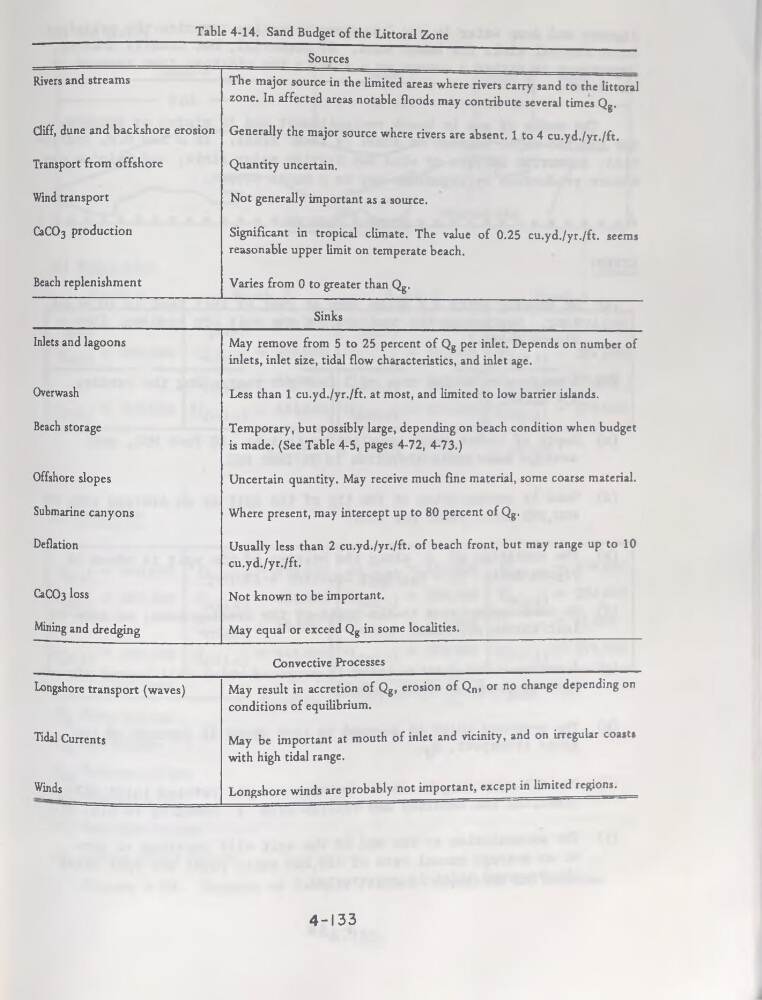
Table 4-14. Sand Budget of the Littoral Zone
________________________________________ Sources
Rivers and streams
The major source in the limited areas where rivers carry sand to the littoral
zone. In affected areas notable floods may contribute several times Qg.
Cliff, dune and backshore érosion Generally the major source where rivers are absent. 1 to 4 cu.yd./yr./ft.
Transport from offshore
Quantity uncertain.
Wind transport
Not generally important as a source.
CaCÛ3 production
Significant in tropical climate. The value of 0.25 cu.yd./yr./ft. seems
reasonable upper limit on temperate beach.
Beach replenishment
Varies from 0 to greater than Qg.
Sinks
Inlets and lagoons
May remove from 5 to 25 percent of Qg per inlet. Dépends on number of
inlets, inlet size, tidal flow characteristics, and inlet âge.
Overwash
Less than 1 cu.yd./yr./ft. at most, and limited to low barrier islands.
Beach storage
Temporary, but possibly large, depending on beach condition when budget
is made. (See Table 4-5, pages 4-72, 4-73.)
Offshore slopes
Uncertain quantity. May receive much fine material, some coarse material.
Submarine canyons
Where présent, may intercept up to 80 percent of Qg.
Déflation
Usually less than 2 cu.yd./yr./ft. of beach front, but may range up to 10
cu.yd./yr./ft.
CaCOj loss
Not known to be important.
Mining and dredging
May equal or exceed Qg in some localities.
Convective Processes
Longshore transport (waves)
May resuit in accretion of Qg, érosion of Qn, or no change depending on
conditions of equilibrium.
Tidal Currents
May be important at mouth of inlet and vicinity, and on irregular coasts
with high tidal range.
Winds
Longshore winds are probably not important, except in limited régions.
4-133
________________________________________ Sources
Rivers and streams
The major source in the limited areas where rivers carry sand to the littoral
zone. In affected areas notable floods may contribute several times Qg.
Cliff, dune and backshore érosion Generally the major source where rivers are absent. 1 to 4 cu.yd./yr./ft.
Transport from offshore
Quantity uncertain.
Wind transport
Not generally important as a source.
CaCÛ3 production
Significant in tropical climate. The value of 0.25 cu.yd./yr./ft. seems
reasonable upper limit on temperate beach.
Beach replenishment
Varies from 0 to greater than Qg.
Sinks
Inlets and lagoons
May remove from 5 to 25 percent of Qg per inlet. Dépends on number of
inlets, inlet size, tidal flow characteristics, and inlet âge.
Overwash
Less than 1 cu.yd./yr./ft. at most, and limited to low barrier islands.
Beach storage
Temporary, but possibly large, depending on beach condition when budget
is made. (See Table 4-5, pages 4-72, 4-73.)
Offshore slopes
Uncertain quantity. May receive much fine material, some coarse material.
Submarine canyons
Where présent, may intercept up to 80 percent of Qg.
Déflation
Usually less than 2 cu.yd./yr./ft. of beach front, but may range up to 10
cu.yd./yr./ft.
CaCOj loss
Not known to be important.
Mining and dredging
May equal or exceed Qg in some localities.
Convective Processes
Longshore transport (waves)
May resuit in accretion of Qg, érosion of Qn, or no change depending on
conditions of equilibrium.
Tidal Currents
May be important at mouth of inlet and vicinity, and on irregular coasts
with high tidal range.
Winds
Longshore winds are probably not important, except in limited régions.
4-133