

so that the globally averaged air–sea exchange is
effectively zero and the globally averaged net evaporation equals the runoff from the continents.
Additional calculations also constrained the meridional ocean heat transport to have fixed values at
the equator and at 24°N in the Atlantic, to agree
with direct estimates of ocean heat transport. The
effect of these adjustments is to reduce the incoming radiation and to increase the evaporative heat
loss by the oceans. Large et al. (1997) similarly
reduced the amount of incoming radiation by
12.5% and decreased the humidity by 7%, thereby
increasing the evaporation, to achieve global heat
balance. Josey et al. (1999) argued that such uniform adjustments are not appropriate. Comparison
of the SOC climatological values with buoy measurements of air–sea fluxes at three sites suggested
that adjustments vary by region, with good agreement between climatology and measurements in
the eastern subtropical North Atlantic, but with
offsets of 17 and 23 W m
92 in the Arabian Sea and
tropical Pacific, respectively. In the latter case, the
difference is primarily due to smaller short-wave
radiative heating of the ocean as seen in the buoy
measurements. Moreover, applying da Silva et al.’s
(1994) uniform adjustments actually increased the
differences between the SOC climatology and the
buoy measurements at all three sites. Josey et al.
(1999) concluded that adjustments to the climatological fluxes must be done locally, by different
adjustments in different regions, and that more
comparisons between buoy measurements and climatological fluxes are needed to form a basis for
regional adjustments. Beyond the uncertainties in
bulk formula parameters and possible biases in
marine surface observations, the inadequate coverage of the vast Southern Ocean, particularly in
wintertime, in the climatological databases may
lead to serious underestimates of ocean heat loss.
The unadjusted climatologies do not exhibit the
expected area of large net heat loss by the oceans
south of 45°S; rather they show ocean heat gain
to 60°S and then relatively small heat losses south
of 60°S.
Overall, estimates of air–sea heat exchange made
by applying bulk formula parameterizations either
6.1 Ocean Heat Transport
457
Bryden and Imawaki
–6
–4
–2
0
2
4
6
Latitude scaled for spherical area
Northward Energy Transport (PW)
90°S 60°
30°S
15°
0°
15°
30°N
6 0 ° 90°N
Dry Static Atmosphere
Latent
Ocean
Total
Components of Global Energy Balance
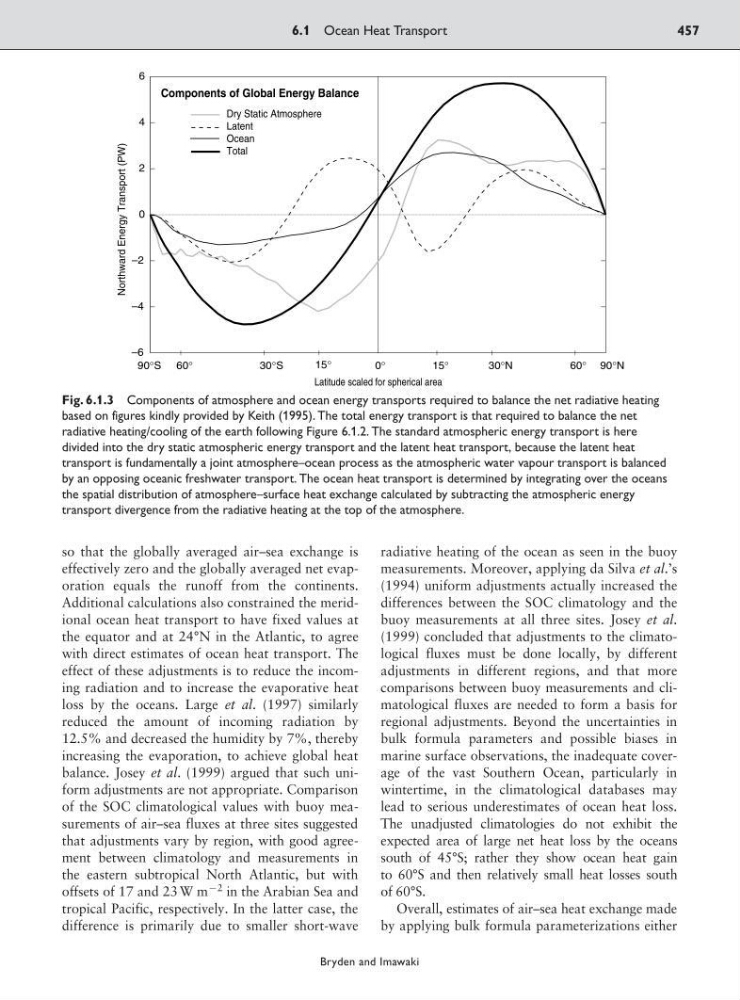
Fig. 6.1.3 Components of atmosphere and ocean energy transports required to balance the net radiative heating
based on figures kindly provided by Keith (1995). The total energy transport is that required to balance the net
radiative heating/cooling of the earth following Figure 6.1.2. The standard atmospheric energy transport is here
divided into the dry static atmospheric energy transport and the latent heat transport, because the latent heat
transport is fundamentally a joint atmosphere–ocean process as the atmospheric water vapour transport is balanced
by an opposing oceanic freshwater transport. The ocean heat transport is determined by integrating over the oceans
the spatial distribution of atmosphere–surface heat exchange calculated by subtracting the atmospheric energy
transport divergence from the radiative heating at the top of the atmosphere.
effectively zero and the globally averaged net evaporation equals the runoff from the continents.
Additional calculations also constrained the meridional ocean heat transport to have fixed values at
the equator and at 24°N in the Atlantic, to agree
with direct estimates of ocean heat transport. The
effect of these adjustments is to reduce the incoming radiation and to increase the evaporative heat
loss by the oceans. Large et al. (1997) similarly
reduced the amount of incoming radiation by
12.5% and decreased the humidity by 7%, thereby
increasing the evaporation, to achieve global heat
balance. Josey et al. (1999) argued that such uniform adjustments are not appropriate. Comparison
of the SOC climatological values with buoy measurements of air–sea fluxes at three sites suggested
that adjustments vary by region, with good agreement between climatology and measurements in
the eastern subtropical North Atlantic, but with
offsets of 17 and 23 W m
92 in the Arabian Sea and
tropical Pacific, respectively. In the latter case, the
difference is primarily due to smaller short-wave
radiative heating of the ocean as seen in the buoy
measurements. Moreover, applying da Silva et al.’s
(1994) uniform adjustments actually increased the
differences between the SOC climatology and the
buoy measurements at all three sites. Josey et al.
(1999) concluded that adjustments to the climatological fluxes must be done locally, by different
adjustments in different regions, and that more
comparisons between buoy measurements and climatological fluxes are needed to form a basis for
regional adjustments. Beyond the uncertainties in
bulk formula parameters and possible biases in
marine surface observations, the inadequate coverage of the vast Southern Ocean, particularly in
wintertime, in the climatological databases may
lead to serious underestimates of ocean heat loss.
The unadjusted climatologies do not exhibit the
expected area of large net heat loss by the oceans
south of 45°S; rather they show ocean heat gain
to 60°S and then relatively small heat losses south
of 60°S.
Overall, estimates of air–sea heat exchange made
by applying bulk formula parameterizations either
6.1 Ocean Heat Transport
457
Bryden and Imawaki
–6
–4
–2
0
2
4
6
Latitude scaled for spherical area
Northward Energy Transport (PW)
90°S 60°
30°S
15°
0°
15°
30°N
6 0 ° 90°N
Dry Static Atmosphere
Latent
Ocean
Total
Components of Global Energy Balance
Fig. 6.1.3 Components of atmosphere and ocean energy transports required to balance the net radiative heating
based on figures kindly provided by Keith (1995). The total energy transport is that required to balance the net
radiative heating/cooling of the earth following Figure 6.1.2. The standard atmospheric energy transport is here
divided into the dry static atmospheric energy transport and the latent heat transport, because the latent heat
transport is fundamentally a joint atmosphere–ocean process as the atmospheric water vapour transport is balanced
by an opposing oceanic freshwater transport. The ocean heat transport is determined by integrating over the oceans
the spatial distribution of atmosphere–surface heat exchange calculated by subtracting the atmospheric energy
transport divergence from the radiative heating at the top of the atmosphere.