

One of the goals of the World Ocean Circulation Experiment (WOCE) was to remedy the principal disadvantage of the direct method; i.e. a
consistent goal in designing the WOCE observational programme was to make the necessary measurements so that ocean heat transport could be
directly determined as a function of latitude in
each ocean basin (WCRP, 1986). These transports
could then be used as a constraint on air–sea heat
fluxes and as a rigorous test of ocean and coupled
atmosphere–ocean general circulation models
(Böning and Semtner, Chapter 2.2; Wood and
Bryan, Chapter 2.3). With the completion of the
WOCE observational phase and the beginning of
the WOCE analysis and synthesis phase, it is an
appropriate time to review progress in the methods for determining ocean heat transport and to
reassess the direct estimation of ocean heat transports from the WOCE observations.
6.1.2 Bulk formula estimates of ocean
heat transport
Over the past decade, several new attempts have
been made to improve the estimates of air–sea heat
exchange using bulk formula parameterizations.
da Silva et al. (1994) have applied carefully chosen
parameterizations to the Comprehensive Ocean
Atmosphere Data Set (COADS) of ship-of-opportunity surface marine observations from 1945 to
1989. Large et al. (1997) have applied similar
parameterizations to National Center for Environmental Prediction (NCEP) re-analyses of surface
conditions and combined conventional radiation
formulae with estimates of cloud fraction from the
International Satellite Cloud Climatology Program
(ISCCP) data set for the period 1985 to 1988.
Josey et al. (1999) have enhanced the COADSbased calculations for the period 1980 to 1993 by
adjusting for systematic biases in individual ship
observations and by using an improved algorithm
to convert visual wind observations to wind speed
(Fig. 6.1.4, see Plate 6.1.4, p. 492). Recent efforts
have attempted to identify and correct uncertainties
in the ship observations and to develop methods for
quantifying them (Gleckler and Weare, 1997; Kent
et al., 1999). In each of the global climatologies,
however, there is a substantial overall heat gain by
the ocean with a globally averaged heating of
30 W m
92 or more: 31 W m
92 for the COADS
analysis, 43 W m
92 for the NCEP analysis, and
30 W m
92 for the enhanced COADS analysis,
which is commonly called the Southampton
Oceanography Centre (SOC) climatology.
To ensure a consistent set of air–sea fluxes, da
Silva et al. (1994) developed inverse models to
adjust bulk formula parameterization coefficients
SECTION 6 LARGE-SCALE OCEAN TRANSPORTS
456
Q
αQ
E
Q
αQ
E
Incoming,Short Wave, Solar Radiation
outgoing, Long Wave, Black Body Radiation
Reflected Solar Radiation (α is Albedo)
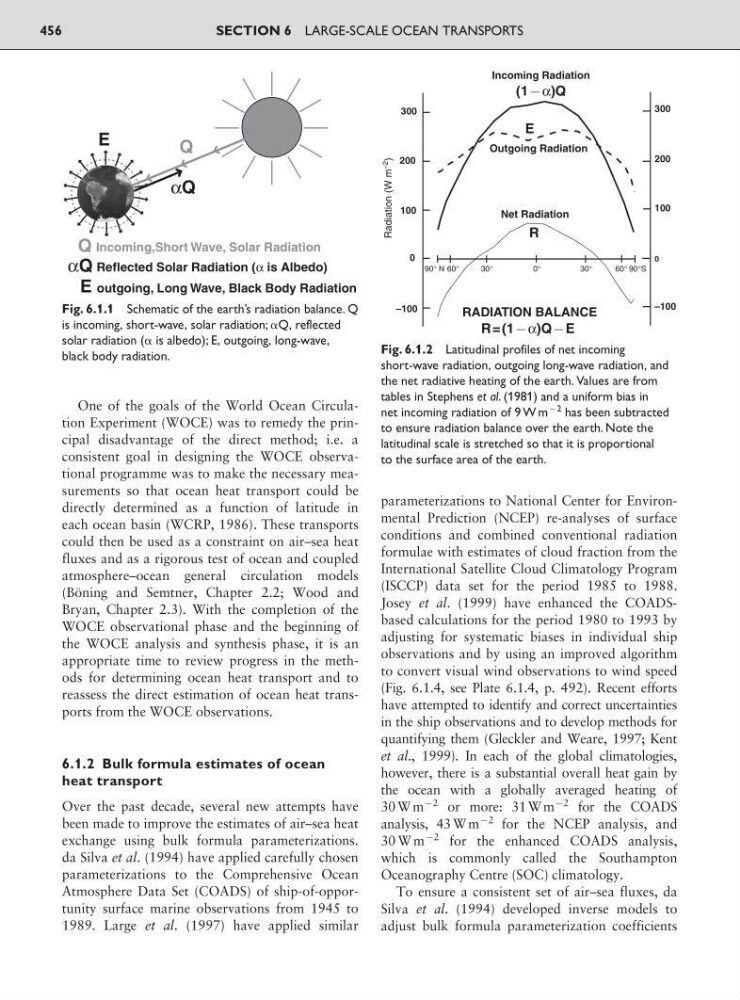
Fig. 6.1.1 Schematic of the earth’s radiation balance. Q
is incoming, short-wave, solar radiation; ␣Q, reflected
solar radiation (␣ is albedo); E, outgoing, long-wave,
black body radiation.
–100
0
100
200
300
–100
0
100
200
300
Incoming Radiation
(19α)Q
Outgoing Radiation
Net Radiation
90° N
3 0 °
0 °
30°
60°
60°
90°S
R
E
RADIATION BALANCE
R=(19α)Q9E
Radiation (W m –2
)
Fig. 6.1.2 Latitudinal profiles of net incoming
short-wave radiation, outgoing long-wave radiation, and
the net radiative heating of the earth. Values are from
tables in Stephens et al. (1981) and a uniform bias in
net incoming radiation of 9 W m
92 has been subtracted
to ensure radiation balance over the earth. Note the
latitudinal scale is stretched so that it is proportional
to the surface area of the earth.
consistent goal in designing the WOCE observational programme was to make the necessary measurements so that ocean heat transport could be
directly determined as a function of latitude in
each ocean basin (WCRP, 1986). These transports
could then be used as a constraint on air–sea heat
fluxes and as a rigorous test of ocean and coupled
atmosphere–ocean general circulation models
(Böning and Semtner, Chapter 2.2; Wood and
Bryan, Chapter 2.3). With the completion of the
WOCE observational phase and the beginning of
the WOCE analysis and synthesis phase, it is an
appropriate time to review progress in the methods for determining ocean heat transport and to
reassess the direct estimation of ocean heat transports from the WOCE observations.
6.1.2 Bulk formula estimates of ocean
heat transport
Over the past decade, several new attempts have
been made to improve the estimates of air–sea heat
exchange using bulk formula parameterizations.
da Silva et al. (1994) have applied carefully chosen
parameterizations to the Comprehensive Ocean
Atmosphere Data Set (COADS) of ship-of-opportunity surface marine observations from 1945 to
1989. Large et al. (1997) have applied similar
parameterizations to National Center for Environmental Prediction (NCEP) re-analyses of surface
conditions and combined conventional radiation
formulae with estimates of cloud fraction from the
International Satellite Cloud Climatology Program
(ISCCP) data set for the period 1985 to 1988.
Josey et al. (1999) have enhanced the COADSbased calculations for the period 1980 to 1993 by
adjusting for systematic biases in individual ship
observations and by using an improved algorithm
to convert visual wind observations to wind speed
(Fig. 6.1.4, see Plate 6.1.4, p. 492). Recent efforts
have attempted to identify and correct uncertainties
in the ship observations and to develop methods for
quantifying them (Gleckler and Weare, 1997; Kent
et al., 1999). In each of the global climatologies,
however, there is a substantial overall heat gain by
the ocean with a globally averaged heating of
30 W m
92 or more: 31 W m
92 for the COADS
analysis, 43 W m
92 for the NCEP analysis, and
30 W m
92 for the enhanced COADS analysis,
which is commonly called the Southampton
Oceanography Centre (SOC) climatology.
To ensure a consistent set of air–sea fluxes, da
Silva et al. (1994) developed inverse models to
adjust bulk formula parameterization coefficients
SECTION 6 LARGE-SCALE OCEAN TRANSPORTS
456
Q
αQ
E
Q
αQ
E
Incoming,Short Wave, Solar Radiation
outgoing, Long Wave, Black Body Radiation
Reflected Solar Radiation (α is Albedo)
Fig. 6.1.1 Schematic of the earth’s radiation balance. Q
is incoming, short-wave, solar radiation; ␣Q, reflected
solar radiation (␣ is albedo); E, outgoing, long-wave,
black body radiation.
–100
0
100
200
300
–100
0
100
200
300
Incoming Radiation
(19α)Q
Outgoing Radiation
Net Radiation
90° N
3 0 °
0 °
30°
60°
60°
90°S
R
E
RADIATION BALANCE
R=(19α)Q9E
Radiation (W m –2
)
Fig. 6.1.2 Latitudinal profiles of net incoming
short-wave radiation, outgoing long-wave radiation, and
the net radiative heating of the earth. Values are from
tables in Stephens et al. (1981) and a uniform bias in
net incoming radiation of 9 W m
92 has been subtracted
to ensure radiation balance over the earth. Note the
latitudinal scale is stretched so that it is proportional
to the surface area of the earth.