

The dynamics of tropical–subtropical water
exchanges were first explored by Pedlosky (1987a,
1988), who developed an inertial theory for the
Equatorial Undercurrent in which its waters have
their origin in the subduction of cold surface
waters in the subtropics. Liu et al. (1994) and
McCreary and Lu (1994) further pursued these
ideas with more sophisticated models. They found
that much of the water in the Equatorial Undercurrent participates in an intense recirculating
tropical cell with water rising to the surface at the
equator, drifting westward and poleward, then
sinking near 3° latitude, and rejoining the Undercurrent in the upper thermocline. In the mean
time, tropical–subtropical exchanges are accomplished in a latitudinally wider subtropical cell in
two ways. After subduction in the subtropics, the
subtropical cell provides waters to the equator by
means of subsurface low-latitude western boundary currents (western boundary pathway), and
also by means of a more direct pathway through
the interior of the ocean basin (interior pathway).
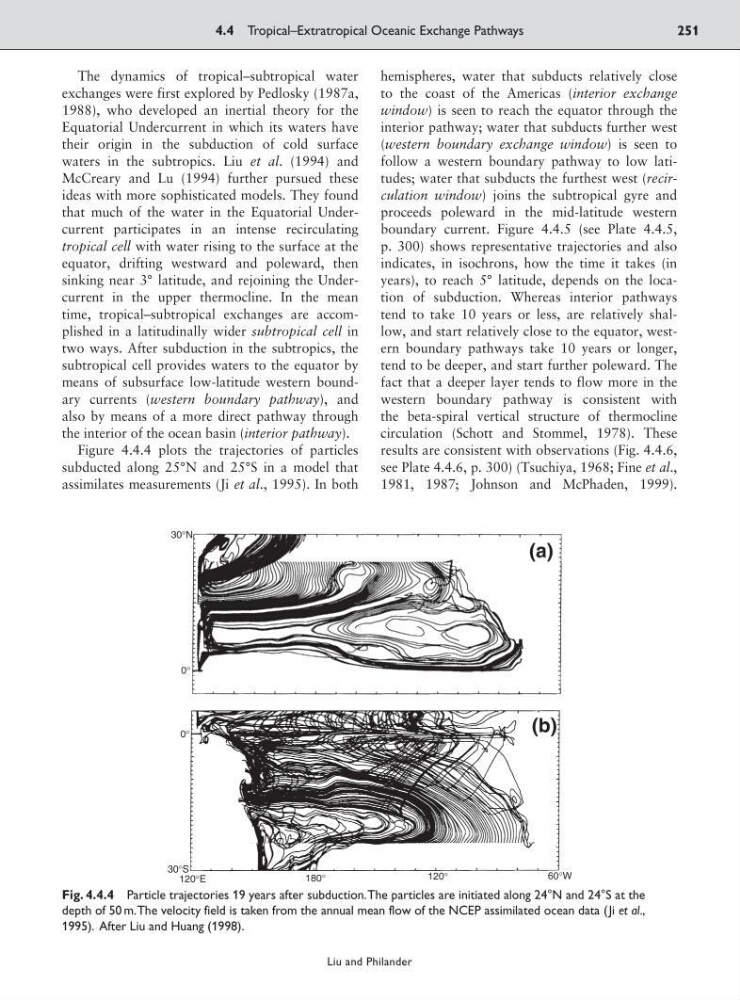
Figure 4.4.4 plots the trajectories of particles
subducted along 25°N and 25°S in a model that
assimilates measurements (Ji et al., 1995). In both
hemispheres, water that subducts relatively close
to the coast of the Americas (interior exchange
window) is seen to reach the equator through the
interior pathway; water that subducts further west
(western boundary exchange window) is seen to
follow a western boundary pathway to low latitudes; water that subducts the furthest west (recirculation window) joins the subtropical gyre and
proceeds poleward in the mid-latitude western
boundary current. Figure 4.4.5 (see Plate 4.4.5,
p. 300) shows representative trajectories and also
indicates, in isochrons, how the time it takes (in
years), to reach 5° latitude, depends on the location of subduction. Whereas interior pathways
tend to take 10 years or less, are relatively shallow, and start relatively close to the equator, western boundary pathways take 10 years or longer,
tend to be deeper, and start further poleward. The
fact that a deeper layer tends to flow more in the
western boundary pathway is consistent with
the beta-spiral vertical structure of thermocline
circulation (Schott and Stommel, 1978). These
results are consistent with observations (Fig. 4.4.6,
see Plate 4.4.6, p. 300) (Tsuchiya, 1968; Fine et al.,
1981, 1987; Johnson and McPhaden, 1999).
4.4 Tropical–Extratropical Oceanic Exchange Pathways
251
Liu and Philander
Fig. 4.4.4 Particle trajectories 19 years after subduction.The particles are initiated along 24°N and 24°S at the
depth of 50 m.The velocity field is taken from the annual mean flow of the NCEP assimilated ocean data (Ji et al.,
1995). After Liu and Huang (1998).
exchanges were first explored by Pedlosky (1987a,
1988), who developed an inertial theory for the
Equatorial Undercurrent in which its waters have
their origin in the subduction of cold surface
waters in the subtropics. Liu et al. (1994) and
McCreary and Lu (1994) further pursued these
ideas with more sophisticated models. They found
that much of the water in the Equatorial Undercurrent participates in an intense recirculating
tropical cell with water rising to the surface at the
equator, drifting westward and poleward, then
sinking near 3° latitude, and rejoining the Undercurrent in the upper thermocline. In the mean
time, tropical–subtropical exchanges are accomplished in a latitudinally wider subtropical cell in
two ways. After subduction in the subtropics, the
subtropical cell provides waters to the equator by
means of subsurface low-latitude western boundary currents (western boundary pathway), and
also by means of a more direct pathway through
the interior of the ocean basin (interior pathway).
Figure 4.4.4 plots the trajectories of particles
subducted along 25°N and 25°S in a model that
assimilates measurements (Ji et al., 1995). In both
hemispheres, water that subducts relatively close
to the coast of the Americas (interior exchange
window) is seen to reach the equator through the
interior pathway; water that subducts further west
(western boundary exchange window) is seen to
follow a western boundary pathway to low latitudes; water that subducts the furthest west (recirculation window) joins the subtropical gyre and
proceeds poleward in the mid-latitude western
boundary current. Figure 4.4.5 (see Plate 4.4.5,
p. 300) shows representative trajectories and also
indicates, in isochrons, how the time it takes (in
years), to reach 5° latitude, depends on the location of subduction. Whereas interior pathways
tend to take 10 years or less, are relatively shallow, and start relatively close to the equator, western boundary pathways take 10 years or longer,
tend to be deeper, and start further poleward. The
fact that a deeper layer tends to flow more in the
western boundary pathway is consistent with
the beta-spiral vertical structure of thermocline
circulation (Schott and Stommel, 1978). These
results are consistent with observations (Fig. 4.4.6,
see Plate 4.4.6, p. 300) (Tsuchiya, 1968; Fine et al.,
1981, 1987; Johnson and McPhaden, 1999).
4.4 Tropical–Extratropical Oceanic Exchange Pathways
251
Liu and Philander
Fig. 4.4.4 Particle trajectories 19 years after subduction.The particles are initiated along 24°N and 24°S at the
depth of 50 m.The velocity field is taken from the annual mean flow of the NCEP assimilated ocean data (Ji et al.,
1995). After Liu and Huang (1998).