

applied to the Gulf Stream and the Kuroshio for
studying their spatial and temporal characteristics
with results consistent with in-situ data (Kelly,
1991; Qiu et al., 1991). The technique was extended
to study the recirculation flanking the main current of the Kuroshio (Qiu, 1992) and the Gulf
Stream (Qiu, 1994). By combining the altimetric
estimate of the ocean topography with historical
hydrographic data, Qiu (1994) estimated the deep
circulation of the Gulf Stream region with results
consistent with in-situ observations.
Gille (1994) applied the kinematic jet model
technique of Kelly and Gille (1990) to the ACC
using GEOSAT data. She obtained estimates of the
mean path and ocean topography of the Polar
Front and Subantarctic Front of the ACC. Her
results are in fair agreement with other estimates
obtained from in-situ and satellite sea surface temperature observations (Belkin and Gordon, 1996;
Moore et al., 1999). She also analysed the spatial
and temporal variability of the surface transport of
the ACC calculated from the sea surface height
difference across the two fronts (Gille and Kelly,
1996). Shown in Fig. 3.3.17 is a wavenumber–
frequency spectrum of the ACC surface transport
variability. Three peaks are present at the annual
period: the main peak is located at zero wavenumber, indicating an along-stream in-phase annual
variation; the other two have a wavenumber of
3 cycles around the ACC with westward and eastward phase propagation, respectively. Another
peak is present at a period of 1/3 cycle per
year with a wavenumber of 3 cycles around the
ACC with eastward phase propagation. Fruitful
research is anticipated from applying the technique
to the multiyear T/P data.
3.3.4.4 Interaction between eddies and
mean flow
Spatial variability of the eddy Reynolds stress
allows the study of the interaction between eddies
and mean flow. Using only 1 year’s worth of
GEOSAT data, Tai and White (1990) showed some
very interesting patterns of Reynolds stress convergence that suggested that the Kuroshio Extension
was accelerated by a convergence of eddy momentum flux, while the mean flow was decelerated by a
divergence to the north and south of the current.
This finding is consistent with theoretical ideas of
the growth of meanders of an eastward zonal jet
due to baroclinic instability and the westward
propagation of Rossby waves to the north and
south of the jet (Wood, 1988; Hogg, 1988). Similar
patterns of eddy–mean flow interactions were
observed in the northeastern Atlantic (Beckman
et al., 1994a; Le Traon and De Mey, 1994).
The variability of the Kuroshio Extension in
relation to eddy field was further studied using
T/P data. Qiu (1995) found that the eddy kinetic
energy in the Kuroshio Extension and its southern
recirculation gyre had undergone significant variations. The eddy energy in the recirculation region
steadily increased in 1993–94, while the flow
strengths of the Kuroshio Extension and the recirculation were steadily decreasing in 1993–94.
Analysis of the energetics suggested that there was
a transfer of energy from the mean flow to the
eddy field of the recirculation region via barotropic
instability.
3.3 Ocean Circulation and Variability from Satellite Altimetry
167
Fu
-15
-10
-5
0
5
10
15
Wavenumber (cycles/360°)
0
1
2
3
Frequency (cycles/year)
0 . 0 5
0.05
0.05
0.05
0.0 5
0. 05
0. 05
0.0 5
0 .1
0. 1
-15
-10
-5
0
5
10
15
0
1
2
3
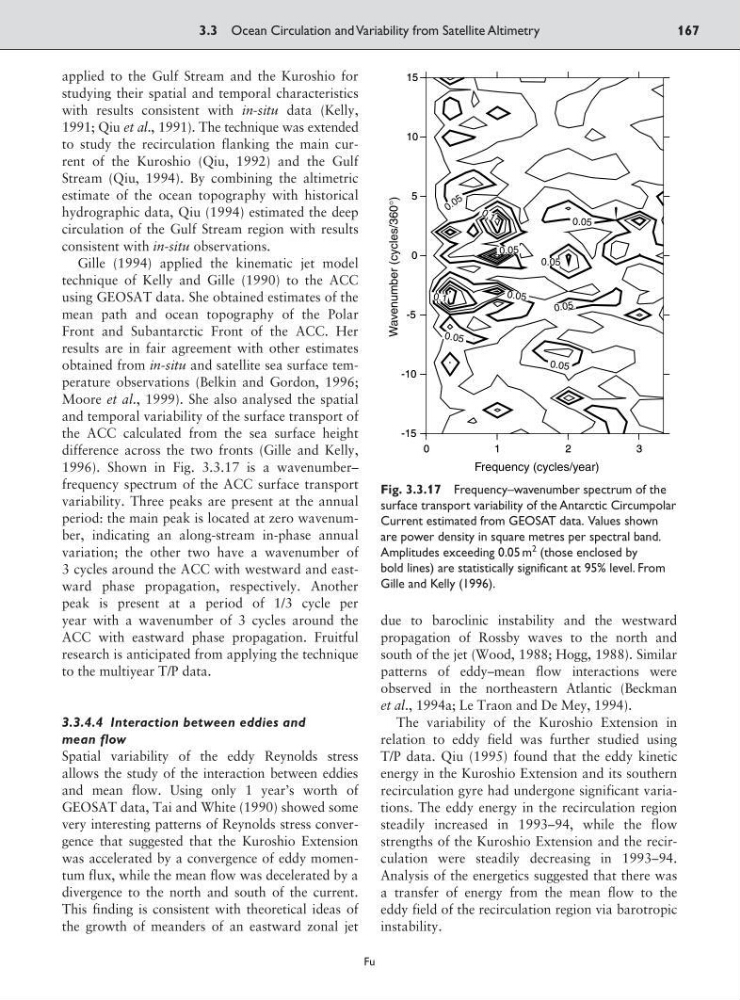
Fig. 3.3.17 Frequency–wavenumber spectrum of the
surface transport variability of the Antarctic Circumpolar
Current estimated from GEOSAT data. Values shown
are power density in square metres per spectral band.
Amplitudes exceeding 0.05 m
2 (those enclosed by
bold lines) are statistically significant at 95% level. From
Gille and Kelly (1996).
studying their spatial and temporal characteristics
with results consistent with in-situ data (Kelly,
1991; Qiu et al., 1991). The technique was extended
to study the recirculation flanking the main current of the Kuroshio (Qiu, 1992) and the Gulf
Stream (Qiu, 1994). By combining the altimetric
estimate of the ocean topography with historical
hydrographic data, Qiu (1994) estimated the deep
circulation of the Gulf Stream region with results
consistent with in-situ observations.
Gille (1994) applied the kinematic jet model
technique of Kelly and Gille (1990) to the ACC
using GEOSAT data. She obtained estimates of the
mean path and ocean topography of the Polar
Front and Subantarctic Front of the ACC. Her
results are in fair agreement with other estimates
obtained from in-situ and satellite sea surface temperature observations (Belkin and Gordon, 1996;
Moore et al., 1999). She also analysed the spatial
and temporal variability of the surface transport of
the ACC calculated from the sea surface height
difference across the two fronts (Gille and Kelly,
1996). Shown in Fig. 3.3.17 is a wavenumber–
frequency spectrum of the ACC surface transport
variability. Three peaks are present at the annual
period: the main peak is located at zero wavenumber, indicating an along-stream in-phase annual
variation; the other two have a wavenumber of
3 cycles around the ACC with westward and eastward phase propagation, respectively. Another
peak is present at a period of 1/3 cycle per
year with a wavenumber of 3 cycles around the
ACC with eastward phase propagation. Fruitful
research is anticipated from applying the technique
to the multiyear T/P data.
3.3.4.4 Interaction between eddies and
mean flow
Spatial variability of the eddy Reynolds stress
allows the study of the interaction between eddies
and mean flow. Using only 1 year’s worth of
GEOSAT data, Tai and White (1990) showed some
very interesting patterns of Reynolds stress convergence that suggested that the Kuroshio Extension
was accelerated by a convergence of eddy momentum flux, while the mean flow was decelerated by a
divergence to the north and south of the current.
This finding is consistent with theoretical ideas of
the growth of meanders of an eastward zonal jet
due to baroclinic instability and the westward
propagation of Rossby waves to the north and
south of the jet (Wood, 1988; Hogg, 1988). Similar
patterns of eddy–mean flow interactions were
observed in the northeastern Atlantic (Beckman
et al., 1994a; Le Traon and De Mey, 1994).
The variability of the Kuroshio Extension in
relation to eddy field was further studied using
T/P data. Qiu (1995) found that the eddy kinetic
energy in the Kuroshio Extension and its southern
recirculation gyre had undergone significant variations. The eddy energy in the recirculation region
steadily increased in 1993–94, while the flow
strengths of the Kuroshio Extension and the recirculation were steadily decreasing in 1993–94.
Analysis of the energetics suggested that there was
a transfer of energy from the mean flow to the
eddy field of the recirculation region via barotropic
instability.
3.3 Ocean Circulation and Variability from Satellite Altimetry
167
Fu
-15
-10
-5
0
5
10
15
Wavenumber (cycles/360°)
0
1
2
3
Frequency (cycles/year)
0 . 0 5
0.05
0.05
0.05
0.0 5
0. 05
0. 05
0.0 5
0 .1
0. 1
-15
-10
-5
0
5
10
15
0
1
2
3
Fig. 3.3.17 Frequency–wavenumber spectrum of the
surface transport variability of the Antarctic Circumpolar
Current estimated from GEOSAT data. Values shown
are power density in square metres per spectral band.
Amplitudes exceeding 0.05 m
2 (those enclosed by
bold lines) are statistically significant at 95% level. From
Gille and Kelly (1996).