

The WHP was designed to provide a relatively
uniform but coarse global grid of hydrographic
sections on zonal and meridional lines, resolving
the density field at intermediate and large scales
but not at the mesoscale (O(10–100 km)). The
nominal station spacing of 50 km would at best
marginally resolve parts of the ubiquitous
mesoscale eddy field. In boundary regions and in
other selected areas, closer spacing was used.
In addition to providing a basic survey of ocean
parameters in unsampled regions and enabling the
calculation of geostrophic current estimates, the
WHP data set was intended to be used for estimating fluxes of heat, salt and other tracers. It had
been shown that with a full-depth coast-to-coast
section it is feasible to estimate heat and freshwater fluxes through an ocean basin; Bryden and
Hall (1980) provide an example of one such calculation. Flux calculations using this technique
require the same high-quality temperature and
salinity data as for dynamical calculations. Certain
zonal lines were designated as ‘heat flux lines’.
SECTION 3 NEW WAYS OF OBSERVING THE OCEAN
104
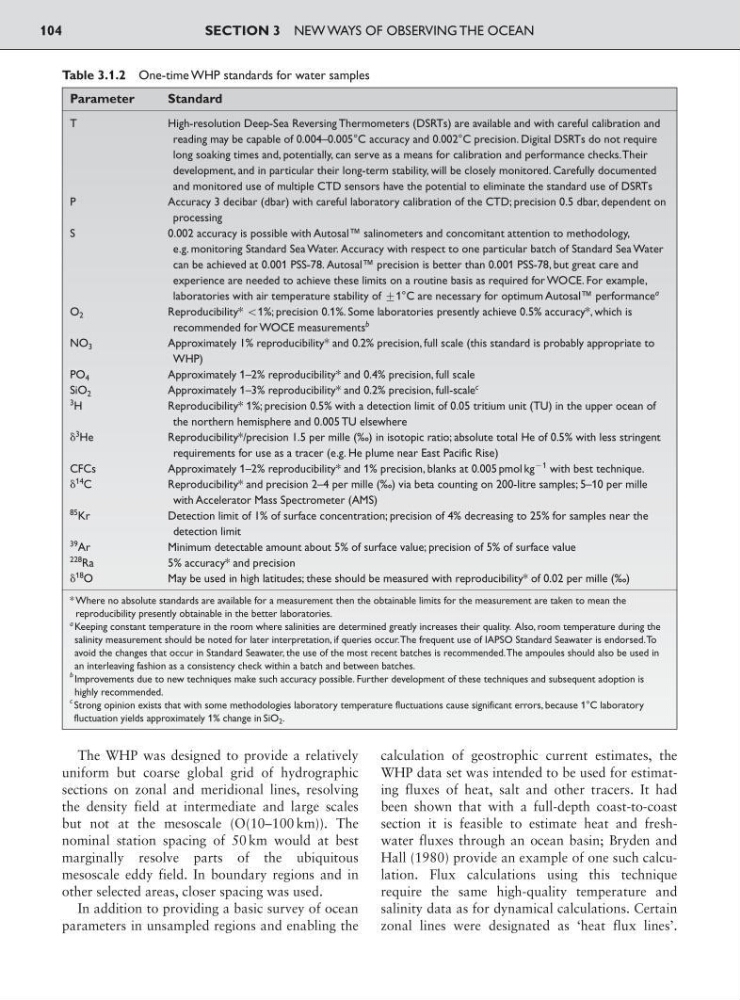
Table 3.1.2 One-time WHP standards for water samples
Parameter
Standard
T
High-resolution Deep-Sea Reversing Thermometers (DSRTs) are available and with careful calibration and
reading may be capable of 0.004–0.005°C accuracy and 0.002°C precision. Digital DSRTs do not require
long soaking times and, potentially, can serve as a means for calibration and performance checks.Their
development, and in particular their long-term stability, will be closely monitored. Carefully documented
and monitored use of multiple CTD sensors have the potential to eliminate the standard use of DSRTs
P
Accuracy 3 decibar (dbar) with careful laboratory calibration of the CTD; precision 0.5 dbar, dependent on
processing
S
0.002 accuracy is possible with Autosal™ salinometers and concomitant attention to methodology,
e.g. monitoring Standard Sea Water. Accuracy with respect to one particular batch of Standard Sea Water
can be achieved at 0.001 PSS-78. Autosal™ precision is better than 0.001 PSS-78, but great care and
experience are needed to achieve these limits on a routine basis as required for WOCE. For example,
laboratories with air temperature stability of <1°C are necessary for optimum Autosal™ performance
a
O 2
Reproducibility* :1%; precision 0.1%. Some laboratories presently achieve 0.5% accuracy*, which is
recommended for WOCE measurements
b
NO 3
Approximately 1% reproducibility* and 0.2% precision, full scale (this standard is probably appropriate to
WHP)
PO 4
Approximately 1–2% reproducibility* and 0.4% precision, full scale
SiO 2
Approximately 1–3% reproducibility* and 0.2% precision, full-scale
c
3 H
Reproducibility* 1%; precision 0.5% with a detection limit of 0.05 tritium unit (TU) in the upper ocean of
the northern hemisphere and 0.005 TU elsewhere
␦
3 He
Reproducibility*/precision 1.5 per mille (‰) in isotopic ratio; absolute total He of 0.5% with less stringent
requirements for use as a tracer (e.g. He plume near East Pacific Rise)
CFCs
Approximately 1–2% reproducibility* and 1% precision, blanks at 0.005 pmol kg
91 with best technique.
␦
14 C
Reproducibility* and precision 2–4 per mille (‰) via beta counting on 200-litre samples; 5–10 per mille
with Accelerator Mass Spectrometer (AMS)
85 Kr
Detection limit of 1% of surface concentration; precision of 4% decreasing to 25% for samples near the
detection limit
39 Ar
Minimum detectable amount about 5% of surface value; precision of 5% of surface value
228 Ra
5% accuracy* and precision
␦
18 O
May be used in high latitudes; these should be measured with reproducibility* of 0.02 per mille (‰)
* Where no absolute standards are available for a measurement then the obtainable limits for the measurement are taken to mean the
reproducibility presently obtainable in the better laboratories.
a Keeping constant temperature in the room where salinities are determined greatly increases their quality. Also, room temperature during the
salinity measurement should be noted for later interpretation, if queries occur.The frequent use of IAPSO Standard Seawater is endorsed.To
avoid the changes that occur in Standard Seawater, the use of the most recent batches is recommended.The ampoules should also be used in
an interleaving fashion as a consistency check within a batch and between batches.
b Improvements due to new techniques make such accuracy possible. Further development of these techniques and subsequent adoption is
highly recommended.
c Strong opinion exists that with some methodologies laboratory temperature fluctuations cause significant errors, because 1°C laboratory
fluctuation yields approximately 1% change in SiO 2 .
uniform but coarse global grid of hydrographic
sections on zonal and meridional lines, resolving
the density field at intermediate and large scales
but not at the mesoscale (O(10–100 km)). The
nominal station spacing of 50 km would at best
marginally resolve parts of the ubiquitous
mesoscale eddy field. In boundary regions and in
other selected areas, closer spacing was used.
In addition to providing a basic survey of ocean
parameters in unsampled regions and enabling the
calculation of geostrophic current estimates, the
WHP data set was intended to be used for estimating fluxes of heat, salt and other tracers. It had
been shown that with a full-depth coast-to-coast
section it is feasible to estimate heat and freshwater fluxes through an ocean basin; Bryden and
Hall (1980) provide an example of one such calculation. Flux calculations using this technique
require the same high-quality temperature and
salinity data as for dynamical calculations. Certain
zonal lines were designated as ‘heat flux lines’.
SECTION 3 NEW WAYS OF OBSERVING THE OCEAN
104
Table 3.1.2 One-time WHP standards for water samples
Parameter
Standard
T
High-resolution Deep-Sea Reversing Thermometers (DSRTs) are available and with careful calibration and
reading may be capable of 0.004–0.005°C accuracy and 0.002°C precision. Digital DSRTs do not require
long soaking times and, potentially, can serve as a means for calibration and performance checks.Their
development, and in particular their long-term stability, will be closely monitored. Carefully documented
and monitored use of multiple CTD sensors have the potential to eliminate the standard use of DSRTs
P
Accuracy 3 decibar (dbar) with careful laboratory calibration of the CTD; precision 0.5 dbar, dependent on
processing
S
0.002 accuracy is possible with Autosal™ salinometers and concomitant attention to methodology,
e.g. monitoring Standard Sea Water. Accuracy with respect to one particular batch of Standard Sea Water
can be achieved at 0.001 PSS-78. Autosal™ precision is better than 0.001 PSS-78, but great care and
experience are needed to achieve these limits on a routine basis as required for WOCE. For example,
laboratories with air temperature stability of <1°C are necessary for optimum Autosal™ performance
a
O 2
Reproducibility* :1%; precision 0.1%. Some laboratories presently achieve 0.5% accuracy*, which is
recommended for WOCE measurements
b
NO 3
Approximately 1% reproducibility* and 0.2% precision, full scale (this standard is probably appropriate to
WHP)
PO 4
Approximately 1–2% reproducibility* and 0.4% precision, full scale
SiO 2
Approximately 1–3% reproducibility* and 0.2% precision, full-scale
c
3 H
Reproducibility* 1%; precision 0.5% with a detection limit of 0.05 tritium unit (TU) in the upper ocean of
the northern hemisphere and 0.005 TU elsewhere
␦
3 He
Reproducibility*/precision 1.5 per mille (‰) in isotopic ratio; absolute total He of 0.5% with less stringent
requirements for use as a tracer (e.g. He plume near East Pacific Rise)
CFCs
Approximately 1–2% reproducibility* and 1% precision, blanks at 0.005 pmol kg
91 with best technique.
␦
14 C
Reproducibility* and precision 2–4 per mille (‰) via beta counting on 200-litre samples; 5–10 per mille
with Accelerator Mass Spectrometer (AMS)
85 Kr
Detection limit of 1% of surface concentration; precision of 4% decreasing to 25% for samples near the
detection limit
39 Ar
Minimum detectable amount about 5% of surface value; precision of 5% of surface value
228 Ra
5% accuracy* and precision
␦
18 O
May be used in high latitudes; these should be measured with reproducibility* of 0.02 per mille (‰)
* Where no absolute standards are available for a measurement then the obtainable limits for the measurement are taken to mean the
reproducibility presently obtainable in the better laboratories.
a Keeping constant temperature in the room where salinities are determined greatly increases their quality. Also, room temperature during the
salinity measurement should be noted for later interpretation, if queries occur.The frequent use of IAPSO Standard Seawater is endorsed.To
avoid the changes that occur in Standard Seawater, the use of the most recent batches is recommended.The ampoules should also be used in
an interleaving fashion as a consistency check within a batch and between batches.
b Improvements due to new techniques make such accuracy possible. Further development of these techniques and subsequent adoption is
highly recommended.
c Strong opinion exists that with some methodologies laboratory temperature fluctuations cause significant errors, because 1°C laboratory
fluctuation yields approximately 1% change in SiO 2 .