

quick survey, say during a single phase of ENSO
(El Niño-Southern Oscillation). Because several
lines in the pre-WOCE period (of demonstrable
high quality and including the requisite tracers)
were not reoccupied in WOCE, the starting time
for the Pacific survey was in effect 1985, including
the pre-WOCE lines. Hence one must rely on independent data such as repeat hydrography or timeseries stations to determine the degree to which the
WHP one-time survey ‘snapshot’ in any one ocean
basin was blurred by the motions of those being
‘photographed’.
It was recognized that the one-time survey would
be more inclusive of variables measured than repeat
hydrography, and have the strictest requirements
for accuracy. In the minutes of the first meeting of
the Planning Committee, the recommendations for
CTD and water sample requirements were first
stated and later (WCRP, 1988a) published: they are
reproduced in the attached tables (Table 3.1.1 for
CTDs and Table 3.1.2 for water samples). Original plans were that the one-time suite of water
samples would include all of the tracers down to
and including CFCs in Table 3.1.2. At the start of
WOCE, accurate radiocarbon measurements using
beta counting techniques needed large volumes
(9100 litres) of water. Less accurate Accelerator
Mass Spectrometer (AMS) measurements of radiocarbon were to be confined to the upper ocean
where the signal was larger. However, Key (1996)
has shown that with improvements in AMS
methodology, the AMS facility constructed at the
Woods Hole Oceanographic Institution for the
WHP measurements could routinely achieve comparable accuracy from small volume samples;
large-volume sampling for radiocarbon became
obsolete during WOCE.
3.1 Shipboard Observations during WOCE
103
King, Firing and Joyce
50000
45000
40000
35000
30000
25000
20000
15000
10000
5000
0
pre-WOCE
>3000m
WOCE
Hydrographic
Programme
Global Hydrographic Stations
One
Time
Repeat
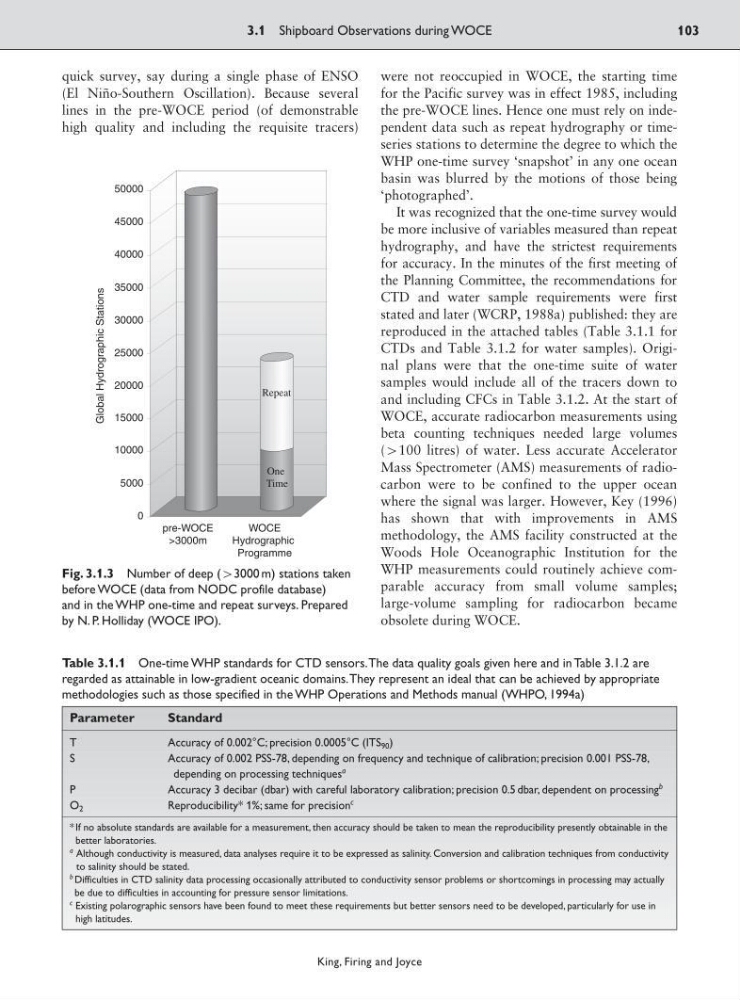
Fig. 3.1.3 Number of deep (93000 m) stations taken
before WOCE (data from NODC profile database)
and in the WHP one-time and repeat surveys. Prepared
by N. P. Holliday (WOCE IPO).
Table 3.1.1 One-time WHP standards for CTD sensors.The data quality goals given here and in Table 3.1.2 are
regarded as attainable in low-gradient oceanic domains.They represent an ideal that can be achieved by appropriate
methodologies such as those specified in the WHP Operations and Methods manual (WHPO, 1994a)
Parameter
Standard
T
Accuracy of 0.002°C; precision 0.0005°C (ITS 90 )
S
Accuracy of 0.002 PSS-78, depending on frequency and technique of calibration; precision 0.001 PSS-78,
depending on processing techniques
a
P
Accuracy 3 decibar (dbar) with careful laboratory calibration; precision 0.5 dbar, dependent on processing
b
O 2
Reproducibility* 1%; same for precision
c
* If no absolute standards are available for a measurement, then accuracy should be taken to mean the reproducibility presently obtainable in the
better laboratories.
a Although conductivity is measured, data analyses require it to be expressed as salinity. Conversion and calibration techniques from conductivity
to salinity should be stated.
b Difficulties in CTD salinity data processing occasionally attributed to conductivity sensor problems or shortcomings in processing may actually
be due to difficulties in accounting for pressure sensor limitations.
c Existing polarographic sensors have been found to meet these requirements but better sensors need to be developed, particularly for use in
high latitudes.
(El Niño-Southern Oscillation). Because several
lines in the pre-WOCE period (of demonstrable
high quality and including the requisite tracers)
were not reoccupied in WOCE, the starting time
for the Pacific survey was in effect 1985, including
the pre-WOCE lines. Hence one must rely on independent data such as repeat hydrography or timeseries stations to determine the degree to which the
WHP one-time survey ‘snapshot’ in any one ocean
basin was blurred by the motions of those being
‘photographed’.
It was recognized that the one-time survey would
be more inclusive of variables measured than repeat
hydrography, and have the strictest requirements
for accuracy. In the minutes of the first meeting of
the Planning Committee, the recommendations for
CTD and water sample requirements were first
stated and later (WCRP, 1988a) published: they are
reproduced in the attached tables (Table 3.1.1 for
CTDs and Table 3.1.2 for water samples). Original plans were that the one-time suite of water
samples would include all of the tracers down to
and including CFCs in Table 3.1.2. At the start of
WOCE, accurate radiocarbon measurements using
beta counting techniques needed large volumes
(9100 litres) of water. Less accurate Accelerator
Mass Spectrometer (AMS) measurements of radiocarbon were to be confined to the upper ocean
where the signal was larger. However, Key (1996)
has shown that with improvements in AMS
methodology, the AMS facility constructed at the
Woods Hole Oceanographic Institution for the
WHP measurements could routinely achieve comparable accuracy from small volume samples;
large-volume sampling for radiocarbon became
obsolete during WOCE.
3.1 Shipboard Observations during WOCE
103
King, Firing and Joyce
50000
45000
40000
35000
30000
25000
20000
15000
10000
5000
0
pre-WOCE
>3000m
WOCE
Hydrographic
Programme
Global Hydrographic Stations
One
Time
Repeat
Fig. 3.1.3 Number of deep (93000 m) stations taken
before WOCE (data from NODC profile database)
and in the WHP one-time and repeat surveys. Prepared
by N. P. Holliday (WOCE IPO).
Table 3.1.1 One-time WHP standards for CTD sensors.The data quality goals given here and in Table 3.1.2 are
regarded as attainable in low-gradient oceanic domains.They represent an ideal that can be achieved by appropriate
methodologies such as those specified in the WHP Operations and Methods manual (WHPO, 1994a)
Parameter
Standard
T
Accuracy of 0.002°C; precision 0.0005°C (ITS 90 )
S
Accuracy of 0.002 PSS-78, depending on frequency and technique of calibration; precision 0.001 PSS-78,
depending on processing techniques
a
P
Accuracy 3 decibar (dbar) with careful laboratory calibration; precision 0.5 dbar, dependent on processing
b
O 2
Reproducibility* 1%; same for precision
c
* If no absolute standards are available for a measurement, then accuracy should be taken to mean the reproducibility presently obtainable in the
better laboratories.
a Although conductivity is measured, data analyses require it to be expressed as salinity. Conversion and calibration techniques from conductivity
to salinity should be stated.
b Difficulties in CTD salinity data processing occasionally attributed to conductivity sensor problems or shortcomings in processing may actually
be due to difficulties in accounting for pressure sensor limitations.
c Existing polarographic sensors have been found to meet these requirements but better sensors need to be developed, particularly for use in
high latitudes.